Because of the growing number of security threats on the Internet, the email link at the top right of this page is no longer active. However, readers who wish to comment are welcome to email me directly at “tolemac@shaw.ca” or use the space at the end of each post.
“The Last Days of Tolemac“ is a book about prophecy. It deals with events that are happening in the world today and shows how they fulfill prophecies that were made many centuries ago. The book is set out in a series of questions and answers, and explains in detail:
What is about to happen to our planet
Why these events are happening at this time
What places on earth will be affected
What the new world will be like
What we can do to prepare
As the book explains, our world is about to be transformed. We are about to experience “a new heaven and a new earth” where there will be no more suffering and no more pain. However all of us are faced with a choice. Do we wish to inherit the new world that is coming? Or will we fall victim to the catastrophes that will herald its arrival? What we need to do to survive is explained in the pages of this book.
For the benefit of readers who might be looking for information on specific subjects related to prophecy, the following articles have been included here for easy reference. They can be found in “Articles” listed under the heading “Categories” in the column on the right, or by clicking here:
The Apocalypse Unveiled
The Rapture Revealed
The Lost Years of Jesus
The New Golden Age
The Last Pope
The Death of the Pope
The Four Horsemen
The Doomsday Prophecies
The Kachina Prophecies of the Hopi
Rebuilding the Temple of Solomon
What is “Wormwood” in the Book of Revelation?
What is “Mystery Babylon” in the Book of Revelation?
Why America is not Mentioned in “End Time” Prophecy
As most readers of this Blog are aware, I have written two eBooks that are available on Amazon.com. One is called “The Cosmic Web” and the other “The Last Days of Tolemac“.
As I explain in the opening chapter of “The Cosmic Web”, (which is sumarised here), the central theme of the book is that each one of us spins a web of thought that becomes for us our personal reality, as I explain in the following post:
And because the universe is a subjective phenomenon, and not an objective reality, as we have for so long believed, we are always free to recreate our personal universe in a way which conforms to our desires. Each one of us is free to spin a web of personal belief which then reveals itself as our individual reality.
By contrast, “The Last Days of Tolemac” is a book about prophecy. It deals with events that are happening in the world today and shows how they fulfill prophecies that were made many centuries ago.
When I had completed the Tolemac book, I set up a website to market it. Attached to this website was a Blog designed for me by my webmaster which allowed me to post updates from time to time.
But because this Blog was also a convenient way to publicise material from “The Cosmic Web”, I added this as well. So this Blog has now become a vast compendium (more than a thousand pages) of information that many readers have said they enjoy and have profited from.
However, new readers who are interested in prophecy only are often confused by all these different posts. So the purpose of this post is to provide a brief overview of the prophetic side of this website, as summarised in the following posts:
I believe that we are now living in the “Last Days” described in the Bible, and that the seven years under the Anti-Christ will begin shortly, perhaps as soon as October 2026. That would make the date of the battle of Armageddon and the return of Jesus around the year 2033.
This seven-year period begins with the Rapture of the chosen ones to meet with the Lord in the air.
At the same time the meteor “Wormwood” strikes the earth causing devastation through earthquakes and tidal waves around the world. This leads to the destruction of America so that it is no longer a force in world affairs. In fact all coastal cities will be affected.
As a result of these tidal waves most of Western Europe will be under water, including Britain, Holland, France and Germany. The whole of China will also be flooded.
This meteor strike leads to the “Three Days of Darkness” in which the forces of the underworld (demons, etc) are let loose on the earth.
Following this destruction in which all the governments of the world are overwhelmed, a man appears who claims to be the long-awaited Saviour of the world. He heals the sick and feeds the hungry, and performs all the miracles attributed to Jesus.
This man makes a pact with Israel, where their temple of Solomon is rebuilt and their ancient ritual of animal sacrifice is restored.
After three-and-a-half years this “Saviour” (Anti-Christ) is assassinated (head wound). However he miraculously recovers, but then reveals his demonic qualities.
He travels to Jerusalem where he enters the Holy of Holies and declares himself to be God and demands that all the world worship him. After this no one will be able to buy or sell unless they carry his mark.
The Anti-Christ then launches a campaign to wipe out the Jews. The only ones to escape will be those who can flee to underground caverns in the desert.
The next three-and-a-half-years will be the Great Tribulation predicted by Jesus, during which time the Mongolian hordes will rise up and sweep across Asia, killing all those who resist them.
They will cross the Euphrates River which will have dried up and confront the forces of the Anti-Christ on the plain of Jezreel near Megiddo in the long-awaited battle of Armageddon.
Jesus will then descend and defeat Satan and bind him up for a thousand years.
This summary is based on my own research. Most of my source material comes from the King James Bible, as well as the Book of Revelation. In addition to this I refer to a variety of other sources of a prophetic nature which I find both convincing and trustworthy.
The following list refers to Posts that I have personally written and researched about each of the above claims.
This seven-year period begins with the Rapture of the chosen ones to meet with the Lord in the air.
At the same time the meteor “Wormwood” strikes the earth causing devastation through earthquakes and tidal waves around the world. This leads to the destruction of America so that it is no longer a force in world affairs. In fact all coastal cities will be affected.
As a result of these tidal waves most of Western Europe will be under water, including Britain, France and Germany. The whole of China will also be flooded.
Following this destruction in which all the governments of the world are overwhelmed, a man appears who claims to be the long-awaited Saviour of the world. He heals the sick and feeds the hungry, and performs all the miracles attributed to Jesus.
After three-and-a-half years this “Saviour” (Anti-Christ) is assassinated (head wound). However he miraculously recovers, but then reveals his demonic qualities.
He travels to Jerusalem where he enters the Holy of Holies and declares himself to be God and demands that all the world worship him. After this no one will be able to buy or sell unless they carry his mark.
The Anti-Christ then launches a campaign to wipe out the Jews. The only ones to escape will be those who can flee to underground caverns in the desert.
The next three-and-a-half-years will be the Great Tribulation predicted by Jesus, during which time the Mongolian hordes will rise up and sweep across Asia, killing all those who resist them.
They will cross the Euphrates River which will have dried up and confront the forces of the Anti-Christ on the plain of Jezreel near Megiddo in the long-awaited battle of Armageddon.
About seven years ago I wrote a series of posts on the subject of climate change under the heading of “An Inconvenient Truth“. It seems to me that this is a good time to provide an update and review some of the topics that currently dominate the news. In Part Seven I wrote the following:
“The “inconvenient” truth about climate change is that the earth is dying. It is losing its ability to support life. Insects are dying. Trees and plants are dying. Birds and animals are dying. How long before our agriculture and crop yields are seriously affected? How much time do we ourselves have left?
“This truth is inescapable. It is no longer something that we can merely shrug off as inconsequential. Not only is it a truth that none of us can avoid, but it is one that every one of us must come to terms with as we make the day-to-day decisions about the future conduct of our lives.
“Unfortunately, the reality is that very few people today are equipped to handle the devastating truth that the world as we know it is coming to an end. They simply cannot bring themselves to believe that the entire human species could be threatened with extinction.
“Yet the evidence is there for all to see. And it is growing more and more evident with every passing year. We are reminded of the movie “A Few Good Men”, in which the actor Jack Nicholson uttered that memorable line, “You can’t handle the truth!”.
“The ultimate question is: Can you? ”
At the time I wrote this piece, not only were most people unaware of the seriousness of the problem, but they tended to dismiss this as just another example of “fake news”, or at best an exaggeration of something that was of little concern to the general public.
So even I was surprised to read an Opinion piece by the noted climate scientist and best selling author Bill McGuire that appeared on CNN on March 7, 2024, that began with the words: “I’m a climate scientist. If you knew what I know, you’d be terrified too”. He then went on to say:
“Are you frightened by climate change? Do you worry about what sort of world we are bequeathing to our children and grandchildren? In the words of science writer and author of “The Uninhabitable Earth” David Wallace-Wells, “No matter how well informed you are, you are surely not alarmed enough.”
“I would put it even more strongly.
“If the fracturing of our once stable climate doesn’t terrify you, then you don’t fully understand it. The reality is that, as far as we know, and in the natural course of events, our world has never — in its entire history — heated up as rapidly as it is doing now. Nor have greenhouse gas levels in the atmosphere ever seen such a precipitous hike.
“Think about that for a moment. We’re experiencing, in our lifetimes, a heating episode that is probably unique in the last 4.6 billion years.
“While those of us working in the climate science field know the true picture, and understand the implications for our world, most others do not. And this is a problem — a big one. After all, we can’t act effectively to tackle a crisis if we don’t know its full depth and extent.
“What’s happening to our world scares the hell out of me, but if I shout the brutal, unvarnished truth from the rooftops, will this really galvanize you and others into fighting for the planet and your children’s futures? Or will it leave you frozen like a rabbit in headlights, convinced that all is lost? It is an absolutely critical question.
“Climate change is no different. Everyone has the right to know the facts — scary or not — so as to provide the opportunity to act based upon the reality of what we are doing to our planet, and not on some sanitized version”.
In his essay “The UninhabitableEarth”, Wallace-Wells outlined a variety of conditions which threaten the continued survival of humanity on this planet. He divided these threats into nine categories:
1. “Doomsday”
It is, I promise, worse than you think. If your anxiety about global warming is dominated by fears of sea-level rise, you are barely scratching the surface of what terrors are possible, even within the lifetime of a teenager today.
And yet the swelling seas — and the cities they will drown — have so dominated the picture of global warming, and so overwhelmed our capacity for climate panic, that they have occluded our perception of other threats, many much closer at hand. Rising oceans are bad, in fact very bad; but fleeing the coastline will not be enough.
Indeed, absent a significant adjustment to how billions of humans conduct their lives, parts of the Earth will likely become close to uninhabitable, and other parts horrifically inhospitable, as soon as the end of this century.
2. Heat Death
Humans, like all mammals, are heat engines; surviving means having to continually cool off, like panting dogs. For that, the temperature needs to be low enough for the air to act as a kind of refrigerant, drawing heat off the skin so the engine can keep pumping.
At seven degrees of warming, that would become impossible for large portions of the planet’s equatorial band, and especially the tropics, where humidity adds to the problem; in the jungles of Costa Rica, for instance, where humidity routinely tops 90 percent, simply moving around outside when it’s over 105 degrees Fahrenheit would be lethal.
At 11 or 12 degrees of warming, more than half the world’s population, as distributed today, would die of direct heat. And the effect would be fast: Within a few hours, a human body would be cooked to death from both inside and out.
3. The End of Food
Climates differ and plants vary, but the basic rule for staple cereal crops grown at optimal temperature is that for every degree of warming, yields decline by 10 percent. Some estimates run as high as 15 or even 17 percent.
Which means that if the planet is five degrees warmer at the end of the century, we may have as many as 50 percent more people to feed and 50 percent less grain to give them. And proteins are worse: It takes 16 calories of grain to produce just a single calorie of hamburger meat, butchered from a cow that spent its life polluting the climate with methane farts.
Drought might be an even bigger problem than heat, with some of the world’s most arable land turning quickly to desert. By 2080, without dramatic reductions in emissions, southern Europe will be in permanent extreme drought, much worse than the American dust bowl ever was.
The same will be true in Iraq and Syria and much of the rest of the Middle East; some of the most densely populated parts of Australia, Africa, and South America; and the breadbasket regions of China. None of these places, which today supply much of the world’s food, will be reliable sources of any.
4. Climate Plagues
Rock, in the right spot, is a record of planetary history, eras as long as millions of years flattened by the forces of geological time into strata with amplitudes of just inches, or just an inch, or even less.
Ice works that way, too, as a climate ledger, but it is also frozen history, some of which can be reanimated when unfrozen. There are now, trapped in Arctic ice, diseases that have not circulated in the air for millions of years — in some cases, since before humans were around to encounter them.
Which means our immune systems would have no idea how to fight back when those prehistoric plagues emerge from the ice. The Arctic also stores terrifying bugs from more recent times.
In Alaska, already, researchers have discovered remnants of the 1918 flu that infected as many as 500 million and killed as many as 100 million — about 5 percent of the world’s population and almost six times as many as had died in the world war for which the pandemic served as a kind of gruesome capstone.
5. Unbreathable Air
Our lungs need oxygen, but that is only a fraction of what we breathe. The fraction of carbon dioxide is growing: It just crossed 400 parts per million, and high-end estimates extrapolating from current trends suggest it will hit 1,000 ppm by 2100. At that concentration, compared to the air we breathe now, human cognitive ability declines by 21 percent.
Other stuff in the hotter air is even scarier, with small increases in pollution capable of shortening life spans by ten years. The warmer the planet gets, the more ozone forms, and by mid-century, Americans will likely suffer a 70 percent increase in unhealthy ozone smog, the National Center for Atmospheric Research has projected.
By 2090, as many as 2 billion people globally will be breathing air above the WHO “safe” level; one paper last month showed that, among other effects, a pregnant mother’s exposure to ozone raises the child’s risk of autism (as much as tenfold, combined with other environmental factors). Which does make you think again about the autism epidemic in West Hollywood.
Already, more than 10,000 people die each day from the small particles emitted from fossil-fuel burning; each year, 339,000 people die from wildfire smoke, in part because climate change has extended forest-fire season (in the U.S., it’s increased by 78 days since 1970).
By 2050, according to the U.S. Forest Service, wildfires will be twice as destructive as they are today; in some places, the area burned could grow fivefold.
6. Perpetual War
This is one reason that, as nearly every climate scientist I spoke to pointed out, the U.S. military is obsessed with climate change: The drowning of all American Naval bases by sea-level rise is trouble enough, but being the world’s policeman is quite a bit harder when the crime rate doubles.
Some speculate that the elevated level of strife across the Middle East over the past generation reflects the pressures of global warming — a hypothesis all the more cruel considering that warming began accelerating when the industrialized world extracted and then burned the region’s oil.
What accounts for the relationship between climate and conflict? Some of it comes down to agriculture and economics; a lot has to do with forced migration, already at a record high, with at least 65 million displaced people wandering the planet right now.
But there is also the simple fact of individual irritability. Heat increases municipal crime rates, and swearing on social media, and the likelihood that a major-league pitcher, coming to the mound after his teammate has been hit by a pitch, will hit an opposing batter in retaliation.
And the arrival of air-conditioning in the developed world, in the middle of the past century, did little to solve the problem of the summer crime wave.
7. Permanent Economic Collapse
The murmuring mantra of global neoliberalism, which prevailed between the end of the Cold War and the onset of the Great Recession, is that economic growth would save us from anything and everything.
But in the aftermath of the 2008 crash, a growing number of historians studying what they call “fossil capitalism” have begun to suggest that the entire history of swift economic growth, which began somewhat suddenly in the 18th century, is not the result of innovation or trade or the dynamics of global capitalism but simply our discovery of fossil fuels and all their raw power — a onetime injection of new “value” into a system that had previously been characterized by global subsistence living.
Before fossil fuels, nobody lived better than their parents or grandparents or ancestors from 500 years before, except in the immediate aftermath of a great plague like the Black Death, which allowed the lucky survivors to gobble up the resources liberated by mass graves.
After we’ve burned all the fossil fuels, these scholars suggest, perhaps we will return to a “steady state” global economy. Of course, that onetime injection has a devastating long-term cost: climate change.
The scale of that economic devastation is hard to comprehend, but you can start by imagining what the world would look like today with an economy half as big, which would produce only half as much value, generating only half as much to offer the workers of the world.
8. Poisoned Oceans
That the sea will become a killer is a given. Barring a radical reduction of emissions, we will see at least four feet of sea-level rise and possibly ten by the end of the century.
A third of the world’s major cities are on the coast, not to mention its power plants, ports, navy bases, farmlands, fisheries, river deltas, marshlands, and rice-paddy empires, and even those above ten feet will flood much more easily, and much more regularly, if the water gets that high.
At least 600 million people live within ten meters of sea level today.
But the drowning of those homelands is just the start. You have probably heard of “coral bleaching” — that is, coral dying — which is very bad news, because reefs support as much as a quarter of all marine life and supply food for half a billion people.
Ocean acidification will fry fish populations directly, too, though scientists aren’t yet sure how to predict the effects on the stuff we haul out of the ocean to eat; they do know that in acid waters, oysters and mussels will struggle to grow their shells, and that when the pH of human blood drops as much as the oceans’ pH has over the past generation, it induces seizures, comas, and sudden death.
That isn’t all that ocean acidification can do. Carbon absorption can initiate a feedback loop in which under oxygenated waters breed different kinds of microbes that turn the water still more “anoxic,” first in deep ocean “dead zones,” then gradually up toward the surface. There, the small fish die out, unable to breathe, which means oxygen-eating bacteria thrive, and the feedback loop doubles back.
This process, in which dead zones grow like cancers, choking off marine life and wiping out fisheries, is already quite advanced in parts of the Gulf of Mexico and just off Namibia, where hydrogen sulfide is bubbling out of the sea along a thousand-mile stretch of land known as the “Skeleton Coast.”
Hydrogen sulfide is also the thing that finally did us in that time 97 percent of all life on Earth died, once all the feedback loops had been triggered and the circulating jet streams of a warmed ocean ground to a halt — it’s the planet’s preferred gas for a natural holocaust.
Gradually, the ocean’s dead zones spread, killing off marine species that had dominated the oceans for hundreds of millions of years, and the gas the inert waters gave off into the atmosphere poisoned everything on land. Plants, too. It was millions of years before the oceans recovered.
9. The Great Filter
It is not easy to know how much to be reassured by that bleak certainty, and how much to wonder whether it is another form of delusion; for global warming to work as parable, of course, someone needs to survive to tell the story.
The scientists know that to even meet the Paris goals, by 2050, carbon emissions from energy and industry, which are still rising, will have to fall by half each decade; emissions from land use (deforestation, cow farts, etc.) will have to zero out; and we will need to have invented technologies to extract, annually, twice as much carbon from the atmosphere as the entire planet’s plants now do.
Nevertheless, by and large, the scientists have an enormous confidence in the ingenuity of humans — a confidence perhaps bolstered by their appreciation for climate change, which is, after all, a human invention, too.
They point to the Apollo project, the hole in the ozone we patched in the 1980s, the passing of the fear of mutually assured destruction. Now we’ve found a way to engineer our own doomsday, and surely we will find a way to engineer our way out of it, one way or another.
The planet is not used to being provoked like this, and climate systems designed to give feedback over centuries or millennia prevent us — even those who may be watching closely — from fully imagining the damage done already to the planet. But when we do truly see the world we’ve made, they say, we will also find a way to make it livable. For them, the alternative is simply unimaginable.
Conclusion
While David Wallace-Wells is undoubtedly correct in his assessment of the long term effects of climate-change upon the planet, he is completely mistaken in his understanding of the true causes of global warming, which he attributes to carbon emissions from energy and industry.
For starters, climate change is NOT human-caused.
If it was, we would have seen a marked reduction in greenhouse gases in 2020 during the Covid pandemic due to the fact that most people were required to work from home, while others, as in the case of China, were simply prevented from travelling at all. However, no such dip was evident.
That means that we cannot reverse global-warming, no matter how much we reduce the greenhouse gases we release into the air. Even if we reduced this to zero, the earth would still continue to get hotter.
As I pointed out in Part Seven the simple truth is that the earth is getting hotter because the sun is getting hotter, and the earth is being bathed in ever-increasing amounts of deadly Ultra-Violet radiation.
And why is the sun getting hotter? The answer, sadly, is that we really do not know. As the anonymous source that responded to the New York investigative journalist Marjorie Tietjen that I quoted in Part Four responded:
“We don’t know exactly the cause of the phenomenon we are fighting. We don’t know how long it will last or the peak of its intensity. We only know that the Earth, as well as all the other planets and our sun, has become enveloped in an unknown energy field that threatens all stability across the solar system and our very lives”.
Allan, An Inconvenient Truth, Signs of the Times, March 13, 2024, 2:09 pm
The driving force of life is the motivation of desire. Life is nothing more or less than the desire for experience, and the search for ever-new ways in which to experience. Desire stirs the waters of experience.
But as every living person learns to discover, it is one thing to desire something, but quite another to experience what it is that one desires. In fact the challenge of life is to learn how to manifest what one desires.
Once again, the Sages of the East explain what is needed to attract the objects of our desires, and why it is that so many of us fail. The power of desire is both mysterious and miraculous, as Nisargadatta Maharaj explains:
“Your mind projects a structure and you identify yourself with it. It is in the nature of desire to prompt the mind to create a world for its fulfilment. Even a small desire can start a long line of action; what about a strong desire? A desire can produce a universe; its powers are miraculous.”
We have the assurance of Maharaj that we can attain whatever our hearts desire.
“When you work for something whole-heartedly and steadily, it happens, for it is the function of the mind to make things happen.”
If what Maharaj says is true, that it is possible for all desires to be attained, then why is it that our desires are not fulfilled? The following questioner speaks for our troubled state.
QUESTION: “I am full of desires and want them fulfilled. How am I to get what I want?
MAHARAJ: Do you deserve what you desire? In some way or other you have to work for the fulfillment of your desires. Put in energy and wait for the results.
QUESTION: Where do I get the energy?
MAHARAJ: The desire itself is energy.
QUESTION: Then why does not every desire get fulfilled?
MAHARAJ: Maybe it was not strong enough and lasting.”
As the Tripura Rahasya points out:
“The desire must be strong and abiding, in order that it may bear fruit. The effects are in proportion to the intensity and duration of the desire.”
As Maharaj explains:
“When your desire is not clear nor strong, it cannot take shape. Besides, if your desires are personal, for your own enjoyment, the energy you give them is necessarily limited; it cannot be more than what you have.”
Ramana Maharshi explains:
MAHARSHI: “The wavering of the mind is a weakness arising from the dissipation of its energy in the shape of thoughts. When one makes the mind stick to one thought the energy is conserved, and the mind becomes stronger.
QUESTION: What is the meaning of the strength of the mind?
MAHARSHI: Its ability to concentrate on one thought without being distracted.
QUESTION: How is that achieved?
MAHARSHI: By practice.”
The Need for Positive Thinking
So contradictory thoughts or doubts, which are negative thoughts, negate the power of the original thought. As Dattatreya explained to his pupil Parasurama:
“The will conceives effectively or ineffectively according as it is uniform or broken up by indecision. One should forget the old associations in order to make one’s new conception effective and this endures only so long as it is not obstructed by the old one.
“A conception is forceful unless obstructed by an antecedent one and thus destroyed. It is effective only when forceful; in that way even great things may be achieved.”
Destiny has its firmest grip on those who are convinced of its immutable power. Maharaj scoffs at these shallow fears:
“Steady faith is stronger than destiny. Destiny is the result of causes mostly accidental and is therefore loosely woven. Confidence and good hope will overcome it easily.”
And to those who claim that the world is simply beyond their power to control, he answers:
“On the contrary, a world of which you are the only source and ground is fully within your power to change. What is created can always be un-created, and re-created. All will happen as you want it, provided you really want it.”
Ramana Maharshi responds in similar fashion to those who believe that their lives are bound by inherited limitations:
QUESTION: “Distractions result from inherited tendencies. Can they be cast off too?
MAHARSHI: Yes. Many have done so. Believe it! They did so because they believed they could.”
For as Maharaj has pointed out:
“What is imagined and willed becomes actuality – here lies the danger as well as the way out.”
Referring to faith, the apostle Paul wrote in the first verse of the eleventh chapter of his Epistle to the Hebrews:
“Now faith is the substance of things hoped for, the evidence of things not seen.”
Speaking of faith, Saint Augustine asked, “What is faith unless it is to believe what you do not see?” Sri Aurobindo, the sage of Pondicherry, wrote of faith:
“Faith is the soul’s witness to something not yet manifested, achieved or realized, but yet the knower within us, even in the absence of all indications, feels to be true or supremely worth following.”
The fact that we are able to alter the circumstances of our lives, finds support in the Book of Job: “Thou shalt also decree a thing, and it shall be established unto thee; and the light shall shine upon thy ways.” (Job 22: 28)
Maharaj also gives us the assurance that “whatever deep conviction you hold onto in the core of you will happen.”
Since beliefs are the shaping forces of our experiences in life, if we wish to alter the circumstances of our lives, we need only alter the nature of our beliefs.
The energy with which we invest our desires determines the speed with which they come about, and the potency of our desires hinges on our faith that they will be fulfilled. The greater the number of people who come to share a common desire, the greater becomes the energy that is available for its fulfilment.
Those who wish to change society, therefore, can do this by utilizing the forces of energy unleashed by large numbers of people, if they can be persuaded to adopt a common pattern of belief.
All effective leaders of society learn to focus the energies of their followers into particular channels of belief. The greater the emotional energy which can be allied to these beliefs, the more dramatic will be the results, and the quicker these beliefs will manifest in the world of experience.
Adolf Hitler
Societies are always vulnerable to leaders who are able to direct the energy of the group into certain selected patterns of belief.
Examples abound throughout history of men and women who have successfully utilised these methods to mould society to their wishes. One of the most effective men to do so in recent times was Adolf Hitler.
Hitler was a man possessed with a lust for power. Now there was nothing particularly unusual about that. Thousands of people before him had entertained similar desires.
But Hitler did not simply wish to rule a clan, a city, or a sovereign state. His ambition was to rule the world, and to set up a reign of power so glorious and so complete that it would last for a thousand years.
Yet Hitler was a man of insignificant origin. He did not come from a family noted for its conspicuous wealth and influence. He was not trained in a great military tradition.
He did not have powerful friends. He was not the confidant of Kings. All he had was that single, overriding desire to rule the world. There was little that occurred in his early life that seemed to offer any hope for the fulfilment of this dream.
As a young man in Vienna, Hitler was a dropout from society. He was described at that time as “lazy, moody and so contemptuous of any form of work that he would pawn his books and a few personal belongings rather than go out to work to earn a few miserable hellers“.
When the first world war began, Hitler joined the 16th Bavarian Reserve Infantry regiment and served as Meldeganger, an orderly-cum-runner who carried messages between headquarters and the front lines.
Although he distinguished himself through his personal bravery and was subsequently awarded the Iron Cross, Hitler remained a common Corporal in the German Army for the duration of the war.
It was hardly the sort of auspicious beginning that would have been expected to single him out for future military leadership.
Yet within the space of twenty years, Hitler had successfully gained control of the defeated German nation, and had transformed it to such a level of power that it took the combined forces of the better part of the rest of the world to prevent him from attaining his goal of global domination.
How could such a thing have happened? How was it possible for Hitler to resurrect the German nation as swiftly as he did? Where did Hitler get the power to fulfill his autocratic desire?
Hitler began with a simple idea – the idea of world domination.
But what singled him out as a man to be reckoned with was his indomitable will. Hitler believed in himself totally, and was utterly convinced that he would achieve his goal.
Imbued with such intense faith in his own inherent power, and bolstered by his will, Hitler soon began to attract favourable opportunities which were the direct result of his initial desire. He was quick to seize upon these favourable circumstances, and to use them to carry him closer to his goal.
Hitler nevertheless realised that in order to revolutionise Germany so soon after it had suffered a shattering military defeat, he would need to arouse the emotional resources of his people.
Being a naturally gifted orator, Hitler used his demagogic ability to galvanise the German people. He did this by means of nationwide broadcasts, but also by means of carefully staged ceremonies.
Vast numbers of people were assembled together to attend Hitler’s torch-lit rallies. These ceremonies were attended by blaring martial music which served to stimulate the public mood.
At these vast assemblies, concealed loudspeakers would broadcast pulsed vibrations at a predetermined rate of fourteen cycles per second, which had the effect of generating a high degree of emotional tension.
When Hitler finally appeared on the podium high above the gathered throng, the spotlights that were focused on him were reflected by means of strategically placed mirrors back into the crowd, forming a mesmerising sight.
As Hitler began to speak, so his hypnotic cadences of speech quickly stirred the crowd. As his fervour rose, so the pitch of his voice escalated, until his words poured forth in a frenzied torrent.
The emotional excitement of the crowd was systematically raised to ever higher levels, until it culminated in a crashing fusillade of Sig Heils, professing total allegiance to the Fuhrer.
Broadcast to the nation, these torchlight Nazi rallies had a profound effect upon the national psyche. Germans came to believe that they were capable of achieving anything.
It was Hitler’s special genius that he was able to manipulate this national reservoir of energy towards the fulfilment of his personal dream of conquest.
All effective leaders use the power of human emotion, or charged thought, to manipulate their followers, whether they do so knowingly or not. Although the objects of their desires may differ widely, their techniques invariably remain the same.
The charismatic evangelists who today win souls for Christ, adopt the same techniques that were used to such devastating effect by Hitler. There is the same use of public rallies, the stirring music, the angelic choirs, the use of lights, and rhythmic oratory that bring the congregation to a fever pitch of emotion.
Emotion is thewellspring of raw power.
Drawing upon this supply of energy, leaders can focus it upon any goal they wish. Their power can become truly awesome, and is capable of astonishing feats. It is the power that can yield the fruition of any desire in our waking world of consciousness.
The power of focused emotion is the voltage which powers the circuit of desire. When sustained by national will, it is capable of bringing the world to the very brink of total domination, as Hitler so ably proved.
We may be inclined to scoff at claims that the force of emotion is capable of transforming the world around us. Yet linked to an impassioned desire its powers are truly miraculous. It does not matter what that desire may be.
The power is neutral, it can be used for good or ill. As Nisargadatta Maharaj has warned:
“Just like a small matchstick can set a huge forest on fire, so does a desire light the fires of manifestation. The very purpose of creation is the fulfilment of desire. The desire may be noble or ignoble; space is neutral – one can fill it with what one likes.”
Donald Trump
What Hitler and Mussolini did before him, Donald Trump aims to do today. Throughout his career, he has steadfastly pursued his goal of gaining control over the American people and imposing his Fascist ideas on the nation.
And in so doing, he hopes to match the achievements of men he claims to admire the most – people like Vladimir Putin, Xi Jinping and Kim Jong-un. As he explained to reporter Andrea Amilcare in January 2016, some ten months before he was elected President:
“I read Benito Mussolini Memoires every day. The Il Duce was a great man, and he was a strong man. I am inspired by his life and how he changed Italy for the better. This is what I want for America.
“Let’s face it, there will be a period, like Mussolini’s when he was prime minister of Italy, where he ruled constitutionally until 1925, but soon after he thought, screw this, let’s have a full dictatorship.
“I’m not saying we’re going to have an immediate dictatorship in America when I’m president, but I’ll give it a little time, maybe a year or two. Business is business, I gotta do what I gotta do, and I’m going to clean house, whatever it takes. Fascism is great because you don’t have to answer to anyone, you just do it.” (Source)
What separates Trump from other U.S. politicians is his total belief in what he believes to be true. He insists that he never lost the last election, and that he still remains the legitimate president and that the idea that he lost is “the big lie”.
Furthermore, he has never been bothered by facts that run counter to his beliefs. He simply dismisses them as “fake news”. He continues to repeat his false ideas at every opportunity. And when he was once asked why he did this, he replied “I just don’t care”.
Two things define Donald Trump. One is anger. He not only explodes in anger at every perceived threat or criticism, but he constantly exhorts his followers to react with violence against those who challenge his ideas, and promises to avenge all those who are afflicted.
The other is revenge. And if anyone offends him, he never forgets. And he is willing to spend the rest of his life if necessary, to gain his revenge. And the thing he values most in life is loyalty. He demands total loyalty from all those who work for him, yet offers nothing in return.
As the handwriting specialist who analysed his signature that I referred to here commented: “Look at the angles, look how sharp it is. Anyone who gets near Trump will get hurt”.
Like Hitler, Trump has learned the value of emotion in galvanising his followers. But unlike Hitler who used his powers of oratory to stir the crowd, Trump achieves the same effect by arousing anger against whatever target he happens to pick on at the time.
His main targets are, as they have always been, immigrants who he refers to as “vermin” that he claims are “poisoning the blood of the nation”. And the reason why the multitudes continue to follow him blindly is because he projects the image of a strongman who can save them from all the problems that confront the nation. And not only that, but that “he alone can fix it”.
And so the nation stumbles on towards the next election. And when the final results are tallied, let no one doubt Trump’s ability to achieve his dream of total domination. Why?
Because he did it in his last life.
Allan, Reincarnation, Signs of the Times, February 20, 2024, 12:38 pm
There is a popular news item currently circulating on social media showing a picture of the Italian Fascist dictator Benito Mussolini together with a remark which he is said to have made moments before his death on April 28, 1945.
“If you kill me now, I will come back at the head of a far more powerful nation in need of a leader, and you will feel the arm!”
Unfortunately, according to those historians who have investigated the circumstances of his death, there is no record of Mussolini having said any such thing. In fact this seems like just another example of “fake news”.
On 25 April 1945, as Allied forces were advancing into northern Italy, Mussolini agreed to meet with a delegation of partisans at his palace in Milan. At this meeting, he was furious to discover that the Nazis had already begun negotiations behind his back for an unconditional surrender.
Fearing for his life, he left the palace and fled Milan with his 33-year-old mistress Clara Petaccci in his Alfa Romeo sports car. Together they set out for Switzerland, intending to board a plane and escape to Spain.
The following day the pair joined a convoy of fellow Fascists and German soldiers that were heading north towards Lake Como. However, their convoy was later stopped by communist partisans at the lakeside town of Dongo.
Although Mussolini was wearing a German helmet and overcoat, he was easily recognised by his distinctive shaved head and granite jaw. The partisans seized him and his mistress and hid them in a remote farmhouse for the night.
The following day they were taken from the house and driven to the small village of Giulino di Mezzegra on the shores of Lake Como. There they were ordered to stand in front of a stone wall where they were both shot by a firing squad.
According to subsequent reports, when the soldiers were about to shoot, Mussolini cried out “No! No!” Those were his last words. He did not wear a blindfold. He died on Sunday April 29, 1945, at 4:10p.m.
And up to the moment of his death, there is no record of him saying anything like the words ascribed to him above, nor was there anyone among the soldiers who captured him who mentioned it either.
But just 413 days after he died, a child was born on the other side of the ocean who would not only renew his fascist dream, but achieve it on a scale that dwarfed anything he could have imagined in Italy. He would be Mussolini reborn.
The New Mussolini
The name of this child was Donald John Trump. As most people are now aware, Donald Trump grew up to be an American politician, media personality, and businessman who served as the 45th president of the United States from 2017 to 2021.
As the young child grew up, he not only began to look like the late dictator, as can be seen in the photo above, but he also adopted many of his mannerisms, such as the famous jutting jaw. Even their signatures are similar.
One of the people who have delved into the similarities between the two men is Michael R. Burch, an American poet, columnist and essayist. These are some of the things he has pointed out.
(1) Trump’s Mussolini-like preoccupation with his own image and his development of “a cult of one-man leadership that focused media attention and national debate” on his person via exploitation of all forms of mass media including new technologies.
(2) Trump’s Mussolini-like love of theatricality and spectacles such as parades, rallies, and flyovers.
(3) Trump playing simultaneously both Superman and victim, as did Mussolini and Hitler.
(4) Trump’s racist belief in his “superior” genes and his fear and loathing of other races.
(8) Trump’s celebration of violence against journalists and dissenters.
(9) Trump’s often-stated desire to “lock up” his political opponents on bogus charges.
(10) Trump’s desire to “dominate the streets,” which Mussolini did with his “blackshirts” and Hitler with his “brownshirts”.
(11) Trump’s purges of all but fawning sycophants.
(12) Trump’s favouring of the rich over the middle class and poor.
(13) Trump’s refusal to accept a democratic transfer of power.
(14) Trump’s appeal to armed militias loyal to his person rather than the country.
Burch goes on to point out:
Like Mussolini, Trump demands loyalty to his person, rather than to the nation.
Like Mussolini, Trump threatens and humiliates anyone who opposes him.
Like Mussolini, Trump attempts to discredit and cow the legitimate press.
Like Mussolini, Trump becomes enraged when criticized.
Like Mussolini, Trump exhibits “thin-skinned ignorance combined with arrogant contempt”.
Like Mussolini, Trump is a “man of the banner headline” who is quickly bored by details, discussions and strategy.
Like Mussolini, Trump takes all the credit when things go right, but none of the blame when things go wrong.
Like Mussolini, Trump is what Umberto Eco called “a beehive of contradictions”.
Like Mussolini, Trump lacks any philosophy: he has only rhetoric.
Like Mussolini, Trump gives the impression of talking directly to the people, while presuming to speak for them.
Like Mussolini, Trump pretends to be an expert on every subject while in reality being incredibly incompetent and uninformed.
Like Mussolini, Trump is closer to a Mafia don or gang lord than a democratic leader.
Like Mussolini, Trump has had multiple wives, several mistresses and scores of adulterous affairs.
Like Mussolini, Trump is working to strengthen laws against abortions, forcing girls and women to bear children they don’t want or can’t afford.
Other Parallels
They both were “problem children” and bullies who were sent to boarding schools as young men.
They both were megalomaniacs, obsessed with themselves.
They both had books published.
They both denounced military interventions, only to later advocate and order military interventions.
They both had children before they were married.
They both had affairs while married.
They both organized disparate right-wing groups into a cohesive political force.
They both blamed their nations” economic problems on other nations that acted unfairly.
They both painted a picture of a society in crisis that needed a strong leader to save it (i.e. them).
They both stoked racial animosities and grievances of the majority against minorities.
They both favoured the “stick” over the “carrot” in dealing with unwanted “inferior” people.
They both favoured deportation of “inferior” people.
They both saw darker-skinned people as “inferior” to white people.
They both enlisted working-class voters against the left.
They both mocked people they perceived as weak.
They both glorified strength, power and “winning at all costs”.
They both claimed that only they could restore order and “save” their nations.
They both became cults of one.
They both denounced legitimate presses while employing propaganda lavishly themselves.
They both demanded public displays of loyalty like saluting the flag during the national anthem.
They both called for large sums of money to be spent on public works.
They both supported their nation’s dominant religion and were supported in turn by religious leaders and their flocks.
They both used the term “love” while sowing discord, hatred and intolerance.
They were both wildly inconsistent; they said whatever suited “the mood of the moment”.
They both had no time or use for scruples.
They both were patently unfit to hold any office, yet held the highest office nonetheless.
In short, Donald Trump seems to be the reincarnation of the Italian dictator, and the fulfillment of the prophecy quoted at the beginning of this post. And because of this, he poses a special threat as explained by the noted American professor Robert Reich in the video below.
We live in a world of unpredictability and change.
But amid all this uncertainty one thing is becoming increasingly clear, and that is that Benito Mussolini will soon “come back as the head of a far more powerful nation in need of a leader”. And when he does so, he will unleash suffering across the world on a terrifying scale.
And in answer to those who wonder why the U.S.A. does not appear in “end time” Bible prophecy, it is because the reborn Mussolini will preside over the destruction of the country and the end of the American dream.
Allan, Reincarnation, Signs of the Times, February 10, 2024, 10:44 am
Despite the fact that over 1,500 years have passed since Christianity officially rejected the doctrine of reincarnation, a surprising number of modern Christians believe that we continue to be reborn again and again.
In a survey conducted among adults in the United States in September 2023, roughly one quarter of those who call themselves Christians embrace the idea. This includes 10% of all “born again” Christians.
In addition, Catholics say that they are more likely than Protestants to believe in reincarnation, and nearly half of all Hispanic Catholics claim to be believers compared with a third of White Catholics.
And the reason why they do so is undoubtedly because children continue to be born in every generation who possess vivid memories of past lives, and who astonish their parents with tales of where they lived and what they did.
While relatively few children are born with memories of past lives, enough of them are to suggest that we do indeed live multiple lives, and that our memories carry over from one lifetime to another. Here are some examples.
Example No. 1
Born in Seattle in 1991, Sonam Wangdu was only two years old when he realized he was actually the fourth reincarnation of the original Tibetan lama (“lama” is the Tibetan word for “guru”), Dezhung Rinpoche I.
This realization was the culmination of a number of signs that had been accumulating since before the boy was even born. These included the visions of his mother and her own lama, as well as the words of the third reincarnation of Dezhung, himself (Dezhung Rinpoche III), who informed his acolytes in 1987 (the year of his death), “I will be reborn in Seattle.”
In 1996, the boy, who by then only answered to the name, Trulku-la (meaning “reincarnation”), left his family to be raised by monks while studying Tibetan Buddhism in Kathmandu, Nepal and eventually becoming the head of a monastery there.
Arriving in Nepal, “dressed in gold and maroon robes and riding on a luggage cart pushed by his mother, the little lama smiled widely,” reported SeattleMet in a 2016 follow-up story tracing the boy’s journey over the past 20 years.
“When asked how long he would stay in Nepal, though, the little boy was serene, almost stoic. “Lots of time,” he said. “I’m just going to stay here a long time.”
And that has proven to be true. The boy is now in his 23rd year of life as the fourth reincarnation of Dezhung Rinpoche I. (Source)
Example No. 2
In 2004, ABC News aired a story about a six-year-old boy named James Leininger who, at age two, began to have what many believe were spontaneous past life recalls. It all began innocently enough when he was only 18 months old and the family visited a war museum.
Gradually, the child’s fascination with airplanes increased and developed into recurring traumatic nightmares of a burning plane crash. He would wake up screaming, “Airplane crash! Plane on fire! Little man can’t get out!”
He drew detailed pictures of the fight that claimed his past life. He signed the drawings as James 3, stating he was the third James. As he began to develop speech, James started telling his parents about his former life as a fighter pilot in the World War II Pacific Campaign.
James not only named the kind of plane he flew but also the name of the carrier, Natoma. He named a pilot, Jack Larsen, who had witnessed his death. All of these statements were verified as true facts.
His parents later identified James M. Huston, Jr., as the name of the only pilot from the USS Natoma Bay who died in the battle James described. Since the pilot was a Jr., it was surmised James Leininger considered himself to be James III.
His parents managed to track down Jack Larsen and confirmed he’d seen James Houston’s plane hit and crash. They also contacted James’s sister from his former life.
The sister confirmed the statements James made about their family and their father’s alcoholism. She was convinced that James was her brother reincarnated. His parents later published a book about James’s story. (Source)
Example No. 3
A three-year-old boy, touted as a golfing prodigy, claims he is 13-time winner Bobby Jones. The little boy called Hunter (not his real name) received a kid’s set of plastic golf clubs when he was two years old and was immediately hooked.
While watching a video clip from the 1930s that aired on the Golf Channel, Hunter pointed to Bobby Jones and announced that was him when he was big. After that, he insisted his parents call him Bobby since it was his real name.
In an attempt to verify what Hunter was saying, his father showed Hunter six photos of 1930s golfers. Hunter pointed to the photo of Bobby Jones and said, “That’s me!”
Curious, Hunter’s father showed the boy several houses that included one of Bobby Jones’s childhood home. Hunter looked at all the pictures and when he got to Bobby’s childhood home. He said it was home.
Hunter’s golfing talent grew quickly, and he was accepted into the 5-year-old class. Hunter is living up to his reincarnated claims, having won 41 out of 51 junior tournaments. Twenty-one of those were in a row.
Strangely, people who don’t know about the little boy’s claim comment to his father that the child swings like Bobby Jones. The little boy proclaimed to his parents that the Augusta course is his favorite.
It so happens that Bobby Jones founded the Augusta National Golf Club and helped to design it. Jones had tremendous influence on the game and was co-founder of the Masters Tournament. No one is saying he’s destined to be the next Bobby Jones. Instead, they are predicting he’ll be the next Tiger Woods! (Source)
Example No. 4
One reincarnation story left an impression on Dr. Frederick Lenz, who wrote in his book, “Lifetimes, True Accounts of Reincarnation”, about the verified claim by a boy named Charlie, who at age four, recalled his death at Pearl Harbor.
It all began when Mary took her daughter and son to a cliff diving performance and on the way back to their car, Charlie blurted out, “I died once!” Mary thought he said dived and asked him when he had dived. Young Charlie quickly corrected her. “No. I died once, and it hurts!”
Mary asked how he died, and he replied that his leg was badly hurt. Over time, Charlie’s story was pieced together through these conversations. In his past life, he was born an only child named James Kellow from San Francisco.
When he was in his 20s, Kellow was a naval officer and served onboard a warship. The ship was bombed and exploded. James and three other men made it into a lifeboat and when they got to shore, James dragged the only surviving crew member onto the beach. James fell onto the beach and died.
Mary decided to take Charlie to visit the decommissioned USS Alabama, having misheard the name of the ship. She didn’t find James Kellow on the ship’s roster and the guide told her that the Alabama was never hit, but the USS Arizona was.
While there, Charlie scooted about the ship as though he were a seasoned sailor. Later, his mother began researching the USS Arizona, lost during the attack on Pearl Harbor. Eventually, she was able to check the Arizona roster and found an officer, James Kellow from San Francisco.
Dr. Lienz verified these and other aspects of Charlie’s story, including the recovery of Officer Kellow’s body and those of the men in the lifeboat after the Arizona was struck with a Japanese torpedo bomb.
The bomb hit the ship’s magazine and exploded on December 7, 1941, during the Japanese attack on Pearl Harbor. The ship is still lying at the bottom of Pearl Harbor and the USS Arizona Memorial just out onto the water, just above the ship’s hull. (Source)
Example No. 5
Also known as “The Boy Who Lived Before”, Cameron Macauley of Glasgow, Scotland, started telling his mother at the age of 2 that he wasn’t from Glasgow at all, but rather from a small island called Barra off the west coast of Scotland in the Outer Hebrides.
Cameron described intimate details of his life there, including his black-and-white dog, the beach he used to walk on, his mother, the house they lived in and his seven siblings. He even named his former parents, claiming that his father’s name was Shane Robertson and that he had died in a car crash.
Determined to get to the bottom of all this, Cameron’s parents took him to Barra. Although no one there remembered anyone by the name of Shane, the Macauley’s found the house Cameron had described — a house owned by the Robertsons. The black-and-white dog was in one of the family photos, and the car that Cameron remembered was there, too. (Source)
In addition to the stories mentioned above, here are a few videos of children who recall experiences in past lives.
As explained in Part One of the post “Beyond the Grave“, the world we see and sense around us does not exist as an objective reality as scientists would have us believe. Instead, it is a projection of our minds.
And we who sojourn in this illusory world and space and time, act according to the prompting of our desires. These actions bring results which are the harvest of those desires that we ourselves have sown.
As it is on earth while we are alive, so it continues after death. As recorded in the Brhadaranyaka Upanishad, dating back to the sixth century BC:
“A man acts according to his desires to which he clings. After death he goes to the next world bearing in his mind the subtle impressions of his deeds; and after reaping there the harvest of his deeds, he returns again to the world of action. Thus he who has desire continues subject to rebirth.”
What this Vedic quotation reveals is that death does not bring an end to our cycle of life.
Instead, it is this thread of unfulfilled desire that chains the individual to the wheel of life, and draws them unerringly back to another form in which to continue to pursue the fruits of their desires.
It is only when all of these bonds of desire are finally broken, that the “I am” merges with its source of Supreme Reality and the cycle of rebirth is finally at an end.
One of the mysteries that has long puzzled the human mind is this concept of “Reincarnation”. The word itself is derived from a Latin term meaning “to take flesh again”.
The first recorded writings on this subject date back to the philosophical traditions of India and Greece about the 6th century BC. Since that time, different religions have formulated different answers to this puzzle.
Three of these religions began in India, while three others began in the Middle East. The teachings of these religions can briefly be summarised as follows.
Hinduism
The Hindu interpretation of reincarnation is based on the teachings of the original Indian Rishis (Sages) as recorded in the Vedas, a Sanskrit word meaning “knowledge”.
According to these Sages, the world that we ordinarily think of as “real” is actually an illusion – just like a dream. Together with other illusory states like hypnosis and drug-induced visions, these states are not permanent.
They always come to an end. However, according to these Sages, life does not end there. It continues in an after-death state, which is followed in due course by a new cycle of birth and death which the Hindus call Samsara.
We continue to be trapped in this illusory cycle until such time as we awaken from our ignorance of the true nature of our existence. This awakening is referred to by such Sanskrit terms as Mukti or Moksha.
The individual soul (Jiva) continues to be bound by action (Karma), and every action that we take has a reaction according to the dictates of our own desires. And it is these actions that determine our next incarnation.
We are reborn through desire. We choose to be reborn so that we can continue to enjoy the delights which bodily existence provides. And this continues for as long as we hanker for the pleasures of the flesh.
It is only after numerous births and deaths that we eventually become dissatisfied with our human lives, which can never bring deep, lasting happiness and begin to yearn for higher forms of happiness (Ananda).
When, after long spiritual practice (Sadhana), a person comes to realise that their immortal soul is their true “Self” rather than a physical body, their interest in the desires of the physical body begin to fade.
When all desires are extinguished, the soul that previously sought physical existence will never be born again. Their cycle of rebirth comes to an end, and that person is said to have attained liberation (Moksha).
Jainism
Jainism is a nontheistic religion founded in India in the 6th century BC, that teaches that perfection is gained through multiple incarnations, and that progress is based on one’s actions in each life.
Karma forms a fundamental part of the Jain faith, and the path to becoming a supreme soul is to practise non-violence and truthfulness.
Our actions in life have consequences. Some of these consequences are experienced in this life, while others are delayed to future incarnations. So whatever suffering or pleasure is experienced in this life is the result of choices made in the past. The Jain texts describe four states of existence. They are:
Deva – this is the state where the heavens are located.
Manussya – this is the state occupied by human beings.
Tiryanca – this is the state occupied by animals, plants and micro-organisms.
Naraki – hellish beings occupy the lower-levels, where the seven hells are situated.
Depending on its Karma, the soul incarnates according to its level of progress within these four states of existence.
In Jainism, God does not play a role in an individual’s destiny. One’s personal destiny is not seen as a consequence of any system of reward or punishment, but rather as a result of its own personal Karma.
Violent deeds, killing of creatures having five sense organs, eating fish and so on, lead to a rebirth in Hell. Deception, fraud and falsehood leads to rebirth in the animal and vegetable world.
Kindness, compassion, and humble character result in a human birth, while austerities and the making and keeping of vows lead to a rebirth in heaven. Each soul is thus responsible for its own predicament, as well as its own salvation.
Buddhism
Although the Buddha attained enlightenment in the town of Bodh Gaya in the Indian state of Bihar, his teachings on the nature and meaning of life differ from those of the Hindu Sages.
For example, the Buddhist concept of reincarnation differs from Hinduism in that there is no individual soul which the Hindus refer to as Jiva. Instead, there is only a “stream of consciousness” that links life with life.
The actual process of change from one life to the next is called Punarbhava (Sanskrit) or Punabbhava (Pali), which means “becoming again, or more briefly bhava “becoming”.
Although early Buddhist texts discussed techniques for recalling previous births by means of intense meditation, the Buddha himself cautioned against such practices.
He taught a distinct concept of rebirth in which there is no primal Atman or universal self. There is thus no basic principle from which the individual soul is derived and which links these lives together.
In contrast to the three Indian religions summarised above, the three major Middle Eastern religions below are all monotheistic religions, based on the belief that we all have single, finite lifetimes, after which we are all judged and rewarded accordingly.
Islam
The word “Islam” means “submission to the will of God”. Followers of Islam are called Muslims, and they worship one all-knowing God, who in Arabic is known as Allah.
The concept of reincarnation is rejected by all the monotheistic religions of the world because they conflict with their teachings that we all have single, finite lifetimes, after which we are all judged and rewarded accordingly.
They base this on the argument that if we all have multiple lifetimes, then which of these will form the basis on which we are judged – the first, the last, or other lifetimes in between.
Although the Quran preaches the existence of the soul, it rejects the concept of reincarnation. The principal belief in Islam is that we only have one birth on this earth. After death, each on of us will be judged, following which we will either be united with God or consigned to Hell.
However, the idea of reincarnation is still accepted by a few Muslim sects, particularly those who belong to the Shia sects who live mostly in Iran and Iraq, as well as some members of the Sufi (Mystical) tradition of Islam.
Judaism
Although reincarnation remains an esoteric belief that is still held by some Jews, it is not part of the traditional teaching of Judaism. It is not mentioned in classical sources such as the Hebrew Bible, or in Rabbinical works like the Mishnah and Talmud.
However, there is a concept called Gilgul described in great detail in the Kabbalah, a mystical interpretation of the Bible that is a central feature of Hasidism, a spiritual revivalist movement that emerged in Eastern Europe in the 18th century.
Similar to the Sanskrit concept of Samsara, the Hindu cycle of life and death, the word Gilgul comes from the Hebrew root meaning “to spin”. In the Kabbalistic view, the soul spins through multiple bodies as it strives for perfection.
Christianity
Like the other two monotheistic religions, Judaism and Islam, modern Christianity rejects the idea of reincarnation. Instead, they believe that souls are only born on earth once, and that following death they will be judged according to their deeds.
Those who are found worthy will ascend into heaven to be with Jesus for eternity, while those who are unworthy will be condemned to hell.
However, it was not always that way. The early Christian church accepted and taught the doctrine of reincarnation, which was expounded by Plato, the Gnostics, and by numerous other church fathers.
These included such luminaries as St. Jerome who lived in the 4th century AD, who was best known for his translation of the Bible into Latin, as well as Origen and Clement of Alexandria, who were among the most influential of the early Christian theologians.
It was only some five hundred years after the death of Christ that the doctrine of reincarnation was declared a heresy, by the Second Council of Constantinople presided over by the Byzantine Emperor Justinian.
The reason this was done was because the idea that we live multiple lives afforded human beings too much time to seek salvation, so they replaced it with the idea that we only live one life, and are judged at the end of it.
Yet despite the teachings of the major monotheistic religions, evidence continues to mount showing that individual souls are indeed born again, and that they often return with vivid memories of past lives, as will be shown in the following instalment.
Shortly before he was crucified, Jesus was asked by his disciples what the signs of the end of the world would be, and when they would occur. The answer that he gave them is recorded in the gospels of Matthew, Mark and Luke.
However, when it came to the question as to when these things would happen, Jesus replied: “But of that day and hour knoweth no man, no, not the angels of heaven, but my Father only.” (Matthew 24:36)
Curiously enough, although the disciple John was present when this conversation took place, he makes no mention of this in his own gospel. However, when he was later banished to the island of Patmos, he had a series of visions showing what would happen during the time of the end, and he recorded what he saw in his Book of Revelation.
John said he was visited by an angel who explained to him the sequence of events that would occur during the “end times”. In Chapter 17 he wrote:
“And there came one of the seven angels which had the seven vials, and talked with me, saying unto me, come hither; I will show unto thee the judgment of the great whore that sitteth upon many waters: With whom the kings of the earth have committed fornication, and the inhabitants of the earth have been made drunk with the wine of her fornication.
“So he carried me away in the spirit into the wilderness: and I saw a woman sit upon a scarlet-coloured beast, full of names of blasphemy, having seven heads and ten horns. And the woman was arrayed in purple and scarlet colour, and decked with gold and precious stones and pearls, having a golden cup in her hand full of abominations and filthiness of her fornication:
“And upon her forehead was a name written, MYSTERY, BABYLON THE GREAT, THE MOTHER OF HARLOTS AND ABOMINATIONS OF THE EARTH.” (Revelation 17:1-5)
Mainstream Christianity today believes that the mystery woman that John was describing refers to the rise of a future one-world religion that will be founded by, and presided over, by a future Anti-Christ who is predicted to appear on the world stage during the “last days”.
However, as I explained in my post “What is Mystery Babylon in the Book of Revelation?“, most Christian scholars seem oblivious of the fact that a one-world religion that exactly matches that described by St. John has grown up under their very gaze.
This religion that that the angel calls “Babylon” is not just the name of a place. It is a symbol of everything for which the original city of Babylon was once famous. At the height of its glory Babylon was the envy of the world. It was a place of great luxury and wealth. Its hanging gardens were among the wonders of the ancient world.
The religion symbolized by the mystery woman called “Babylon” is the religion of materialism. It is the desire for material wealth ahead of all other values in life. Babylon is a very old religion. It has seduced people since the earliest days of civilization. It is now the dominant religion on the earth. All nations have fallen prey to its seductive lure.
All of humanity is governed today by an economic system that is based on money. All human enterprise is based on a system that is required to generate money in order to survive. Yet as we have discovered in the last few years, our economic system has become corrupted to the point where the lust for money on the part of the few, has placed the livelihood of hundreds of millions of people around the world in jeopardy.
Not only is this desire for material wealth now the major economic motivator around the planet, but it has assumed the character of a religion. This world-wide religion of materialism has captured the minds and hearts of humanity just as much as if it were a traditional faith.
There is little doubt that our modern economic system comprising commerce, finance, investment and trade now fits the one-world religion described by St. John. For in describing the influence of this mystery woman he wrote:
“For all nations have drunk of the wine of the wrath of her fornication, and the kings of the earth have committed fornication with her, and the merchants of the earth are waxed rich through the abundance of her delicacies.” (Revelation 18:1-3)
The references above to “the kings of the earth”, “merchants of the earth” and “waxed rich through the abundance of her delicacies” should make it obvious that John is not writing about a religious movement led by some future Anti-Christ.
Instead he is referring here to a mercantile system that has grown to world-wide proportions, but has become totally corrupted by materialistic pursuits and is devoid of spiritual qualities.
Not only has our modern economic system been subverted from within by greed and the lust for wealth, but it has also been exploited from without by powerful interests whose main purpose has been to entrench themselves in positions of power, and at the same time insulate themselves from accountability and justice.
This system has now become so convoluted and complex that no single nation or institution has the power to reform it. And as has happened in the past, when the institutions of humanity become corrupted from within, they become ripe for destruction.
According to the angel, our global system of international finance and trade will be destroyed by a giant asteroid that will strike the earth and plunge into the sea. The devastation will be unimaginable and it will leave merchants everywhere stupefied with terror.
“And a mighty angel took up a stone like a great millstone, and cast it into the sea, saying, thus with violence shall that great city Babylon be thrown down, and shall be found no more at all”. (Revelation 18:21)
“And the kings of the earth, who have committed fornication and lived deliciously with her, shall bewail her, and lament for her, when they shall see the smoke of her burning. Standing afar off for the fear of her torment, saying, Alas, alas, that great city Babylon, that mighty city! For in one hour is thy judgment come. And the merchants of the earth shall weep and mourn over her; for no man buyeth their merchandise any more.”
“The merchants of these things, which were made rich by these things, shall stand afar off for the fear of her torment, weeping and wailing, and saying, Alas, alas, that great city, that was clothed in fine linen, and purple, and scarlet, and decked with gold, and precious stones, and pearls!”
“For in one hour so great riches is come to nought. And every shipmaster, and all the company in ships, and sailors, and as many trade by sea, stood afar off, and cried when they saw the smoke of her burning, saying, what city is like unto this great city!
“And they cast dust on their heads, and cried, weeping and wailing, saying Alas, alas, that great city, wherein were made rich all that had ships in the sea by reason of her costliness! For in one hour is she made desolate” (Revelation 18:9-19)
According to the angel, this mystery woman called Babylon would be utterly destroyed in the great and terrible day of the Lord, because she had become ”the habitation of devils, and the hold of every foul spirit, and a cage of every unclean and hateful bird“. (Revelation 18:2)
Then, in Chapter 8, St. John describes the devastation that would be caused on earth after “the great mountain burning with fire” was cast into the sea.
“And the seven angels which had the seven trumpets prepared them selves to sound. The first angel sounded, and there followed hail and fire mingled with blood, and they were cast upon the earth: and the third part of trees was burnt up, and all green grass was burnt up.
“And the second angel sounded, and as it were a great mountain burning with fire was cast into the sea; and the third part of the sea became blood; And the third part of the creatures which were in the sea, and had life, died; and the third part of the ships were destroyed.
“And the third angel sounded, and there fell a great star from heaven, burning as it were a lamp, and it fell upon the third part of the rivers, and upon the fountains of waters; And the name of the star is called Wormwood: and the third part of the waters became wormwood; and many men died of the waters, because they were made bitter.
“And the fourth angel sounded, and the third part of the sun was smitten, and the third part of the moon, and the third part of the stars; so as the third part of them was darkened, and the day shone not for a third part of it, and the night likewise”. (Revelation 8:6-12)
The above verses refer to a global disaster that strikes the earth suddenly, devastating the land as well as the oceans, leading to an immense loss of life, as well as cargo and shipping. And the reference to “a great star from heaven, burning as it were a lamp” is a clear reference to a comet.
And the verse indicating that the “third part” of the sun will be smitten, and that the day was darkened for a third part of it and the night likewise, is a reference to what Biblical scholars call “the three days of darkness”, as I have explained in the following Blogposts.
Furthermore, although St. John does not use words like “comet” or “asteroid”, simply because they were not part of his vocabulary at the time, others have, including Nostradamus and the 12th century visionary St. Hildegard of Bingen, who wrote:
“The Comet by its tremendous pressure, will force out much of the ocean and flood many countries, causing much want and many plagues. (After the) great Comet, the great nation will be devastated by earthquakes, storms, and great waves of water, causing much want and plagues.
“The ocean will also flood many other countries, so that all coastal cities will live in fear, with many of them destroyed by tidal waves. Most living creatures will be killed and even those who escape will die from a horrible disease.” (View Source)
So the key question that has challenged students of end time prophecy ever since is when this global catastrophe will happen. As mentioned previously, when Jesus was asked when these events would occur, he replied: “Of that day and hour knoweth no man but my Father only.” (Matthew 24:36)
It is clear that Jesus was referring here to the exact moment of his return to earth on the Day of Judgment, for he then went on to say:
“Now learn a parable of the fig tree; When his branch is yet tender, and putteth forth leaves, ye know that summer is nigh: So likewise ye, when ye shall see all these things, know that it is near, even at the doors.” (Matthew 24; 32-33)
So, if you happen to be around when the forces of the Anti-Christ are confronted by the armies of the “Prince of the East” in the valley of Jezreel before the long-awaited battle of Armageddon, you can pretty much guarantee that Jesus will return in a matter of hours.
Likewise, when you see the “great star from heaven, burning as it were a lamp” in the skies above earth, then you can safely predict that Mystery Babylon will soon be destroyed, the rapture will occur, and that the three days of darkness will begin.
And this is where modern technology is on our side, for we now live in the space age where every heavenly intruder that could threaten the earth can be identified beforehand, so we know both the day and the hour when this collision will occur, as can be seen on the website “spaceweather.com”.
Here is an example of what they show:
“Potentially Hazardous Asteroids (PHAs) are space rocks larger than approximately 100m that can come closer to Earth than 0.05 AU. None of the known PHAs is on a collision course with our planet, although astronomers are finding new ones all the time.
“On May 27, 2023 there were 2335 potentially hazardous asteroids
And just as potentially hazardous asteroids are tracked as they approach the earth, so are comets that will become visible in the skies above earth. And although it is safe to say that most Bible scholars are as yet unaware of this, a new comet has been discovered that could have prophetic significance.
The object I am referring to is Comet C/2023 A3 (Tsuchinshan-Atlas)
This comet was first discovered in February of this year (2023) during a survey of the sky at the Sutherland Observatory in South Africa using ATLAS (the Asteroid Terrestrial-impact Last Alert System). At the time it was considered unimportant, and was given the reference A10SVYR.
But when its orbit was calculated, it was noted that images of this object had already been seen by the Purple Mountain Observatory in China, on January 9, 2023. Further observations revealed that it had a short tail, so following long-stablished practice it was designated a comet and given a name honouring both of its discoverers.
Initial data suggests that the comet is currently located between the orbits of Jupiter and Saturn, and that it will only reach perihelion (its closest approach to the Sun) on September 28 of next year (2024). This means it should become visible to the naked eye around 11 or 12 October 2024.
Whether or not this comet will go on to become as prominent as Halley’s Comet or comet Hale-Bopp cannot be predicted at this time. This will depend on a variety of factors outlined in the video below.
From a prophetic point of view, we need to remember that Christians are not the only people with a prophetic tradition relating to the ending of the current age.
According to the Hopi tradition, “Kachinas” are the messengers of Maasaw, their creator of the earth. They are the spirit teachers of nature. The Hopi predict that the new world that is about to dawn upon the Earth will be heralded by the arrival of two of these Kachinas. One will be coloured blue, and the other red.
They believe that the return of the Blue Kachina will be the forewarning that tells us there will soon be a new day, a new way of life and a new world coming. Not far behind will come the Purifier, the Red Kachina who will bring the day of purification.
Speaking of the new world that is to come, they say that when the Blue Star Kachina makes its appearance in the heavens, the 5th world will emerge. In the final days we will look up in the heavens and witness the return of the two brothers who helped to create this world in the birthing time.
For the Hopi, the key date in the fulfillment of their prophecy is the day when the Blue Star Kachina makes its appearance “in the heavens”. And this is where the prophecies of St. John in his Book of Revelation and the Hopi coalesce, for this will be the sign that our current age is about to end, and be replaced by “a new earth and a new heaven”.
Could it be that the demise of Babylon and the arrival of the Blue Kachina are interlinked – that is to say – could the Blue Kachina be a warning of the Red Kachina that will soon follow, that will strike the earth and bring an end to our system of commerce and trade?
So the key question is this. When this new comet finally appears in the skies above earth in October of next year, will it be coloured blue? If it is, this will be the long-awaited sign that the end of the age is nigh, and that the final countdown has begun.
About ten years ago at this time, the world was abuzz with rumours of impending doom. The worst of these was the prediction (elevated by some to absolute conviction), that the entire world would be destroyed on the date of the mid-winter solstice on December 21, 2012.
Of course we all know that the world didn’t end on that day. In fact nothing of any consequence happened that would cause this date to be remembered, other than the fact that the so-called “end-date” of the Mayan Long-Count Calendar proved to be false.
As I indicated in my article 2012 and the Mayan Calendar, there was no reason to doubt that the last day of the Thirteenth B’ak’tun would not be followed by the first day of the Fourteenth B’ak’tun without any particular fuss or fanfare, exactly as the Mayans themselves expected.
In fact, as I explained in the article, this entire scenario had been inflicted upon the Mayan people by a motley cast of Western writers and researchers, none of whom had bothered to investigate the true facts behind the Long-Count Calendar before rushing off to print their apocalyptic stories.
Although many of these writers had died prior to 2012, those who were still alive, like Graham Hancock, John Major Jenkins and the celebrated American anthropologist Michael D. Coe, were forced to concede that their predictions of global destruction linked to December 21st, 2012, were wrong.
The world-wide circus associated with this supposed end-date proved to be a considerable embarrassment to the Maya themselves. As the President of the National Mayan Council of Elders, Don Alejandro Cirilo Oxlaj (also known by the name of “Wandering Wolf”), remarked at the time:
“2012 is not the end of the world, nor did we ever predict that it would end: not now, not at the end of our Long Count calendar, not on December 21, 2012. Do not trust self-proclaimed elders, gurus and pseudo scientists who, for their own personal gain, create fear in the name of the Maya.”
“Far from being a date on a calendar when something will automatically happen, the elders say that it is up to us how we traverse these challenging times. The new Sun will come, but if we don’t change our destructive and disharmonious ways, many may not see it. We are not powerless over something happening to us; we are happening to the Earth and to each other.” (View Source)
“Wandering Wolf” explained that it is our thoughts and actions that have been responsible for creating a world that is out of balance, and that is these same thoughts and actions that must be rebalanced in order for us to avoid yet more suffering, not only for ourselves, but for all created life.
He said that according to the Mayan Long-Count Calendar, we are approaching the Year Zero, which is the end of another period of the Sun. This is a period lasting 5,200 years and ending with 60-70 hours of darkness, bringing to an end the fifth age of the Sun by their calendar. “Wandering Wolf” went on to add this chilling warning:
“There will be huge problems. Catastrophes and cataclysms will befall us.”
Like the Maya, the Hopi Indians of Arizona have a similar prophetic tradition. They too believe that there have been previous world ages, each of which ended in a global catastrophe. But whereas the Maya believe that we are now living in the 5th world age, the Hopi consider the 5th age to be the one that is about to unfold on the planet.
The Hopi predict that the new world that is about to dawn upon the Earth will be heralded by the arrival of two Kachinas, one coloured blue and the other red. According to Hopi tradition, Kachinas are considered to be spirit teachers of nature that act as messengers of Maasaw, their Creator of the Earth.
As we find recorded in Last Cry, Native American Prophecies, Tales of the End Times written by Dr. Robert Ghost Wolf:
In the final day we will look up in the heavens and we will witness the return of the two brothers who helped to create this world in the birthing time.
This end time prophecy makes it clear that the above verse refers to a celestial event, for the “two brothers” will be seen “in the heavens”. It also mentions that these two brothers will be the same as those that assisted in the “birthing” of the current world age, which was also a time of great turmoil across the face of the earth.
The exact nature of these two brothers becomes clearer from subsequent quotations.
When the Blue Star Kachina makes its appearance
in the heavens the 5th world will emerge.
This will be the day of purification.
The return of the Blue Kachina will be the forewarning
that tells us there will soon be a new day,
a new way of life and a new world coming.
Not far behind will come the Purifier,
the Red Kachina who will bring the day of purification.
When the Purifier comes we will see him first as a small red star
which will come very close and sit in our heavens watching us.
Watching to see how well we have remembered
the sacred teachings.
Then one morning we will awaken to a Red Dawn.
The sky will be the colour of blood and many things will begin
to happen that right now we are not sure of their exact nature,
for much of reality will not be as it is now.
From the above descriptions, it seems obvious that the Hopi prophecies revolve around the appearance in the skies above earth of two large comets. One will come as a warning to humanity to change their ways, while the second will come as the “Purifier”, to cleanse the earth and make it new.
The reference to one morning when we will awaken to a Red Dawn, where the sky will be the colour of blood, bears an uncanny resemblance to the words of Immanuel Velikovsky. As quoted previously from the time of the Biblical Exodus, when the world was confronted by a large comet:
“The comet was on its way from its perihelion and touched earth first with its gaseous tail…One of the first signs of this encounter was the reddening of the earth’s surface by a fine dust of rusty pigment. In sea, lake and river this pigment gave a bloody coloring to the water.” (Worlds in Collision)
It is also strikingly reminiscent of various quatrains of Nostradamus that were quoted in the previous instalment, where he writes about “false dust”, “red hail” and “water coloured by blood” as set out below:
Century Two – Verse 46
After great misery for humanity, a greater one comes when the great cycle of the centuries is renewed. It will rain blood, milk, famine, war and plague, Fire will be seen in the sky, dragging a trail of sparks.
Century Five – Verse 90
In the Cyclades, Perinthus and Larissa, in Sparta and the entire Pelopennesus: A very great famine, plague through false dust, lasting nine months throughout the whole peninsula.
Century Six – Verse 38
The enemies of peace, the profligate ones, after having conquered Italy: The bloodthirsty king, red will be revealed, Fire, bloodshed, water coloured with blood.
Century Eight – Verse 77
The antichrist swiftly annihilates the three, Twenty-seven years his war will last. The heretics will be dead, captive, exiled; Blood, human bodies, water and red hail covering the earth.
Century Ten – Verse 60
I weep for Nice, Monaco, Pisa, Genoa, Savona, Siena, Capua, Modena and Malta: Blood from on high and the sword for a gift, Fire, earthquake, water, an ill-timed alliance.
The idea that a comet might be the source of poisonous “red dust” that could contaminate the waters of the earth, and be responsible for plagues and other skin diseases, probably never occurred to the American astronomer Fred Whipple, when he first formulated his theory that comets were little more than “dirty snowballs”.
Artist’s conception of Stardust spacecraft collecting dust from the tail of comet Wild 2. (NASA images)
However, all of that changed in 1999 when NASA initiated an ambitious space mission known as project Stardust. They launched a robotic space probe that was designed to fly close to Comet Wild 2, collect dust samples from its Coma, and then return these samples to the earth.
This mission proved to be spectacularly successful, for the entire sample collection was ejected from the space probe, and survived a perilous descent through the atmosphere of earth before landing safely on the sands of Utah in January, 2006.
When these samples were later analysed in the laboratory, scientists were surprised to find that the dust particles were not of uniform size. In addition to particles of extremely fine dust, they also found other particles that were much larger than had been expected.
These particles were found to consist of iron and copper sulphide minerals. Scientists had therefore found hidden in the Coma of Comet Wild 2, the very water soluble dust particles that Velikovsky had predicted were responsible for the initial plagues that afflicted the earth at the time of Moses.
As explained in the extract from Worlds in Collision quoted above, the presence of iron particles would have accounted for the “red dust” that showered the entire planet and turned the waters into “blood”, while the presence of copper sulphide would have made these bloody waters toxic.
So the key question to be asked from the data obtained from Project Stardust is this. If iron and sulphur minerals have been found to be present in the dust particles in the tail of Comet Wild 2, then how likely are they to be present in the tails of other comets as well?
The answer is very likely indeed, since astronomers are in general agreement that comets that come from similar regions of deep space are more than likely to be composed of similar constituent materials.
And if that is the case, then the Hopi prediction of awakening one day to a red dawn where the sky will be the colour of blood, begins to become a scientifically viable possibility.
As we have seen, according to Hopi prophetic tradition the present world age will end with the appearance of “two brothers”, the two Kachinas who will preside over the destruction of the old world, and the formation of the new.
And as has been pointed out, these “two brothers” are described in language which makes it evident that the Hopis are talking here about the arrival in the skies of earth of two large comets.
For those people who are interested in the future of our planet, and who have studied the prophetic works of various societies, it is no coincidence that the appearance of every new comet has been greeted with doom-laden associations.
People all over the planet are becoming increasingly aware of the predictions of the Bible, Nostradamus, the Maya, the Hopi and others, which all implicate comets as the agents of destruction.
It seems clear from the events that are unfolding around us at this time, that we are now approaching the apocalyptic climax that has long been predicted by the prophets of old, and that we are the generation that will live to experience these cataclysmic events.
But as “Wandering Wolf” has emphasized in his remarks quoted above, the events that are shortly to unfold on the earth are not the result of the inanimate forces of nature acting blindly upon us.
Instead, they are the direct result of what we ourselves have been doing to the earth and to each other. And if we wish to protect ourselves from what is coming, we need to address our inner thoughts and actions, rather than stock up on food or look for underground shelters or places of safety.
This advice has been repeated by the late Robert Ghost Wolf, an accomplished artist and author who possessed many gifts that earned him recognition with many indigenous tribes in both North and South America, as a Spiritual Healer and Ceremonial Leader. He died on December 21, 2005.
During an interview with famous late-night radio talk-show host Art Bell, during which he talked about the prophecies of the Hopi Elders, Robert Ghost Wolf was asked whether he had anything to say in closing. He replied:
”I think the most important thing that we can do now, is to realize that we are going to experience things that we have not experienced before. We’re going to see things that we never even conceived that we could see. We’re going to go through changes.
“We’re going to go through trials. The most important thing that we can do is to turn inward because, if we turn inward and we open up the inward, then that which happens outside will be a result of what we have opened up inside. If we keep looking outward and forget the inside, then we’ll be lost in the illusion.”
Allan, Fire From the Sky, April 18, 2020, 11:43 am
As has been pointed out in earlier instalments, modern astronomers have tended to dismiss the sensational claims that have appeared on the Internet in recent years associated with comets as yet further examples of public ignorance, or even hysteria.
But one person who did consider comets to be a potential threat to the earth, and who wrote graphically about it, was the 16th century French savant Michele de Nostredame, who has become better known to us by his Latinized name of Nostradamus.
Michele de Nostredame (1503 – 1566)
It was in 1550 that Nostradamus first published an Almanac containing prophetic information. This Almanac was so well received that for many years it became an annual publication. He subsequently published more generalized predictions under the title of “Prognostications”.
By 1555, Nostradamus completed the first part of his Book of Prophecies, with which his name has ever since been linked. This book contained references to events that he predicted would occur in the future, and that would culminate in the ending of the Piscean Age.
Nostradamus used the word “century” to describe these prophecies. This term had nothing to do with time or the passing of the years. Instead, it was simply the term he gave to his collection of prophecies, because each “century” contained 100 verses.
Each verse of prophecy, called a quatrain, consisted of four lines with alternate rhymes. So the word at the end of line one rhymed with the word at the end of line three, and the word at the end of line two rhymed with that at the end of line four.
The verses of “The Prophecies” – all 4772 lines of them – were written in old Provincial French. This was a language that was still very close to its Greek and Latin roots, but was quite different from the French language that is spoken today.
This is one of the reasons why so many commentators over the years have struggled to interpret his verses. In addition, they were also filled with anagrams, confusing names and other linguistic riddles.
Nostradamus would also conceal the names of towns destined to become famous, by using small neighboring towns instead. He would also disguise them by means of popular names or nicknames, and spell them without capital letters.
Nostradamus used these stratagems deliberately in order to obscure their meaning, and to ensure that they would only be understood after careful analysis and investigation.
As if his archaic and convoluted style was not enough, Nostradamus also juggled the order of his verses. Although they were originally written in chronological order, he later scrambled them before they were published, so that very few verses were linked together in time.
Verses of prophecies relating to completely different centuries have ended up next to one another, making it even more difficult for commentators to interpret them.
But in spite of the need to disguise his future predictions with obscure language in order to avoid offending the Catholic Inquisition at the time, Nostradamus was unmistakably clear when it came to the comet that would devastate the earth in the last days of the present age.
The verses that Nostradamus wrote about the comet and the cataclysmic effects it will have upon the earth make gloomy reading. Yet they will undoubtedly become the headlines of tomorrow when the events unfold exactly as he foretold.
When Nostradamus wrote about the comet in his verses he referred to it in a variety of ways. Among his descriptions were “bearded star”, “great star”, “fire from the sky”, trail of sparks”, “burning torch”, “flaming torch”, “long meteor”, and “dart from heaven”.
He also made frequent references to “false dust”, “raining blood, milk and stones”, “water coloured by blood”, “great hail”, “red hail” and “hail larger than an egg”.
Because the appearance of the comet and the events that would follow formed such a critical part of earth’s future, Nostradamus composed nearly sixty quatrains about this one event alone. The following verses are some of the examples of what he wrote.
Century One – Verse 46
Very near Auch, Lectoure and Mirande, a great fire will fall from the sky for three nights. The cause will appear stupefying and marvellous: Shortly afterward the ground will tremble.
Century One – Verse 67
The great famine which I sense approaching will often turn (in various areas) then become world-wide. It will be so vast and long lasting that (they) will grab roots from the trees and children from the breast.
Century Two – Verse 15
Shortly before the monarch is assassinated, Castor and Pollux in the ship, a bearded star: The public treasure devastated by land and sea, Pisa, Asti, Ferrara, Turin under threat.
Century Two – Verse 18
New, unexpected and sudden rain will suddenly halt two armies: From the skies, fire, and a sea of stones, The death of seven suddenly by land and sea.
Century Two – Verse 41
The great star will burn for seven days, the cloud will cause two suns to appear: The large mastiff will howl all night when the great pontiff changes his residence.
Century Two – Verse 43
During the appearance of the bearded star, the three great princes will become enemies: Struck from the sky, peaceful earth quaking, Po, Tiber overflowing, a serpent placed upon the shore.
Century Two – Verse 46
After great misery for humanity, a greater one comes when the great cycle of the centuries is renewed. It will rain blood, milk, famine, war and plague, Fire will be seen in the sky, dragging a trail of sparks.
Century Two – Verse 62
Mabus will soon die, then will come a terrible destruction of people and animals: Sudden vengeance will be seen, A hundred hands, thirst, famine, when the comet will pass.
Century Two – Verse 70
The dart from heaven will make its journey, speaking with death; a great execution. The stone in the tree, the proud nation brought down, A human monster, cleansing, the penalty paid.
Century Two – Verse 81
The city is almost destroyed by fire from the sky: The Deucalion flood threatens again: Sardinia is vexed by the Punic fleet, after Phaeton has left Libra.
Century Two – Verse 91
A great fire will be seen at sunrise, noise and light extending towards the north: Death within the earth, one will hear cries, Death awaits them through war, fire and famine.
Century Two -Verse 92
Golden fire will be seen in the sky on earth: Struck from on high, a marvellous accomplishment: Great slaughter for humanity: The nephew of the great one taken, spectacular death, the proud one escapes.
Century Two – Verse 96
A flaming torch will be seen in the sky at night near the end and the source of the Rhone: Famine, war: relief comes too late, Persia turns to invade Macedonia.
Century Three – Verse 19
In Lucca it will rain blood and milk, shortly before a change of leader: Great plague and war, famine and drought will be seen, far from where the prince and ruler dies.
Century Three – Verse 42
A child born with two teeth in his mouth, stones will fall like rain in Tuscany: A few years after no wheat or barley, to satisfy those who faint from hunger.
Century Four – Verse 67
When Saturn and Mars are equally fiery, the air is parched by a long meteor: From hidden fires a great place blazes with burning heat, Little rain, hot winds, wars, invasions.
Century Five – Verse 62
Blood will rain down on the rocks, the Sun in the East, Saturn in the West: War near Orgon, a great evil seen near Rome, ships sunk to the bottom taken by Poseidon.
Century Five – Verse 90
In the Cyclades, Perinthus and Larissa, in Sparta and the entire Pelopennesus: A very great famine, plague through false dust, lasting nine months throughout the whole peninsula.
Century Five – Verse 98
At the forty-eighth degree latitude, at the end of Cancer a very great drought: Fish boiled in the seas, rivers and lakes, Béarn and Bigorre in distress from fire in the sky.
Century Six – Verse 5
A very great famine caused by pestilence, will extend its length to the arctic pole: Samarobrin one hundred leagues from the hemisphere, They will live without law, free from government.
Century Six – Verse 6
He will appear towards the North, not far from the bearded star in Cancer: Susa, Siena, Boetia, Eretria, The great Roman will die, the night is dispersed.
Century Six – Verse 38
The enemies of peace, the profligate ones, after having conquered Italy: The bloodthirsty king, red will be revealed, Fire, bloodshed, water coloured with blood.
Century Eight – Verse 2
I see Condom, Auch and Mirande, encompassed by fire from the sky. The Sun and Mars joined in Leo, then at Marmande, lightning, great hail, A wall falls into the Garonne.
Century Eight – Verse 10
A great stench will come from Lausanne, but they will not know its source, It will displace people in distant places, Fire in the sky, a foreign nation defeated.
Century Eight – Verse 77
The antichrist swiftly annihilates the three, Twenty-seven years his war will last. The heretics will be dead, captive, exiled; Blood, human bodies, water and red hail covering the earth.
Century Nine – Verse 83
The Sun in twenty degrees of Taurus, a very great earthquake, The great crowded theater will be ruined: Darkness will trouble the sky and the earth, even the faithless will call on God and the saints.
Century Ten – Verse 60
I weep for Nice, Monaco, Pisa, Genoa, Savona, Siena, Capua, Modena and Malta: Blood from on high and the sword for a gift, Fire, earthquake, water, an ill-timed alliance.
Century Ten – Verse 67
A mighty trembling in the month of May, Saturn in Capricorn, Jupiter and Mercury in Taurus: Venus also in Cancer, Mars in Virgo, Then hail will fall larger than an egg.
The picture painted by Nostradamus of the appearance of the comet and its aftermath on the earth is bleak indeed. Earthquakes that devastate the land; fiery meteorites that bombard the earth setting fire to forests and vegetation; red dust that poisons the drinking water and causes disease.
An asteroid that plunges into the sea causing tidal waves that swamp coastal cities and kill marine life. Humanity afflicted by famine, war, pestilence and plague. Those spared the destruction of these disasters desperately trying to survive amidst “little rain, hot winds, wars, invasions”.
Although the Coma surrounding the nucleus of the comet will be many times larger than the earth, the asteroid that will strike the earth will be small by comparison. Yet it will still be large enough to cause immense destruction across the surface of the earth.
In the Book of Revelation, John calls this asteroid a “great mountain” .
“And the second angel sounded, and as it were a great mountain burning with fire was cast into the sea.” (Revelation 8: 8)
By an interesting coincidence, Nostradamus used the same words that appear in the Bible (great mountain) in a verse that he wrote about a future asteroid that would strike the earth.
“The great mountain, seven stadia round, After peace, war, famine, flood. It will spread far, drowning great countries, Even those of great age and mighty foundations.” (Century One: Verse 69)
Nostradamus gives the size of this “great mountain” as “seven stadia round”. The “stadium” was a unit of measurement used by the Greeks and Romans. “Seven stadia round” would make this asteroid nearly a mile (7/10ths) wide.
An asteroid of this size traveling at a speed of several hundred thousand miles an hour would cause global devastation, especially if it were to crash into the sea.
As I wrote in my article entitled What is Mystery Babylon, the impact of this collision would not only vaporize the asteroid itself, it would also penetrate the ocean floor causing huge amounts of superheated water, molten rock and other matter to rise high into the upper atmosphere, where they would then fall back down to earth in the form of blazing missiles that would set fire to buildings, forests and crops around the entire planet.
Volcanoes would suddenly roar back to life, spewing vast clouds of debris into the atmosphere, adding to the hellish conditions. Forest fires would also create enormous noxious fumes that would stain the sky and cause the moon to appear “blood-red” in colour.
In addition to setting off a series of gigantic earthquakes around the world, the impact of this asteroid would also cause a rupture of undersea fault lines that would generate colossal tidal waves that would travel around the world many times, “drowning great countries, even those of great age and mighty foundations”.
The death toll caused by this disaster would run into the hundreds of millions, while the damage to cities, ships and cargo would be beyond count. Such are the horrors that await mankind at the ending of the present age, as described so vividly in the quatrains of Nostradamus.
Allan, Fire From the Sky, Nostradamus: His Life and Prophecies, April 17, 2020, 2:29 pm
On the morning of 27 December 1831, the naturalist Charles Darwin set sail from Plymouth harbour in England at the tender age of 22, on a journey that was to last five years and take him all around the world.
It was the result of his botanical and biological research conducted in the course of that voyage that was to result, many years later, in his epochal work On the Origin of Species, which was to become the foundation of the modern theory of evolution.
In this book Darwin laid out his theory that all the different species that have ever lived upon the earth were descended from a common ancestor, and that each species subsequently changed into another through a process he called “natural selection”.
According to Darwin, this process of natural selection took place over vast ages of geological time. In this he was guided by the work of two men. One was the 18th century Scottish naturalist James Hutton, and the other was the geologist Charles Lyell.
Both Hutton, who has come to be regarded as the father of modern geology, and Lyell were major advocates for an idea that was rapidly gaining acceptance at the time, and that was the principle of “Uniformitarianism”.
Uniformitarianism was the belief that the geological forces we see at the present time are the same as those that operated in the past, and that all the changes that have taken place on the earth are the result of imperceptibly slow changes over vast spans of time. There was no room in this theory for sudden catastrophes.
For Darwin, this was the idea his theory needed in order in order to justify the same imperceptibly slow rate at which one species changed into another. And Uniformitarianism remains to this day the theory that is taught in our schools and universities.
Unfortunately, this neatly ordered theory of evolution, in which catastrophism plays no part, has not been validated by the facts. It is now known that almost all the species that have ever lived on the earth have not continued to evolve over time into ever higher orders of form, as Darwin so eloquently argued.
Instead, they became extinct.
What the fossil record has shown very clearly is that different species have emerged suddenly, and then, after long periods of time, have vanished equally suddenly, in a process that has come to be known as “Punctuated Stasis”.
Each of these different species has existed for long periods of time, with very little or no morphological change, until they unexpectedly disappeared completely from the fossil record. The best example of this is the dinosaurs.
It has now become accepted throughout the scientific community that the entire spectrum of dinosaurs, from the small to the very large, suddenly perished at a time when the earth underwent a catastrophic event.
This change is now believed to have occurred some 65 million years ago, when a large asteroid collided with the earth in an area around the northern tip of the Yucatan peninsula in Mexico, to form the famous Chicxulub crater.
This event shows up so clearly in the geological record, that it is now considered to be the boundary between the end of the age of the dinosaurs (Cretacious period) and the beginning of the age of mammals (Tertiary period).
This same pattern of long periods of “stasis” or stability, interspersed with sudden extinction level events that we find in the fossil record, seems to be matched by a similar cycle of events in the course of human civilization on the earth.
When we examine the records of ancient history, we find the same tales of long periods of stability broken up by sudden cataclysmic events, that have been responsible for the destruction of entire civilisations all over the earth.
As has been explained in an earlier post (2012 and the Mayan Calendar), stories of previous cataclysmic disasters that have devastated entire cultures have survived in sacred books from China, India, Persia, Greece and Rome, as well as from the Incas, the Aztecs and the Maya.
There seems to be a common link between the sudden extinction of species around the planet and the collapse of these human cultures, and that is the threat of catastrophic change, most often brought about by “fire from the sky”.
It was the Russian-born American scholar Immanuel Velikovsky who devoted ten years of his life researching these ancient stories of disaster. In particular, he focused on a series of events that occurred around 3,500 years ago, and which devastated the entire planet.
As we find recorded in the book of Exodus in the Old Testament of the Bible, Moses was sent on a mission by God to liberate the Hebrew slaves in Egypt, only to find on his arrival that he was rebuffed by the Pharaoh.
According to the Biblical story, Pharaoh hardened his heart against Moses, and refused to release the Israelites. In response, God brought a series of plagues against the people of Egypt.
The first plague caused the waters and rivers to turn into blood, killing the fish and polluting the drinking water. This was followed by an outbreak of frogs, lice and flies. Then came the “murrain”, an infectious disease that killed the livestock.
The next plague was a strange dust that caused boils and blisters to break out on the skin of people and animals. Then came thunder and hail, and fire that ran along the ground, destroying the crops in the field.
This was followed by a vast swarm of locusts that destroyed the remainder of the crops that had survived the hail. Then there came a strange darkness that fell over the whole land of Egypt. This was a darkness that not only blackened the sky, but could be felt as well.
Most Bible scholars have interpreted the story of the plagues of Egypt as a series of miracles performed by Moses, and authorised by God, as part of his plan to deliver the children of Israel out of bondage in Egypt.
These scholars probably never considered for a moment the possibility that the plagues that descended on Egypt might not have been supernatural miracles after all, but rather the predictable consequences of a close encounter between the earth and a large comet.
That is, until Velikovsky came along.
What Velikovsky did was to research the legends of other cultures that existed elsewhere on the earth at that time, to see if they had records of events that correlated with those described in the Bible.
And find them he did. In fact the more he looked, the more he found. In his book Worlds in Collision, he quoted from sources derived from ancient manuscripts in Egypt, as well as from Greece, Babylon, Finland, Siberia, as well as the Maya.
But Velikovsky was not content with drawing historical parallels between stories drawn from ancient cultures located in different parts of the world. He used his education and training to interpret these stories in the light of modern science.
And the story he told was utterly compelling. As he wrote in the second chapter of his book, the cause of these world-wide catastrophes was a close encounter between the earth and a large comet.
“The comet was on its way from its perihelion and touched earth first with its gaseous tail…One of the first signs of this encounter was the reddening of the earth’s surface by a fine dust of rusty pigment. In sea, lake and river this pigment gave a bloody coloring to the water. Because of these particles of ferruginous or other soluble pigment, the world turned red.” (Worlds in Collision)
He then went on to describe the inevitable results that would follow as the earth was drawn deeper and deeper into the tail of the comet.
The dust particles that caused the water to look like blood would also pollute the water, making it unfit to drink. This contaminated water would then cause the fish to die, and their dead carcases would soon begin to decompose, causing the rivers to give off a foul odour.
In order to escape, the frogs would abandon the rivers and make their way into the houses of the Egyptians. As the earth continued to pass through the tail of the comet, the red dust now coating the land would cause an infestation of lice, followed by immense swarms of flies.
This dust would also be likely to cause a variety of skin infections, boils and blisters, that would afflict men and animals alike. The lice and flies would also lead to outbreaks of disease among the livestock of the Egyptians.
As the earth plunged deeper into the tail of the comet, the particles of reddish dust would give way to gravel particles. These superheated particles would then fall to earth in the form of fiery hailstones that would run along the ground.
These flaming meteorites would not only strike people and animals caught in the open, but would set fire to the crops in the field as well. And any crops left standing would likely be destroyed by the vast swarms of locusts that would follow.
As the earth moved closer to the nucleus of the comet, there would come an inky blackness so intense that light could not penetrate it. This would be a darkness that could be felt, for the very air would seem to stick in people’s throats.
There is an eerie parallel between what happened in the distant past of our planet at the time of Moses, and the mysterious events that are described in the final book of the Bible, the Revelation of St. John the Divine.
While the disciple John was living in exile on the Greek island of Patmos, he had a series of revelatory visions about a future time when a Saviour would return in triumph to the earth. In his book of Revelation, John describes the dramatic events that would unfold at that time.
This book has since become one of the most enigmatic books of the Bible, and religious scholars still cannot agree on exactly what it was that John was describing.
We also have to remember, that if John really did foresee events that would happen on the earth several thousands of years in the future, he would hardly have been able to describe them in words that would be intelligible to us today.
He would also have been forced to use symbols for things that even he didn’t understand or recognize. For example, he writes about seven angels who were given seven trumpets. As each angel sounded their trumpet, so the earth would be assailed by a specific disaster.
“The first angel sounded, and there followed hail and fire mingled with blood, and they were cast upon the earth: and the third part of the trees was burnt up, and all the green grass was burnt up.
“And the second angel sounded, and as it were a great mountain burning with fire was cast into the sea: and the third part of the sea became blood; and the third part of the creatures which were in the sea, and had life, died; and the third part of the ships were destroyed.
“And the third angel sounded, and there fell a great star from heaven, burning as it were a lamp, and it fell upon the third part of the rivers, and upon the fountains of waters;
“And the name of the star is called Wormwood; and the third part of the waters became wormwood; and many men died of the waters, because they were made bitter.
“And the fourth angel sounded, and the third part of the sun was smitten, and the third part of the moon, and the third part of the stars; so as the third part of them was darkened, and the day shone not for a third part of it, and the night likewise.” (Revelation 8: 7-12)
For most readers of the Bible, these descriptions will probably seem mystifying enough. But just to complicate matters, John went on to describe seven more angels who had each been given Vials of the Wrath of God to pour upon the earth.
“And the first went and poured out his vial upon the earth; and there fell a noisome and grievous sore upon the men which had the mark of the beast, and upon them which worshipped his image.
And the second angel poured out his vial upon the sea; and it became as the blood of a dead man: and every living soul died in the sea. And the third angel poured out his vial upon the rivers and fountains of waters; and they became blood.
“And the fourth angel poured out his vial upon the sun; and power was given to him to scorch men with fire. And the fifth angel poured out his vial upon the seat of the beast; and his kingdom was full of darkness: and they gnawed their tongues for pain“. (Revelation 16: 2-10)
These verses would probably have held little meaning for the people who were living at the time John wrote these words.
But because of the explanation given to us by Velikovsky, in explaining the various plagues that happened at the time of Moses, we may have a better insight into the apocalyptic events that John was trying to describe.
If he were still alive today, this is what I believe Velikovsky might say. Suppose a large comet was to pass in orbit around the sun. As it sped away from the sun back into the dark void of space, its luminous tail of dust particles would travel ahead of it, blown by the force of solar radiation.
If the earth should happen to lie in the path of this comet after its perihelion (or closest approach to the sun), then our world would first come into contact with the tail of the comet, which would extend ahead of it in space for many millions of miles.
If the dust particles in the tail of the comet were ferruginous (containing iron), then the earth would first be showered by particles of fine, red dust. As this cosmic dust began to fall from the sky, it would settle on the skin of people and animals causing irritation and infection.
The presence in the atmosphere of these tiny particles of dust would also spawn torrential downpours of rain, which would be characterised by a blood-red colour.
As the earth continued to be showered by poisonous dust this bloody rain would soon contaminate the rivers and the seas, causing them to become blood-red in appearance. Those who drank from these toxic waters would die.
When the nucleus of the comet drew closer to the earth, larger particles in the comet’s tail would fall as blazing meteorites.
This torment of fiery hail would then set fire to large portions of the land. Entire forests and countrysides would be engulfed in blazing infernos that would destroy crops, which would later lead to widespread famine.
Should a part of the comet, or even the nucleus itself plunge into the sea, this flaming asteroid would create unparalleled havoc, not just to those creatures in the sea, but also to those craft which happened to be travelling upon it.
Coastal cities would be ravaged by tumultuous tidal waves. Hundreds of millions of people would die in a matter of minutes. The resulting collision would devastate the land and decimate all forms of life on the planet.
A cloud of dust and debris would soon encircle the earth, blotting out in places the light of the sun, the moon and the stars. Such a close encounter with a large comet would severely jolt the earth, perhaps even causing it to tilt on its axis, and even change the alignment of its poles.
Just as at the time of the Exodus, when the earth was assailed by “fire from the sky”, so according to the book of Revelation, there will come a time when the world will once again suffer the cataclysmic consequences of a close encounter with a comet.
But just as before, when the global devastation caused by that previous encounter enabled Moses to lead the Israelites out of bondage in Egypt to a place “flowing with milk and honey”, so the earth will once again be blessed.
It will be “made new” by these disasters, and will be transformed into a “new earth” where there will be no more suffering, and no more pain.
The political conflicts, the economic crises, the wars and outbreaks of terrorism, and the convulsions of climate that have come to characterise our current age, will give way to a time of harmony and peace, where “the calf and the young lion will lie down together”.
Allan, Fire From the Sky, April 16, 2020, 12:06 pm
In my post Signs in the Sky, I began by pointing out that we are now living through the convulsions of a dying age, and that the transition from the present world age to the new one that is coming will be accompanied by world-wide calamities brought about by a close encounter with a comet.
I ended the post by remarking that scientists today display little concern about the potential threat posed by comets, because they have been lulled into a state of complacency by a model of the universe that has not only become outdated, but has now been invalidated by the latest information relayed by space probes.
For the last sixty years, orthodox astronomers and astrophysicists have clung to an obsolete theory proposed by the American astronomer Fred Whipple in 1950.
Whipple maintained that comets weren’t rocky objects like asteroids or meteors, but instead consisted mainly of ice together with some dust and frozen gases such as carbon monoxide, carbon dioxide, methane and ammonia.
Whipple’s hypothesis, which came to be known as the “dirty snowball” model, soon gained widespread acceptance among the scientific community, and it remains to this day the model that is taught in all the leading colleges and universities of the world.
What distinguishes comets from other space objects like asteroids, is that as they draw closer to the Sun, they begin to glow and develop various luminous tails, which point away from the sun and stretch for many millions of miles.
According to the “dirty snowball” model, when a comet approaches the Sun, a “Coma” or glowing envelope forms around the nucleus or head of the comet, as the solid matter of the core is converted directly into a gas through a process known as “sublimation”.
As conventional theory explains, these pockets of ionized gas inside the nucleus of the comet, formed by the radiant heat of the sun and the Solar Wind, then explode to form the jets of material commonly seen emerging from the heads of comets.
Then as the comet approaches its perihelion, or closest approach to the Sun, the ice that makes up the bulk of the nucleus of the comet steadily boils away, causing it to shrink in size with every successive orbit until nothing remains.
However, when scientists began sending probes into space with sophisticated instruments that enabled them to examine the nature of comets more closely, they were startled to find that their results were very different from what the “dirty snowball” model predicted.
Comet Tempel 1 as seen by Deep Impact – Courtesy NASA
For example, when NASA launched its Deep Impact probe in 2005 to study the surface of Comet Tempel 1, images sent back by the probe portrayed an object that looked surprisingly like an asteroid, as can be seen from the photograph on the right.
The absence of any surface ice, together with evidence of numerous impact craters on the comet’s surface, seems remarkably similar to the asteroid 21 Lutetia, photographed in 2011 by the European Space Agency’s Rosetta probe, as shown below.
A Rosetta mission image of the asteroid 21 Lutetia. IMAGE: ESA October 28, 2011
Space probes have now been sent to five different comets. They are the comets Halley, Borrelly, Wild 2, Tempel 1 and Hartley 2. Yet none of these comets have shown any evidence of surface ice, as the “dirty snowball” theory requires.
In order to gain a better understanding of the constituents of comets, NASA launched its Stardust Mission to Comet Wild 2 in 1999, in order to evaluate its dust and formative material, and to return samples of these to the earth.
Whereas scientists had expected to find evidence of surface ice, when these samples were later recovered and examined in the laboratory, they revealed a complete absence of water. And when NASA extended its Deep Space mission (DS1) to include an encounter with Comet Borrelly in 2001, it was also found to be hot and dry, with not a hint of water.
But the absence of surface ice was just one of many challenges to the long-established “dirty snowball” theory. There were also problems caused by comets whose Comas continued to flare, even when they were vast distances away from the heat of the Sun.
In 1991, five years after it had made its closest approach to the Sun, the much-heralded Comet Halley was travelling beyond the planet Uranus some 1.3 billion miles from the Sun, in temperatures of around minus 330 degrees Fahrenheit.
Its nucleus had been reduced to a faint speck in the darkness of space, visible only through telescopes, and its tail had long since disappeared. Then without warning, something happened to Comet Halley that totally defied conventional theory.
As Associated Press reported at the time, it unexpectedly erupted with an immense dust cloud about 180,000 miles across, causing it to become a thousand times brighter than it had been a few days before.
Then in 1997, when Comet Hale-Bopp was also farther out in space than the orbit of Uranus, it continued to flare just as it had done earlier when it dominated the skies of earth. It still displayed a Coma, a dust tail, and an ion tail more than a million kilometres long.
As if the above examples were not enough to severely dent the “dirty snowball” theory, then the behaviour of Comet Holmes should have been sufficient to demolish it entirely.
In October 2007, Holmes suddenly and unexpectedly brightened by a factor of a million. In less than 24 hours it grew to a magnitude so large that it was easily visible to the naked eye, as can be seen from this photograph.
Comet Holmes as captured by astrophotographer Alan Dyer in Alberta, Canada, on Nov. 1, 2007. NASA/ESA/A. Dyer
Its Coma continued to grow in size until by mid-November it had become the largest object in the solar system, even larger than the Sun. The Coma had grown from 28 thousand kilometres in diameter to seven million kilometres.
The challenge this posed to conventional theory was that, at the time of its extraordinary display, Comet Holmes was moving away from the Sun in the extreme cold of deep space. Furthermore, its brilliant illumination continued to shine for months afterward.
One might have thought that this remarkable display by Comet Holmes, which flew in the face of all accepted theory, would have caused a sensation in the world of astronomy. But as Scott Wall wrote in his 2008 article entitled “Comet Holmes – a Media Non-event”:
“You might think that this remarkable behaviour would be big news, particularly among astronomers. A prominent Astronomy magazine recently published their top ten news stories of 2007. Surprisingly, this spectacular comet was not named as the top story. It didn’t even finish in the top ten. In fact, the entire magazine completely ignored the comet. There was not even an editorial comment. Additionally, there was little if any newspaper or TV coverage….” (View Source)
The silence among the astronomical community was deafening, and for good reason, for the behaviour of Comet Holmes defied all conventional understanding.
The anomalies quoted above have continued to multiply, with yet more examples of the unusual behaviour of comets, particularly their uncanny ability to explode violently in defiance of conventional theory.
In December 2010, a long-period comet was discovered by a Russian amateur astronomer Leonid Elenin, and in accordance with common astronomical practice, this comet was named after him.
Comet Elenin soon became an Internet sensation when doomsayers predicted that it would bring disaster to the earth, by fulfilling the looming threat of the prophecies associated with the end of the Mayan calendar in December 2012.
These “gloomsayers” claimed that the comet would trigger catastrophic earthquakes around the world, as a result of its gravitational interaction with the earth. Ironically, it turned out that it was the comet itself that was destroyed, rather than the earth.
On August 19, 2011, when Elenin was roughly 45 million miles away from the Sun (about half the distance between the earth and the Sun), the comet suddenly exploded into a cloud of debris, leaving astronomers everywhere confounded.
Now Elenin was not the first comet to have exploded unexpectedly while in orbit around the Sun, nor has it been the last. Some have even exploded much farther away from the Sun than Elenin was at the time of its demise.
When comet West was first discovered by the Danish astronomer Richard West in August 1975, it immediately showed promise of becoming one of the most spectacular comets ever seen in our skies.
This early promise was vindicated when, following its perihelion on February 26, 1976, it could even be seen in bright daylight. Yet despite the fact that it was speeding away from the Sun, it suddenly exploded and disintegrated into fragments.
Another long-period comet discovered in 1999 was comet Linear. Although it wasn’t due to orbit around the Sun until July, 2000, it began to break up while it was still about 70 million miles away, and disintegrated completely some two weeks later.
Finally there was the case of the comet Shoemaker-Levy 9. As reported in my post Signs in the Sky this comet was observed to break apart and split into a series of fragments that rained down upon the planet Jupiter.
Astronomers trained to interpret all comet behaviour within the confines of the “dirty snowball” model, have been at a complete loss to explain the anomalies outlined above.
In fact many of them have confessed, like Donald Brownlee, principle investigator of NASA’s Stardust Mission: “It’s a mystery to me how comets work at all“.
Their confusion is hardly to be wondered at, since they have been trying for years to explain the phenomena of comets in the context of a Cosmological theory that is palpably wrong.
As has been described in previous instalments, a new breed of scientists have come forward to explain the mysteries of comets within a revolutionary new theory of the universe, which they call the “Electric Universe”.
What they have done has been to build on the Cosmology of the past by including an ingredient which had been overlooked by such scientific giants as Isaac Newton and Albert Einstein. That ingredient is electromagnetism.
And it is only when the electromagnetic force is restored to its rightful place as a fundamental building block of the universe, that the mysteries of comets can not only be explained, but predicted in advance.
The theory of the “Electric Universe” is predicated on the thesis that the entire universe is basically electrical in nature. So in terms of this theory, we are electric beings living on an electric earth, which orbits around an electric Sun as it travels through electric space.
And comets are actually electrically charged objects travelling through an electrically charged field of space. As plasma physicist Wallace Thornhill, one of the leading proponents of this electrical theory, puts it:
“Comets spend most of their time far from the Sun where the charge density is low. Since comets move slowly, their electric charges reach equilibrium with the weak, radial solar electric field. When a comet falls in to the inner Solar System closer to the Sun, however, its nucleus accelerates into regions of increasing charge density and voltage.
“Charge polarization in the nucleus respond to the increasing electrical stress, forming a vast coma (plasma sheath) around the comet. Discharge jets flare up and move across the surface, similar to the plumes on Jupiter’s moon, Io. If the internal electrical stress becomes too great, the nucleus may explode like an overcharged capacitor, breaking into fragments or vanishing forever. Similar effects are most likely responsible for meteoric explosions in Earth’s atmosphere, such as the one that occurred over Tunguska in Siberia.” (View Source)
And in answer to the extraordinary display produced by comet Holmes described earlier, Thornhill had this to say:
“Outbursts from comets at great distances from the Sun seem to be correlated with a sudden change in the solar ‘wind’ plasma environment due to a solar storm. The point about sudden comet outbursts is that we are dealing with a sudden, discontinuous process of plasma discharge – a switch from dark current mode to normal glow mode. It is a complex surface phenomenon that cannot be predicted. The best we can do is to say that the passage of a sudden change in the solar wind is the most likely time to see a flareup“. (View Source)
In the case of comet Holmes, it is worth noting that there was a large spike in the density of the Solar Wind just two days before the flare-up occurred. This could well have been the electrical stimulus needed to switch the plasma sheath surrounding the nucleus of the comet into “normal glow mode”, as explained in the previous instalment.
Sceptical scientists wedded to the “dirty-snowball” theory of comets may well shrug their shoulders at this new emphasis on the electromagnetic nature of comets, and insist that there still is no reason for people to become alarmed when comets appear in the skies above the earth.
After all they might argue, comets that explode in space, for whatever reason, cease to be a threat to earth simply because they destroy themselves in the process. However, these scientists would do well to examine more closely recent events that could have a profound effect on the future of the world.
Suppose for example, a large comet was to enter our Solar System and instead of orbiting around the Sun, ended up crashing into it. Would this be a threat to the earth? It so happens that we now have scientific evidence to answer this question.
The Solar and Heliospheric Observatory (SOHO) that was launched in 1995 to study the Sun, recently captured the final moments of a comet that collided with the Sun. What was significant was that the Sun released an enormous CME (Coronal Mass Ejection) at the very moment that the body of the comet collided with the Sun.
And if a powerful Solar Flare was released in the direction of the earth, this sudden blast of radiation could well become the famous “Kill Shot” that so many doomsayers have been predicting in recent years.
Astronomers ought also be aware of meteoric explosions that can cause extensive surface damage on the earth, such as the one that occurred near the Tunguska river in Siberia in 1908.
It is also worth recalling the incident that happened earlier this year, when a meteor about 18 yards wide travelling at 40,000 miles an hour exploded over the city of Chelyabinsk in central Russia, with a force 25 times greater than the nuclear bomb that exploded over Hiroshima in Japan, as shown below.
What is significant about this incident is that the same electromagnetic forces that cause comets to explode, cause asteroids and meteors to explode as well. In this particular case the explosion was the result of internal electrical stresses building up inside the meteor, as a result of the charge differential between itself and the earth.
This NASA video ends with the chilling warning. “There are millions more just like it. And that is something to think about.”
How long will it be before we witness the next one?
Over the span of the last century, a hidden revolution has been taking place in the science of Cosmology, the study of the origins and nature of the universe. It remains hidden because there is still, as yet, no outward sign that any significant change has taken place.
Within the halls of renowned academic institutions, the faculties of astrophysics and astronomy continue to teach the same courses to new ranks of students, who have little idea that the very foundation of what they are being taught is being systematically demolished by the latest findings of space probes.
The hallowed ideas of men like Newton, Doppler, Einstein and Hubble are being replaced by those who belong to the vanguard of a new band of pioneers, with such unfamiliar names as Geissler, Birkeland, Alfvén and Juergens.
And in the 21st century, their torch has been passed to scientists like Wallace Thornhill, Donald Scott and Anthony Peratt. However it is safe to say that it is likely that many decades will pass before their names will be enshrined among the great visionaries of science.
The classical view of the universe was that it was a vast expanse of empty space populated by island galaxies that were isolated from one another by almost unimaginable distances. And each of these separate galaxies contained billions of fiery stars, many of which hosted variously sized planets and moons.
The force that held all these rotating stars in their places was gravity, which operated with clockwork precision and affected all that came within its reach. It was Albert Einstein who claimed that space was actually a continuum called “space/time”, and that “space” and “time” were inextricably linked together.
Furthermore, he said that the force of gravity was able to “bend” space/time, and that it was this unusual feature that accounted for the force we call gravity. So Einstein’s major contribution to the science of Cosmology was to show that what Newton regarded as the force of gravity, was actually a consequence of the geometry of space/time.
By confining his theory of the universe to the primal force of gravity, Einstein, like Newton before him, paid no heed to the role of electromagnetism, either in the formation of the universe, or in the properties displayed by stars and planets, and even space itself.
This is where this silent revolution in Cosmology has been taking place. For as we have seen in preceding instalments, it is becoming ever clearer to those at the cutting edge of science, that the dynamic force of electromagnetism lies not only at the heart of the creation and functioning of the universe, but is also the fundamental source of all created life.
What they are coming to realise is that we are all electric beings, living on an electric planet, warmed by an electric sun, and part of an electric universe. And plants and trees and fishes and animals and birds, and all of created life, share our electric nature.
And scientists are also beginning to learn that the universe did not unfold some fourteen billion years ago as a result of a “Big Bang”. Instead, it will soon become clear that the real big bang that will be heard around the world, will be the sound of the destruction of the entire classical way of thinking.
As we have seen, the whole idea of an expanding universe rested on a slender thread. It was Edwin Hubble who interpreted the red-shift of light from distant galaxies as a Doppler effect. In other words, he considered that light waves in space operated just like sound waves on earth.
And when his former assistant at the Mount Wilson Observatory in California, Halton Arp, demonstrated that this was not so, the entire foundation of the expanding universe collapsed, as did its supposed cause of origin, the “Big Bang”.
And as was explained in the previous instalment, as a result of the discoveries of the latest space probes, the classical idea of the sun as a thermonuclear furnace, converting hydrogen into helium through the process of fusion, has become a theoretical shell shot through with more holes than the sunspots themselves.
As members of the team of the Thunderbolts project based in Portland, Oregon, have explained, the traditional fusion model of the sun has been found to be wanting in so many ways, that the time has come to look upon the evidence of our telescopes and space probes with new eyes.
They have proposed that the fusion model of the sun be replaced by an electric model, that better serves to explain the existing anomalies and problems. In fact, they have gone further, by suggesting that the traditional teaching of Cosmology be replaced by a revolutionary concept of the cosmos, which they call the “Electric Universe”.
And the reason why they believe that scientists trained in the classical tradition need to consider these new ideas, is because the information that is being relayed back to them from space is revealing things that had never previously been anticipated, let alone explained by traditional theory.
As they point out, images being returned by high-powered telescopes as well as recent space probes, are challenging long-standing assumptions about galaxies and their constituent stars, and of the origin of the universe itself.
Vast magnetic fields are now being discovered everywhere, even in the so-called “empty” regions of intergalactic space. And as every pupil is taught in grade school physics, magnetic fields do not exist without the presence of electric currents. In fact that is how they are formed. They are twin aspects of the same indivisible force.
And when comparing the role of electricity with that of gravity in the formation of the universe, it is worth remembering that the electric force is 39 orders of magnitude greater than that of gravity.
This does not mean that the force of electricity is just 39 times stronger than that of gravity. It means that it is one thousand billion, billion, billion, billion times stronger than gravity! And the universe now appears to be filled with electrically-charged particles.
Another classical concept to fall victim to the electric model, is the idea of space itself. Classical scientists had long believed that space was empty – a vacuum. Despite all the evidence that has been collected in recent years to disprove this theory, traditional astronomers and astrophysicists continue to wrestle with the conundrum that it poses.
For if space really is empty, then what is it that makes up the bulk of the universe? For according to accepted cosmological theory, all the visible energy and matter that has so far been discovered in the universe makes up only four percent of the total theoretical mass.
In order to solve this mystery, astrophysicists have hypothesized that there must also exist in space two additional components. One has been christened “dark energy”, and the other “dark matter”. As of this time no one has been able to explain exactly what either of these components are, or how they came about.
But as supporters of the “Electrical Universe” model have pointed out, there is no mystery to this at all. Space is not empty. On the contrary, it is full. For according to their electrical model, the 96% of missing matter in the universe exists in the form of plasma.
Scientists have long been familiar with the three states of matter, namely solids, liquids and gases. But to these must now be added a fourth state of matter which is plasma, not only because its properties are different from the other three, but also because there is more plasma in the universe than all the other states combined.
Plasma has been defined by Anthony Peratt of Los Alamos Laboratories as “a collection of charged particles that responds collectively to electromagnetic forces“. On earth, plasma can be found in such things as flames from a fire, in neon lights, and in the lightning that heralds a summer storm.
Plasma is often thought of as an “ionized gas”. However this is misleading, as plasma seldom behaves like a gas at all. It does not dissipate in outer space as a gas would do. Instead, it organizes itself into complex forms that do not generally respond to gravity. So plasma is not simply a form of gas. It is actual matter in a plasma state.
What makes plasma so unusual, and differentiates itself from other forms of matter, is that it is able to manifest in any one of three different ways, depending on the strength of electric current. When the flow of charged particles within the plasma is low, plasma is in its “dark mode”. It does not glow, and cannot be seen in visible light.
This is the state in which most of the plasma exists in outer space, which is why astronomers never detected it through their telescopes. They never even knew it was there until they were able to measure its electrical activity with sensitive instruments. The magnetospheres of planets are also examples of plasma operating in the dark mode.
The better known aspect of plasma is its “normal glow mode”. When the strength of the electrical current is significant, the entire plasma glows. The brightness of the glow varies with the intensity of the current. Common examples on earth are auroras and neon signs, while in the solar system the best example is the corona of the sun.
Finally, when the strength of the electrical current in the plasma is very high, it operates in what is called its “arc mode”, where it radiates brilliantly over a wide spectrum. Examples on earth are things like arc welding machines as well as lightning, while in the solar system the best example is the photosphere (surface) of the sun.
Because plasma fills the regions that were once thought of as “empty space”, it was inevitable that this would in due course bring new light to bear on the nature and behaviour of comets in the solar system. In fact Wallace Thornhill considers that “of all the bodies in the heavens, perhaps none will prove more definitive in confirming the electric field of the sun than the comet“.
As explained in the post “Signs in the Sky“, most astronomers and astrophysicists continue to cling to the speculative ideas of Fred Whipple, the American astronomer who originally came up with the hypothesis that comets were little more than “dirty snowballs”, consisting primarily of ice and dirt.
In fact the generally accepted view of establishment science is that all comets, whether classified as short or long-period comets, are composed of rock, dust, ice and frozen gases such as carbon monoxide, carbon dioxide, methane and ammonia.
But what separates comets from other intruders like asteroids, is that as they draw closer to the sun, comets begin to glow and to develop various tails. Streams of ionized (luminous) gas and dust form their own distinctive tails, which generally point in differing directions, and can stretch for millions of miles.
According to conventional theory, the “Coma”, or glowing envelope that forms around the nucleus of the comet, develops as part of the core begins to “sublimate”. This is a process whereby the solid matter of the core is converted directly into gas, without passing through the liquid phase.
However, according to the electric model of the universe, comets are not simply lumps of ice and dirt travelling through empty space. They are in fact charged objects moving through the electric field of the sun.
The major differences between the “dirty snowball” theory of comets and the electrical model can be summarized as follows:
Dirty Snowball Model:
Comets are composed of debris (dust and ice) left over from the formation of the solar system billions of years ago.
Radiant heat from the sun sublimates the ice. The vapour expands around the nucleus to form the coma and is swept back by the solar wind to form the tail.
Over repeated passages around the sun, solar heat vapourizes surface ice and leaves a “rind” of dust.
Pockets of gas occur wherever heat penetrates the surface of a comet, causing energetic jets to form.
Electric Comet Model:
Comets are composed of debris caused by violent interactions between planets and moons in an earlier period of solar system history. Comets are simply asteroids with eccentric orbits.
As comets approach the sun, a charge imbalance develops between the nucleus of the comet and the higher voltage and charge density near the sun.
These growing electrical stresses cause discharges, as well the formation of a glowing plasma sheath, which appear as the coma of the comet and its tail.
The tails of comets show well-defined filaments that extend tens of millions of miles without dissipating.
It is the electric force that holds the spherical cometary coma in place as the comet races around the sun.
The observed jets of comets are electric arc discharges, and these discharges erode the surface of the comet and turn it black.
These jets explode from cometary nuclei at supersonic speeds, and retain their coherent structure for hundreds of thousands of miles.
Wallace Thornhill had this to say on the subject of comets, meteors and asteroids at the Electric Universe conference in 2012:
As Thornhill has explained, there is a growing list of cometary phenomena that have been observed in our solar system in recent years that continues to defy conventional explanation. And while establishment scientists have been quick to announce that they have been startled by these new discoveries, they have shown little inclination in reconsidering their original hypotheses. And the reason for this is clear.
When everything that they have been taught rests upon the bedrock of gravity alone, without a nod towards the role played by electromagnetism, then the admission that electromagnetism might play a part in explaining any one of these new discoveries, must inevitably breach the entire dam of existing theory.
And all of their carefully contrived theories would then be swept aside in the ensuing flood. This would not only demolish their traditional view of comets, but also their fusion model of the sun, and the entire theory of an expanding universe and the “Big Bang”.
But it would not end there. The subsequent realization of the fundamental role played by electromagnetism in the creation and sustenance of life, would revolutionize the social sciences as well. The history of our planet would have to be rewritten, bringing it into line with ancient records of past cataclysms.
Geology, Biology and Archeology would also be transformed. This tidal wave of change would ultimately invalidate even Darwin’s theory of evolution, predicated as it is upon the principle of “uniformitarianism”, or gradual morphological change over vast spans of geological time, in which catastrophism plays no part.
At the risk of mixing metaphors, when even a tiny spark could lead to a conflagration that would destroy the better part of everything that has been taught over the last four hundred years, then those sentinels who guard the gates of conventional science will do whatever it takes to block the path of progress. And comets could well provide the tinder for that spark.
The gulf that exists between the traditional view of science and that of the electric universe has been brilliantly explained by Chuck Missler in the video below. Although Missler is now an author and Christian evangelist, his former education and experience in astronomy, science and technology make him an ideal interpreter.
The Bible speaks of a time when there was war in the heavens. In the book of Revelation we read: “And there was war in heaven: Michael and his angels fought against the dragon; and the dragon fought and his angels“. (Revelation 12: 7)
Well war continues to be waged in the heavens to this day, only this time the combatants are not Michael and his angels against the dragon, but with astronomer pitted against astronomer, and astrophysicist against astrophysicist.
And the reason for this cosmic battle can best be summed up by a quotation from a poem written by the English poet, Alfred Tennyson, called “Idylls of the King”. The poem deals with the passing of the legendary King Arthur of Camelot, and includes these memorable lines as Arthur is placed upon the funeral barge.
“And slowly answer’d Arthur from the barge: The old order changeth, yielding place to the new.”
Once again we are living through times of climactic change where the old order is giving way to the new. And nowhere has this change been more evident, or more heated, than in the field of the queen of the sciences, Cosmology, or the study of the origin and nature of the universe.
We have seen in earlier instalments how the long accepted theory of the origin of the universe is now under siege. It began when the revolutionary theories of Immanuel Velikovsky exploded on the world stage, challenging the idea of the fundamental stability of our solar system.
No sooner had establishment science fought off the assaults of this Jewish-American psychiatrist, when a new combatant appeared on the scene. He was the American astronomer Halton Arp, whose findings questioned the very basis of the entire “Big Bang” theory.
And in the course of the last fifty years, entire platoons of new assailants have emerged, who have attacked the battlements of the monolith that had been the theoretical model of the heavens for centuries, as we have seen in the case of the Thunderbolts project, described in the previous instalment.
The traditional view of science had been dominated by towering geniuses like Isaac Newton and Albert Einstein, who not only identified the formative force of the universe as gravity, but underpinned their entire theory by a foundation of extremely complex mathematical analysis that continues to defy lesser minds.
And that is where the core of the battle for an understanding of the fundamental nature of the universe has been joined. It is about the theoretical physicists and astrophysicists on the one hand, and the observational scientists on the other. And one of the foremost fields of battle concerns the nature of our sun.
According to conventional theory our sun is a circular star at the centre of our solar system. It is roughly 865,000 miles (1,393,000 kilometres) in diameter, and has a mass of about 330,000 times the mass of the earth.
As a result of spectrographic analysis, three-quarters of this mass has been found to consist of hydrogen, while the rest is mostly helium. Small amounts of heavier elements such as oxygen, carbon, neon and iron have also been found.
Our sun is thought to have been formed about four and a half billion years ago, and is considered to have been the result of the gravitational collapse of a large molecular cloud that would eventually become the sun with its orbiting planets.
Being at the centre of this gravitational collapse, the sun became increasingly hot and dense until it reached a point when a process of thermonuclear fusion spontaneously occurred. It was this process of nuclear fusion, converting hydrogen nuclei into helium, that was considered to be the source of its heat and light.
According to existing theory, it is believed that most of the stars in our galaxy were formed by a similar process. And as a result of this nuclear reaction at its core, the sun has a corona that emits a stream of charged particles called the solar wind.
The structure of the sun consists of an inmost core, surrounded by inner zones called the radiative and convective zones, as well as a series of outward layers such as the photosphere, the chromosphere and the corona, as illustrated in the diagram shown.
The sun also manifests a variety of features known as sunspots, whose numbers have been observed to vary according to an eleven year cycle, as well as discharges of solar material known as solar flares, or coronal mass ejections (CME’s).
That in a nutshell, and in an oversimplified summary, outlines the conventional understanding of the nature and constitution of our sun, and is the theory that still remains the foundation of the modern sciences of astronomy, physics and astrophysics as taught at all the leading colleges and universities to this day.
And all remained well in this neatly organized world of accepted theory until a Scottish astrophysicist by the name of Charles Bruce arrived on the scene. In 1944, Bruce, who was an electrical researcher, astronomer, and expert on the effects of lightning, made an unusual discovery.
He noted that the sun’s photosphere, which is the visible surface of the sun, had the appearance and temperature, as well as the spectrum of an electric arc. He then went on to make a bold proposition. The sun looked like an electric arc, he said, and had the same characteristics as an electrical arc, because it was an electric arc.
Furthermore, it was the discharge characteristic of a large number of arcs in parallel that accounted for the “granulations” that are observed on the surface of the sun. As one can imagine, Bruce’s idea that the sun manifested electrical properties was an idea that was soundly rejected by all the scientific authorities of the time.
But worse was to follow. For around the same time as the American astronomer Halton Arp was observing quasars that challenged the foundation of the long-established theory of the “Big Bang”, an American civil engineer by the name of Ralph Juergens issued a frontal challenge to the accepted theory of the sun.
In fact, Juergens didn’t so much as attack the bastions of conventional theory, he stormed the castle, swam the moat, and battered down the doors! In the book Velikovsky Reconsidered, (first published in 1966), in words that were anything but civil, Juergens wrote:
“I can find no way to state this diplomatically, so let me be blunt. The modern astrophysical concept that ascribes the Sun’s energy to thermonuclear reactions deep in the solar interior is contradicted by nearly every observable aspect of the Sun.”
What incensed Juergens at the time was not only that the accepted theory of the sun as a thermonuclear reactor was unable to explain the observed features of the sun, but that the scientists who held so firmly to this theory, blithely ignored these features.
The problem that confronted Juergens was this. If the sun truly was a nuclear reactor, converting hydrogen atoms into helium through a process of thermonuclear fusion, then there should be a simple temperature correlation between the inner and outer heat of the sun.
In other words, temperatures should be hotter the closer you got to the surface of the sun. But the actual temperature readings on which all astrophysicists agreed showed the exact opposite. It was actually cooler.
For example, the temperature at about 500 kilometres (310 miles) above the surface of the sun is roughly 4,400 degrees K. But at the top of the Chromosphere about four times further away, the temperature rises steadily to about 20,000 degrees. From there the temperature jumps abruptly until it reaches 2 million degrees in the Corona.
This conundrum, referred to as the reverse temperature gradient, was something that clearly defied all logic. In fact, according to Juergens, based on these readings even a schoolboy could tell that the conventional theories about the sun were wrong.
Then there was the enigma of the sunspots themselves. These are temporary phenomena that appear from time to time on the surface of the sun. But when they were photographed close-up, they exhibited dark patches which seemed to be “openings” into the interior of the sun.
But if the core of the sun was supposed to be a raging nuclear furnace, then how was it possible that these “openings” appeared dark, and that they had temperatures significantly lower than that of the surrounding material?
It is also worth pointing out that the nuclear fusion process, converting hydrogen into helium, has never been successfully demonstrated in a laboratory on earth, and its existence inside the centre of the sun remains an untested hypothesis, as does the supposed role of radiation and convection of heat within the sun.
However, Juergens was not content with merely pointing out the shortcomings of existing theory. In its place he proposed an entirely different theory of the source of the sun’s heat and light. It was one that was based on electricity, in which the sun was explained as a type of sophisticated though complex, electric light bulb.
According to Juergens, the source of the energy that powers the sun comes from space beyond the sun, and this energy is electrical in nature. The sun is therefore the focus of a “coronal glow discharge” that is fed by electric currents coursing throughout the galaxy.
As he wrote in 1972, some years before his death in 1979, in an article entitled “Reconciling Celestial Mechanics and Velikovskian Catastrophism”:
“The known characteristics of the interplanetary medium suggest not only that the sun and the planets are electrically charged, but that the sun itself is the focus of a cosmic electric discharge – the probable source of all its radiant energy“.
Today, Juergens’ ideas have been amplified and refined by the electrical theorists Wallace Thornhill and Donald Scott of the Thunderbolts group, introduced in the previous instalment. What they and their colleagues have done has been to invite others to conduct a critical comparison between the fusion model of the sun and the electrical model.
Obviously, in a Blog post of this nature it is not possible to do justice to either model in a few pages. However, readers can gain an insight into the differences between the two by listening to the following podcast.
So as things now stand, the contest between the two rival models of the sun, the fusion model and the electrical model, is still being hotly debated. Although the fusion model holds sway for the time being because of its entrenchment in academia, space probes continue to report new findings that are death blows to the old ideas.
It is also important to mention here the role played by Nikola Tesla, the Serbian-born American physicist and engineer who contributed to the design of the modern alternating current (AC) electrical supply system. Tesla’s life-long focus was on the practical application of theory, rather than on theory itself.
Although he was a man renowned for his seemingly miraculous inventions and his showman-like manner, Tesla insisted that the true test of any physical theory must lie in its practical application. As he noted at the time:
“Today’s scientists have substituted mathematics for experiments, and they wander off through equation after equation, and eventually build a structure which has no relation to reality.”
And one of the greatest challenges facing reformers in the field of Cosmology today, is that establishment scientists have concocted elaborate mathematical theories which, as Tesla has argued above, bear “no relation to reality”.
And so we have such abstruse concepts as “black holes”, “white holes”, “dark energy” and “dark matter”, whose sole purpose is to cover up the shortcomings of the existing fusion model. These concepts simply don’t tally with what is actually being observed in space, and even more significantly, are not needed in the electrical model.
So according to Tesla, there are two tests needed to determine whether any scientific theory is a valid one. They are:
1) Does it explain what is already known?
2) Can it predict what is not yet known?
And this is what members of the Thunderbolts group are attempting to do. They have assembled a team whose purpose is to devise an experiment in the laboratory that can actually test some of the underlying assumptions of the electrical model, and validate some of the predicted consequences of this model.
This has been called the Safire project, and it is being conducted under the auspices of the Thunderbolts group. The objective of this project is to devise a real world test of the electric sun theory. The nature of this project is outlined in the video below:
Based on the discoveries of the last six years (up to 2020), the SAFIRE project has now reached the stage of developing a nuclear-plasma reactor that will have the capacity both to generate electrical power, and to remediate radioactive waste, as can be seen from the following video.
As described in the previous post, the generally accepted explanation of the nature of our universe is the theory of the “Big Bang”.
According to this theory, scientists tell us that all the matter and energy that now fills the universe was flung out from a primordial explosion of quite unimaginable fury that occurred some 14 billion years ago, and that everything we see in the sky today is a consequence of that original explosion.
This theory was not the product of a single human mind. It was the end result of numerous brilliant minds over a span of almost 400 years, with each making their own vital contribution towards the final theory. Furthermore, this theory did not rest upon visual observation alone, but was supported by an elegant mathematical foundation.
As explained in the last instalment, it was the noted scholar and astronomer Edwin Hubble who, in 1929, published his discovery that the velocity of distant galaxies increased with their distance from the earth, and that their velocity was directly linked to the red-shift in their spectral lines of light.
He was also able to show a simple relationship between the distance of a galaxy and the shift in its spectral lines. The farther out each galaxy was from earth, the faster it was travelling, and the greater its red-shift. It was from this discovery that he concluded that the entire universe was expanding, and that everything was moving away from everything else.
Over time this theory had come to be accepted so completely that there no longer seemed to be any room for doubt. So there was considerable consternation when an American astronomer named Halton Arp not only challenged the accepted theory, but went on to list his reasons for believing that the entire theory of the “Big Bang” was fundamentally wrong.
In hindsight, it should have been obvious right from the start that the “Big Bang” theory was a train wreck just waiting to happen. The very idea that all the energy and matter contained in the universe today could have been compacted into an infinitesimally tiny source that somehow exploded into the universe that we see today defies all understanding.
Scientists still cannot explain either the cause of, or the reasons for, the “Big Bang”, but are content to assume that it somehow must have happened, because of the expanding universe that exists today. But what they fail to see is that this entire imbroglio is the result of their initial mistake – which was to interpret the red-shift as a Doppler effect in the first place.
In fact the late astronomer and author Carl Sagan of Cornell University wrote the obituary for the “Big Bang” theory more than a quarter of a century ago when he penned the following lines: “This red shift, observed in the spectral lines of distant galaxies and interpreted as a Doppler effect, is the key to cosmology.”
The basic problem with treating the red-shift as a Doppler effect was that if this interpretation should later be found to be incorrect, then the entire theory of an expanding universe as a consequence of a primordial “Big Bang” would collapse like a pack of cards. And this is exactly what happened.
It all started off innocently enough when Halton Arp published his Atlas of Peculiar Galaxies in 1966. The initial purpose of his book was to show photographs of nearby galaxies that did not fall into any of the classic categories of galaxy shapes, so that it could be used by fellow astronomers to test their theories of galactic formation.
It was only some years later that Arp realized that several of the objects illustrated in his Atlas also appeared on the published list of recognized quasars. As previously explained, although “quasars” (short for Quasi Stellar Radio Sources) looked like stars, the extent of their red-shift showed them to be travelling at speeds of up to nine-tenths of the speed of light, which placed them among the most distant objects in the visible universe.
In some photographs Arp discovered a quasar in the foreground of known galaxies, and in others there appeared to be matter bridging the two objects, implying that they were very close in space. But if they were, and their red-shifts were due to Hubble expansion, then both objects should have similar red-shifts.
However, the problem confronting Arp was that these galaxies were found to have much smaller red-shifts than the quasars associated with them. It was clear to Arp that these differentials could not be explained by the Doppler effect, nor to any physical movement of the objects concerned, but must be the result of a non-cosmological or “intrinsic” origin.
He also noticed that quasars were not evenly spread over the sky, but tended to be more commonly found in positions of small angular separation from certain galaxies, which suggested that they were in some way related to these galaxies. Arp hypothesized that quasars were actually local objects ejected from the core of active galactic nuclei.
So he set to work to publish his findings by submitting a paper to the “Astrophysical Journal”, which was the leading publication in its field. Somewhat naively perhaps, Arp hoped that his unusual discovery might attract the acclaim of his peers. What actually happened, however, was yet another travesty in the long, sad saga of science, in silencing those who challenge entrenched ideas.
The editor of the “Astrophysical Journal” at that time was S. Chandrasekhar, an accomplished Indian-American astrophysicist who subsequently became a co-winner of the Nobel prize for Physics. As Arp was later to find out, Chandrasekhar did not choose to send his paper to a referee, which was the accepted practice for reviewing papers submitted for publication.
Instead, he returned his paper to the Director of the Institute where Arp worked, with the words “This exceeds my imagination” scrawled across the top of the paper. What happened next is best described in Arp’s own words, which can be heard at 3 minutes and 40 seconds of the following video.
As Arp explains in this video, he was asked to change to another line of research, and when he failed to do so, he was denied further access to the Palomar Observatory. He lost his job at the Carnegie Institute and was obliged to move to Germany where he later joined the Max Planck Institute for Astrophysics.
There was a not a little irony in this, for Max Planck had himself been the victim of oppression by his peers, who initially rejected his idea that energy was not transmitted in waves, but in tiny packets called “quanta”. And of course it was this discovery by Planck that was to become the basis for the entire science of Quantum Mechanics.
In fact, as a disillusioned Planck noted at the time, new theories do not succeed in science by the brilliance of their ideas, but because the old professors die off, and are replaced by younger men who are more open to new ideas. Arp himself had the last laugh when a new epigram was linked to his name. It was called Arp’s Law, and it stated: “Whenever science is confronted by two competing theories, it invariably chooses the wrong one.”
However, establishment scientists who rely on Government grants for their status and survival, continue to cling to the old idea of the “Big Bang”, and are not about to join the growing group of believers who have joined Arp’s camp. They continue to resort to stratagems like “Dark Energy” and “Dark Matter”, both of which are purely hypothetical, in order to prop up the shortcomings of existing theory.
Another scientist who propounded ideas that were in conflict with the established view of the universe was a Russian-Jewish psychiatrist named Immanuel Velikovsky. He became yet another victim of establishment science when he published his seminal work entitled Worlds in Collision in 1950.
According to Velikovsky, sometime within the last 4,000 years, an enormous convulsion took place on the planet Jupiter. As a result of this convulsion, a proto-planet the size of earth was ejected from Jupiter. And although Velikovsky never said this himself, I am happy to go on record as saying that the most prominent feature associated with the planet Jupiter, its giant red spot, is actually a remnant of that explosion that still persists to this day.
According to the legends that Velikovsky discovered in the course of his research, the object that was ejected from Jupiter ended up as the planet Venus. So, according to Velikovsky, Venus is a very young planet, less than 4,000 years old. And in the course of its erratic orbit around the sun, it began to have close encounters with other planets, particularly Mars and the earth.
In his book Worlds in Collision, Velikovsky provided a vast amount of evidence indicating that Venus had a close encounter with the earth around the 15th century BC, and that it threatened the earth again some 52 years later.
The electromagnetic effects of these encounters forced Venus into a new orbit which then brought it onto a collision path with Mars. These close encounters led to Mars being thrown into a new orbit, where it began to threaten the earth.
A series of disastrous encounters then took place between the earth and Mars, after which Mars settled into its present orbit around the sun. Venus, meanwhile, had become an inner planet with a new orbit between Mercury and the earth. For those interested in learning more about the life and works of Velikovsky, I cover these in greater detail in my Podcast # No 9, Podcast # 10 and Podcast # 11.
As one can imagine, if the response of the scientific establishment was hostile to the works of Max Planck and Halton Arp, their reaction to the revolutionary ideas of Velikovsky was positively apoplectic. They not only succeeded in getting his original publisher (Macmillan Books) to discontinue publication of his work, but he was declared a persona non grata on college and university campuses, and denied access to all scientific journals to answer the scurrilous claims of his critics.
Yet the irony was, as Velikovsky himself sardonically commented, that whereas Darwin’s equally revolutionary book The Origin of Species, which has been hailed by the scientific community as one of the greatest triumphs in all of science, contained not a single scientific reference, his own works by contrast were replete with references so that readers could validate all of his sources for themselves.
Despite the scandalous invectives directed at him and his work, Velikovsky was undaunted. As he explained, his works were based on exhaustive research over a ten year period into the legends and records of ancient cultures around the world, which all told the same basic story of battles in the sky between planetary gods that took place within the recorded history of mankind.
Furthermore, he threw down the gauntlet to his critics by declaring that if the recorded stories of these ancient cultures happened to be in conflict with the accepted theories of the scientists of his day, then the fault lay with scientific theory, and not with the events described by these ancient cultures.
One of the people who were inspired by the works of Velikovsky was an American author by the name of David Talbott. Talbott received his Bachelor of Science degree from Portland State University, where he majored in Education and Political Science. However, it was not long before his interests gravitated towards comparative mythology, and alternative histories of the solar system.
In 1987, Talbott founded the journal Aeon, which allowed him to publish many of his own works. He later became the initial President of the Mind Exploration Corporation, an organization whose mission was “to identify, investigate and market groundbreaking discoveries on the frontiers of science, technology and human understanding”.
It was in the course of these investigations that his life changed as a result of a chance meeting with an Australian physicist by the name of Wallace Thornhill.
Like Talbott, Thornhill had been captivated by the writings of Velikovsky. Having graduated in Physics at Melbourne University in 1964, he began his post-graduate studies doing upper atmospheric research. However, he soon found that anyone professing support for the ideas of Velikovsky could experience first-hand, indifference and even hostility from his superiors. He quickly realized that there is no career for a heretic in academia.
He therefore abandoned his studies and joined IBM Australia. He subsequently worked at the IBM Systems Development Institute in Canberra, helping to develop the first computer graphics system in Australia. He also acted as technical support for the computing facilities in the research schools at the Australian National University, which gave him access to their scientists and libraries.
Now that he had the freedom as well as access to scientific facilities, Thornhill began to undertake his own research in astrophysics, and in particular to question the hitherto established dogma of the “Big Bang”. Paramount among his concerns was the reliance upon gravity in the standard model of the universe, with almost no attention being given to the possible role of electromagnetism.
It was Velikovsky who can be said to have pioneered the science of astrophysics, when he pointed out in 1950 that space was not a vacuum, and that the forces of electromagnetism were the key to understanding the formation of the solar system. He then went on to predict that the sun carried a powerful electric charge, and that the earth possessed a magnetosphere with a geomagnetic tail that stretched as far away as the moon.
When the space age began in October 1957, with the launch of the world’s first artificial satellite, scientists at last had the opportunity to investigate the properties of space and the constitution of the planets. They found that all of the above statements made by Velikovsky were correct. Of course he gained no official credit for this, nor did it help to make his revolutionary works any more palatable to the scientific establishment.
Wallace Thornhill was able to take these ideas of Velikovsky, and with his knowledge of astronomy and plasma physics, use them as a basis for questioning all of the entrenched ideas of astrophysics, such as the “Big Bang” theory, the existence of black holes, and even Einstein’s theory of relativity. It was at this time that he had his chance encounter with David Talbott.
It proved to be a fortuitous event. Despite the gulf that existed between the two men in terms of their academic backgrounds, they were united in their admiration for the work of Velikovsky, and both shared a common conviction that the existing theories of Cosmology and the “Big Bang” were out of touch with the new discoveries that were being made by means of satellites and deep space probes.
They found another bond in the research that had been undertaken by Talbott into ancient forms of art in primitive societies around the globe. When Talbott showed Thornhill pictures showing enigmatic spiky objects that were common to many cultures, Thornhill was immediately struck by their similarity with plasma discharges that he had seen in his laboratory experiments.
It was the start of a productive association that continues to this day. In Talbott, Thornhill found an eager listener to his theories, as well as a forum (via his journal Aeon) in which to publish his ideas. And Talbott found in Thornhill a respected scientist who could attract other scientists to their cause. They agreed to collaborate, and joined forces in an enterprise that came to be known as the Thunderbolts project.
The objective of this project was to attract likeminded individuals with the goal of providing a new theoretical model of the universe, that not only explained the workings of the universe in a fundamentally different way, but at the same time resolved many of the anomalies that continued to baffle astrophysicists still committed to the “Big Bang” theory.
They were aided in their efforts by the timely arrival of the digital age, which allowed them to take advantage of electronic methods of accessing information, and publicizing this to interested parties around the world, via email, DVD’s and videos. Over the years, the Thunderbolts group has sponsored conferences that have attracted many mainstream scientists.
It must have been a considerable source of satisfaction to both men when, in the year 2000, Wallace Thornhill was one of the keynote speakers at a conference in Portland, Oregon, along with Halton Arp from the Max Planck Institute for Physics and Astrophysics. They were also joined by the Plasma Cosmologist Anthony Peratt from the Los Alamos Laboratories, who was the author of the book Physics of the Plasma Universe.
Thornhill was also a keynote speaker at the “Intersect 2001” conference held in Laughlin, Nevada. Among those attending the conference were the well-known Oxford biologist Rupert Sheldrake, the cellular biologist Bruce Lipton, and the psychologist Garry Schwartz of the University of Arizona.
In recent years, Wallace Thornhill and his colleagues at the Thunderbolts group have achieved a broad consensus of ideas which they call the “Electric Universe”. They believe that modern astronomy gives a totally disconnected view of space, filled with isolated galaxies comprised of lonely stars and planets drifting in solitary isolation, governed by the clockwork force of gravity.
The Thunderbolts group contends that all bodies in space are interlinked by an electric force which influences matter at all levels, from subatomic particles to galactic clusters. This synthesis of ideas is explained in two books co-authored by Thornhill and Talbott. The first is called The Electric Sun, and the second is called Thunderbolts of the Gods.
If you were to ask a recognized astronomer to describe the nature of the observable universe today, he or she would say that it is like a giant expanding balloon of intergalactic space, consisting of planets, stars and galaxies, that is roughly 100 billion light years across, and about 14 billion years old.
The prevailing cosmological model that is accepted by most scientists, is that all the matter and energy that now fills the universe was flung out from a primordial explosion of quite unimaginable fury, and that everything we see in the sky today is the consequence of that original explosion. This theory is referred to by astronomers as the “Big Bang”.
But according to a small but influential group of scientists, this theory is not only outdated, it is plumb wrong. And it is their contention that the carefully structured theory of the “Big Bang” has now become the “Big Bust”.
And if that were not shocking enough, they go on to say that the prevailing ideas about space as well as the nature of the planets, stars and galaxies are also wrong, for reasons we will explore in the following instalments.
The edifice that is modern Cosmology stands on the legs – although sceptics might say that it rests on the crutches – of two technological marvels. The first is known by almost everybody. It is the telescope. The second is known by relatively few outside the world of astronomy, yet it’s role in determining science’s view of the universe is critical. It is the spectroscope.
The first rudimentary telescope was constructed in the year 1609 by the Italian astronomer Galileo Galilei, who like his compatriot Dante Alighieri came to be known by his first name only. The telescope was an invention that almost cost Galileo his life.
The late Middle Ages were a dangerous time to be alive in Europe, and men and women who espoused new ideas did so under the threat of agonizing death. The Catholic Church was enthroned as the supreme guardian of thought. Its lieutenants were swift to brand as heretics all those who would sully the infallible word of God.
A firestorm of heretical tribunals swept across Western Europe in an effort to stay the stirrings of people’s minds. Anyone found guilty of heresy would pay a penalty in this world, by burning at the stake, that matched his or her inevitable fate in the next, that of being cast into eternal hell-fire.
At such a time it is hard for us to imagine the courage it must have taken for Galileo to announce in public, the idea that the earth travelled around the sun. In observing the heavens with the magical eye of his telescope, Galileo discovered that the moon had a cratered surface, unlike the smooth, flat surface taught by Aristotle, and that it shone by the reflected light of the sun, and not by virtue of an inner source of light.
He also showed that the planets Venus and Mercury demonstrated phases, just as was required by the Copernican system. Through his telescopic view, Galileo was able to see the four major moons of Jupiter rotating around the Jovian planet, just as the other planets were predicted to revolve around the sun.
Supported by the evidence of his own visual sightings, Galileo became convinced of the truth of the Copernican thesis, and began publicly to expound his views. This thoroughly alarmed the Church in Rome, and in 1616 Galileo was ordered to cease his support for what had come to be known as the “Copernican system”.
Galileo recanted and agreed to remain silent. But he used this period of enforced silence to write a book in which he debated the motions of the heavens from two conflicting points of view – that of Ptolemy, and that of Copernicus. In his final verdict to this dialogue, however, Galileo effectively demolished the old Ptolemaic system of astronomy.
Although he had sought the precaution of getting prior clearance from the authorities in Rome, the publication of his book brought an immediate summons to appear before the Inquisition on a charge of heresy. Galileo had done more than merely challenge a theory of celestial motion, for his book was a frontal attack on the fundamental basis of Catholic theology.
Since theology fixed man as the centre of divine concern, it was clear to the Church that the universe was created to serve the needs of man. The earth was at the centre of this divinely ordained universe, and all of creation was thus made for man’s service.
Man derived his knowledge of the universe from two sources – from human reason and divine revelation. The highest attainments of the human mind were considered by the Church to have been recorded in the works of Aristotle, while the Holy Scriptures contained revelations on all other things which could not directly be understood by the human mind.
Through a synthesis of these two paths, everything could ultimately be known. If it were now possible to prove that it was the earth that moved, rather than the stars around it, man’s very position at the centre of God’s plan would be called into question. Could there be any greater heresy, or one more worthy of the flame?
Galileo argued his own defence by resorting to his telescope. He invited his accusers to look through it and see for themselves the motions of the moons of Jupiter. The cardinals were incensed!
“We will not look through your telescope”, they cried, “because we already know how the universe is ordered. Aristotle, scripture and tradition have pointed the way for centuries. If your telescope were to show us anything different, it would be an instrument of the Devil.”
Galileo was ordered to make a public recantation. Kneeling before them, he was forced to read a statement confessing that he was ready to “curse, abjure and detest” the theory that the earth moved round the sun. Legend has it that at the end of this confession Galileo was heard to mutter under his breath, “But it does move”.
Galileo was lucky. He was spared the rack and the fire. But his fate was to be cut off from the world at his villa at Arcetri in Italy, where visitors were forbidden. In the latter years of his life, his sense of isolation was further deepened when he became completely blind. When he died in 1642 the Pope forbade the erection of any monument on his tomb that would honour his name.
Over the span of nearly four hundred years since Galileo’s death, scientists have refined his original telescope to a degree that would have astonished him. Not only have optical telescopes developed in sophistication and size, but modern telescopes now include radio telescopes, as well as others classified by the wavelengths of light they detect – such as X-rays, ultraviolet and infrared telescopes.
And of course all of earth-based optical telescopes are dwarfed by the capabilities of the Hubble space telescope, which was first lifted into low earth orbit outside the distortion of earth’s atmosphere in 1990, and still continues to send back extremely high-resolution images with almost no background light.
It was not until 1666 that Sir Isaac Newton, who has since come to be regarded as one of the greatest scientists of all time, discovered that sunlight, or white light, was actually a combination of all the colours of the rainbow, and that by shining sunlight through a prism, all of these different colours could be displayed on a screen in the form of a spectrum.
Early in the nineteenth century, a British physicist named William Wollaston noticed an odd feature about this solar spectrum. Its display of multicoloured bands was characterized by a series of dark, vertical lines, as shown in the simplified diagram below.
Then in 1814 a German optician by the name of Joseph Fraunhofer invented a device that was able to disperse, or separate, white light from a star into a much wider spectrum of colours than could be seen through a normal prism. This device came to be known as a spectroscope, or spectrometer.
The invention of the spectroscope, which made it possible to analyse the composition of any spectrum of light, and to determine the characteristics of its source, provided as revolutionary a tool for astronomers as Galileo’s telescope had been initially. For it was now possible to examine the light of the stars, and to determine their chemical composition.
Several years later, Fraunhofer made a spectrograph of sunlight, and counted 574 dark lines appearing against the bright background of the solar spectrum. These dark lines appearing in the spectrum are still referred to as Fraunhofer lines today, as a tribute to his pioneering work in the field of optics.
The cause of these lines remained a mystery until a German physicist named Gustav Kirchhoff announced that they represented an absorption of the specific wavelengths of light emitted by the sun.
He explained that the lines in the solar spectrum were due to certain wavelengths of light that were being absorbed by the gaseous atmosphere of the sun. Because these wavelengths were absorbed, they appeared as gaps in the spectrum which revealed themselves to the observer as dark, vertical lines.
Kirchhoff showed that every element in nature had a distinct and specific signature of lines present in its spectrum. So, for example, if white light was passed through a gas before being shone through a prism onto a screen, the gas would absorb certain wavelengths of that light. The resulting spectrum would show certain black lines appearing in specific places.
It was found that it was possible to identify a gas by its signature of lines. Furthermore, if a gas or any other element was heated and caused to emit light, it would emit only those wavelengths which characterized that particular element or gas.
So instead of a continuous spectrum marked by dark, vertical lines, there would now be certain narrow, vertical slits of light, and these would appear at precisely those places where the dark lines had been in the continuous spectrum.
Yet another crucial breakthrough in the understanding of the heavens derived from a principle that had earlier been explained by the Austrian physicist Christian Doppler. It was known that a moving source of sound changed its pitch as it passed a stationary observer.
As Doppler explained, whenever a source of sound was moving in relation to an observer, a change of frequency occurred. This frequency increased when the source approached the observer, and decreased when they moved apart. This principle came to be known as the Doppler effect.
Because light was also known to be a phenomenon of waves, it was assumed that they travelled through space in a manner similar to sound. The waves of light appeared to increase in frequency when a source of light moved towards an observer, and to decrease in frequency when it moved away. While this effect was not noticeable at low speeds, it became very pronounced when a source of light was moving at a speed that approached the speed of light.
When a source of light approached an observer at high speed, the waves of light shifted in frequency towards the right, or blue end of the spectrum. But if the source was receding at high speed, the waves of light moved towards the left, or red side of the visible spectrum, as shown in the following diagram:
As distant galaxies recede from earth, their light shifts towards the red end of the visible spectrum. The amount of shift shows how fast different galaxies are receding, and how far they are from earth.
In 1912, Vesto Slipher, an astronomer at the Lowell observatory in the United States, made a strange discovery. He found that the spectral lines of a nebula he had been observing were not in their customary positions on the spectrum. Mysteriously, they had shifted towards the red end of the spectrum.
What mystified Slipher was the extent of this red shift. If this shift was to be explained as the motion of the nebula away from the earth, then it would have to be traveling at a speed of about one thousand miles (1600 kilometres) a second. This was far in excess of the speeds which had been calculated for other stars in the firmament.
It was Edwin Hubble, a former Rhodes scholar and astronomer at the Mount Wilson observatory in California, who obtained conclusive evidence that these light sources were unlike the nearby stars. They were in fact conglomerations of stars which lay beyond the galaxy to which the earth belonged.
These island universes roamed the vast reaches of space, and just like our own Milky Way galaxy, were composed of myriads of stars. In 1929, Hubble published his discovery that the velocity of these galaxies increased with distance. He was able to show a simple relationship between the distance of a galaxy and the shift in its spectral lines of light.
The farther out each galaxy was from earth, the faster it was travelling. However, Hubble was surprised to find that all the other galaxies were moving away from the earth. He concluded that the entire universe was expanding, and that everything was moving farther away from everything else.
The British astronomer Sir Arthur Eddington, explained Hubble’s discoveries by likening the universe to a rubber balloon. The galaxies, he pointed out, could then be pictured as being embedded in the surface of this balloon. As it was inflated, so these celestial objects would move farther and farther apart, as a result of the balloon becoming larger.
They would move out farther from each other, but at the same time all galaxies would move farther from the centre of the balloon. As astronomer and author Carl Sagan of Cornell University later wrote:
“This red shift, observed in the spectral lines of distant galaxies and interpreted as a Doppler effect, is the key to cosmology.”
The reason why is that it not only provided the key to understanding the motions of the cosmic travellers, but it led directly to the conclusion that all the matter in the universe could be traced back to a single point of origin. Although the speed of light seems instantaneous to us on earth, its speed is known to be of the order of 186,000 miles (300,000 kilometres) per second.
Because the galaxies which move in the outer reaches of the universe are at almost unimaginably large distances from the earth, the light which leaves each glowing galaxy in the depths of space can take many millions of years to reach us.
And when this light is observed by our astronomers, it does not record the state of the galaxy as it is now, but the state in which the light began its journey. For all we know, it is possible that many visible suns may no longer exist in space and time. The news of their destruction has yet to reach us. And in the case of the most distant objects, the light from these sources has taken many billions of years to reach the earth.
So as astronomers gaze into the farthest reaches of space, they actually peer farther back in time, for the light they see reveals the state of times long past, as far ago as the time it takes to reach us.
The most distant objects seen by astronomers in the heavens are strange cosmic creatures known as “quasars”, derived from their more technical description as “quasi stellar radio sources”.
Although these objects look like stars, they generate quite enormous amounts of energy compared to regular stars. When light from these quasars is examined through a spectrometer, it shows them to be travelling at speeds of up to nine-tenths of the speed of light, which is considered to be the ultimate limit of speed in the universe.
Examinations of their red shifts have placed them at the very outermost regions of the known universe. The latest computations place them some fourteen billion light years from earth.
It is through the interpretation of the red shift as a Doppler effect, as Sagan has indicated, that provides astronomers today with their current explanation of cosmology. It not only gives the vital clue to the motions of nebulae, stars and galaxies, but it also provides the key to unlocking the age of our universe.
As a result of these two factors, if the present motions of observed light sources are reversed back into the past, all the known matter in the universe would have been combined into a single source about fourteen billion years ago.
Based on this premise, scientists have theorised that our universe began with an event that has come to be known as the “Big Bang”.
So according to accepted scientific theory, our universe stands testimony to the results of that primordial fireball. Astronomers also claim that their radio telescopes have even heard the echoes of that original bang, for the weak residue of cosmic radiation remaining from that original explosion has been detected emanating from all parts of our surrounding sky.
All seemed well in the ordered world of Cosmology until an American astronomer by the name of Halton Arp published a book in 1966. The title of the book was the Atlas of Peculiar Galaxies.
Based on the findings of this book, allied to his later research, Arp not only challenged accepted theory, but went on to list his reasons why he believed that the entire theory of the “Big Bang” was fundamentally wrong.
By a strange twist of fate, Hubble’s law, which formed the foundation of the established theory of Cosmology, was now being challenged by the very man who had once served as his assistant, while Edwin Hubble was conducting his research at Mount Wilson Observatory in California.
We may suppose that established scientists of the time would have welcomed this new insight into the true nature of our heavens, and accorded Arp the opportunity to conduct further research into his novel ideas.
But sadly, despite the many centuries that had passed since Galileo had been persecuted for his bold ideas, Arp’s superiors reacted with the same prejudice and scorn displayed by those early cardinals of the Catholic church.
There was no reason to investigate his ideas, they agreed, because they already knew how the universe was ordered. Galileo, Newton, Doppler and Hubble had pointed the way for centuries. If the results of Arp’s research were to show them anything different, they would have to be cast out – just as if they were the work of the Devil.
Halton Arp was shunned by his colleagues, and denied the use of the Palomar Observatory to further his investigation. Despite being a Fellow of the Carnegie Institution of Washington, as well as having been a staff member at Palomar for 29 years, he lost his job and was forced to leave America to practice his profession elsewhere, as we shall see in the next instalment.
In my previous post I indicated that we are living through the death throes of a dying age, and that a new age is dawning that will transform both the earth and the heavens. I went on to say that the transition from our existing world age to the new one will be accompanied by world-wide calamities brought about by a close encounter with a comet.
Shortly before his arrest and crucifixion, as Jesus sat upon the Mount of Olives, he was approached by his disciples who asked him to describe the things that would happen on earth at the time of the ending of this present age.
“And they asked him, saying, Master, but when shall these things be? And what sign will there be when these things shall come to pass?
“And he said, take heed that ye be not deceived: for many shall come in my name, saying, I am Christ; and the time draweth near: go ye not therefore after them.
“But when ye shall hear of wars and commotions, be not terrified: for these things must first come to pass; but the end is not by and by. Then he said unto them, nation shall rise against nation, and kingdom against kingdom:
“And great earthquakes shall be in divers places, and famines, and pestilences; and fearful sights and great signs shall there be from heaven.” (Luke 21: 7-11)
In recent years there have been no shortage of sermons, news releases, articles, websites and videos dealing with wars and rumours of wars, as well as topics like global warming allied to earthquakes, hurricanes, tornadoes and other indications of the recent wrath of nature.
I myself have pointed out that extinction level events in the past have been preceded by climate change (Podcast # 4), and that these changes in climate have been characterized by extreme weather events (Podcast # 12). But up until this point, very little attention has been paid throughout the media to the subject of signs in the sky.
This in itself is surprising, since reference to strange and terrible events in the skies above the earth can be found throughout the Bible, and they were a continuing refrain in the predictions of Old Testament prophets relating to the “latter days”, or the days leading up to the ending of the age.
As we read in the words of the prophet Isaiah, who lived in the 8th century BC:
“Therefore I will shake the heavens, and the earth shall remove out of her place, in the wrath of the Lord of hosts, and in the day of his fierce anger.” (Isaiah 13:13)
In the Book of Joel, the prophet writes:
“The earth shall quake before them; the heavens shall tremble: the sun and the moon shall be dark, and the stars shall withdraw their shining”. (Joel 2:10)
According to the Book of Amos:
“Shall not the day of the Lord be darkness, and not light? even very dark, and no brightness in it?” (Amos 5:20)
The apostles writing in the New Testament of the Bible were even more dramatic, for the apostle Luke writes:
“And there shall be signs in the sun, and in the moon, and in the stars; and upon the earth distress of nations, with perplexity; the sea and the waves roaring. Men’s hearts failing them for fear, and for looking after those things which are coming on the earth: for the powers of the heaven shall be shaken.” (Luke 21:26)
What is significant here is not just the references to changes in the sun, the moon and stars, but the reaction of people on earth who will witness these events at that time, such as the “distress of nations”, and of “men’s hearts failing them for fear”.
Now we are living at a time when the recent discoveries of astronomy, astrophysics and space science have enabled us to understand many of the mysteries of the heavens that so terrified people in ancient times. We are well aware today of the nature and causes of eclipses, supernovae, meteor showers, sunspots and solar flares, as well as of such heavenly interlopers as bolides, meteors, asteroids and comets.
And over the course of the last two thousand years, science has reassured us that nothing has changed in the alignments and motions of the planets, or of earth’s course around the sun. Certainly nothing has happened that would inspire a world-wide sense of dread, panic and despair.
So we have to ask ourselves what event, or events, might the Old and New Testament prophets have been referring to when writing about the “Great and Terrible Day of the Lord”. As we can see from the extracts given below:
“Behold, the day of the LORD cometh, cruel both with wrath and fierce anger, to lay the land desolate: and he shall destroy the sinners thereof out of it. For the stars of heaven and the constellations thereof shall not give their light: the sun shall be darkened in his going forth, and the moon shall not cause her light to shine.” (Isaiah 13:9-10)
“And I will show wonders in the heavens and in the earth, blood and fire and pillars of smoke. The sun shall be turned into darkness, and the moon into blood, before the great and terrible day of the LORD comes.” (Joel 2:30-32)
“The great day of the Lord is near, it is near, and hasteth greatly, even the voice of the day of the Lord: the mighty man shall cry there bitterly. That day is a day of wrath, a day of trouble and distress, a day of wasteness and desolation, a day of darkness and gloominess, a day of clouds and thick darkness.” (Zephaniah 1:14-15)
It is clear from the verses quoted above that the prophets were referring to something that would happen in the course of a single day. Furthermore, this event would be so terrible that it would not only cause men’s hearts “to fail them for fear” (Luke), but also to cause “mighty men to cry bitterly”. (Zephaniah)
So what could they have been referring to that would not only create great devastation upon the earth, but darken the sun and the moon and the stars in a way that would cause brave men’s hearts to quake with fear? It seems clear from the verses quoted from the Book of Revelation in my previous post (The New Golden Age), that the events these prophets were referring to was a close encounter between the earth and a comet.
But according to accepted scientific knowledge, astronomers and cosmologists say that not only is such an event extremely unlikely, but even if it did occur, they insist that there is no chance that it would conjure up “distress among nations”, let alone signs in the sky that would cause “mighty men to cry bitterly”.
Comets, scientists assure us, are nothing more than “dirty snowballs”, and despite the presence of thousands of comets in our solar system, none of them have posed a threat to earth over the last two thousand years. Thus prophecies such as those quoted above are invariably dismissed by science as the fantasies of gullible minds.
Comets are generally divided into two categories, based on the time it takes for them to complete their orbits around the sun. Although these orbital periods can range from a few years to thousands of years or more, comets are usually categorised either as short-period comets, or long-period comets.
Short-period comets are considered to be those whose orbital periods are shorter than 200 years, with the rest being grouped as long-period comets. Short-period comets are thought to originate from an area of space called the Kuiper Belt, which is a region of the Solar System located beyond the orbit of the planet Neptune.
Probably the best known example of a short-period comet is Halley’s comet, which returns to orbit the sun every 75-76 years. Comet Halley can be clearly seen with the naked-eye, and is the only naked-eye comet that is likely to be seen twice in the course of a single human lifetime.
Comet Halley had been observed and recorded by Chinese and Babylonian astronomers dating back to the third century before the birth of Christ. However it was not until 1705 that the English astronomer Edmond Halley realized that these recorded sightings were actually recurring appearances of the same comet.
Since Halley was first person to determine with accuracy the periodicity of this comet, he was accorded the honour of having this comet named after him. This began the practice of naming comets after the people who first discover them, which has continued to this day. Comet Halley last appeared in the inner Solar System in 1986, and will not make its reappearance until the year 2061.
Long-period comets on the other hand have highly eccentric orbits, and are believed to come from a hypothetical area of space called the Oort cloud. The Oort cloud is thought to be a spherical cloud of icy comet nuclei that exists nearly one light year away from our sun, or roughly a quarter of the way to the nearest star.
But whether long-period or short, all comets are believed to be similar in content. Every comet has a central nucleus, ranging from a football field in length to more than thirty miles across. They are composed of rock, dust, ice and frozen gases such as carbon monoxide, carbon dioxide, methane and ammonia.
But the most distinctive feature of a comet, and what distinguishes it from an asteroid, is that they change their nature as they get closer and closer to the sun. While they are in deep space they are almost impossible to see, partly because of their small size, and partly because their surfaces have a very low reflectivity of light.
But once they approach the sun they begin to glow and to develop the characteristic tail of the comet. The “Coma”, or glowing envelope that forms around the nucleus of the comet, develops as part of the core begins to “sublimate”, which is the process whereby solid matter turns directly into gas without passing through the liquid phase.
As the comet approaches the sun, solar radiation causes the volatile materials within the comet to vaporize and stream out of the nucleus. It is these streams of glowing gas and dust that form the Coma of the comet, and as a result of the forces of radiation pressure and solar wind, cause it to emit an elongated tail which always points away from the sun.
In fact comets generally emit several tails, depending on the constituents of the nucleus. The streams of dust and gas form their own distinctive tails. While streams of ionized (luminous) gases generally point directly away from the sun, dust tails tend to be curved. Some of these tails can extend over a distance of more than a hundred million miles.
While most comets pass around the sun only to vanish from our skies into the depths of space, others have met with dramatic fates. Probably the best example of a comet that astonished astronomers everywhere with its spectacular demise, was the Comet Shoemaker-Levy.
This comet had been discovered in March 1993 by the American geologist Eugene Shoemaker and his wife Carolyn, as well as the Canadian astronomer David Levy. It soon became apparent that this was an unusual type of comet, as orbital studies indicated that instead of travelling around the sun, it was actually orbiting the planet Jupiter.
Just over a year later, in July 1994, this comet was observed to break apart and split into a series of fragments ranging from a few hundred metres up to two kilometres (1.2 miles) in size. These fragments later plunged into the southern hemisphere of Jupiter at speeds of about 216,000 kilometres (134,00 miles) per hour.
These collisions were closely watched by astronomers all over the world. And although they had expected to see some fireballs arising from these impacts, few imagined that they would create the spectacular display that followed. In all, 21 different impacts were recorded.
The plumes generated by these fireballs reached heights of over 3,000 kilometres (1,875 miles) above the surface of the planet, while the impacts themselves created impact marks up to 12,000 kilometres (7,400 miles) across. The largest of these was estimated to have released an energy blast equal to six million megatons of TNT, about 600 times the size of all the nuclear bombs on earth.
But despite this graphic demonstration of the devastation that can be caused by cometary impacts like Shoemaker-Levy, astronomers today still display little concern about the potential harm to the earth from these “flying snowballs”. Yet if the prophets are correct, then our astronomers are about to get a rude awakening.
And the reason why is because they have lulled themselves into a state of complacency, based on a model of the universe that has become totally outdated. For as we shall see in the following instalments, space is not what scientists have long believed it to be, nor are comets the innocent “snowballs” they think they are.
Nostradamus did not always speak in riddles. We still have copies of several of his letters, in which he wrote explicitly in prose about the events he predicted would occur in the “latter days” spoken of in the Bible.
In a letter to his son César, dated March 1st, 1555, Nostradamus wrote:
“But my son, lest I venture too far for your future perception, be aware that men of letters shall make grand and usually boastful claims about the way I interpreted the world, before the worldwide conflagration which is to bring so many catastrophes and such revolutions, that scarcely any lands will not be covered with water, and this will last until all has perished save history and geography themselves.”
“This is why, before and after these revolutions in various countries, the rains will be so diminished and such abundance of fire, and fiery missiles shall fall from the heavens, and nothing shall escape the holocaust. And this will occur before the last conflagration.”
“For before the war ends the century, and in its final stages it will hold the century under its sway. Some countries will be in the grip of revolution for several years, and others ruined for a still longer period. And now that we are in a Republican period, with Almighty God’s aid, and before completing its full cycle, the Monarchy will return, then the Golden Age.”
“For according to the celestial signs, the Golden Age shall return. This will be after the visible judgment of Heaven, before we reach the millennium that shall complete all.”
In the above letter Nostradamus makes reference to the Republic (now that we are in a Republican period). This was his method of referring to rule by the people – as in the days of Rome. This is also characteristic of the democratic ideals of the modern world. He then goes on to refer to the Monarchy (the Monarchy will return).
This is a reference to the return of Christ – the future King of the world during the thousand years of peace. Nostradamus wrote another letter dealing with the events that would lead up to the return of the Christ. This letter was written on 27th June 1558. It was addressed to “Henry, Second King of France”. In this letter he wrote:
“Then the great empire of the Anti-Christ will begin in the Altai Mountains, and at Sevrej, whence he shall descend with innumerable troops, so that the coming of the Holy Spirit that advances along the 48° longitude shall change place, pursued by the Abomination of the Anti-Christ, waging war with the great King who will be the vicar of Jesus Christ at the right and proper time.”
“This event will precede the obscurest and darkest eclipse of the sun seen since the creation of the world, and the passion and death of Jesus Christ until then. Then, in the month of October, there will be a great translatory movement, so much so, that it will be thought the earth has lost its natural motion and is plunged into perpetual darkness. Before this, there shall have been signs in the spring equinox.”
“Thus, there will be a universal peace among men and the Church of Jesus Christ be delivered from all tribulation, and that shall be close to the seventh millennium (the year 2000), so that Jesus Christ’s sanctuary will no longer be trampled by the feet of the unfaithful ones coming from Russia, the world approaching a great conflagration, although my calculations in my prophecies do not cover the whole course of time, – which goes far further.”
Of the days prior to the millennium of peace, Nostradamus writes as follows: “The Old and New Testaments shall be forbidden and burned, after which the Antichrist shall be the infernal prince; and for the last time all the Christian countries shall tremble and also because of the unfaithful ones.”
“For twenty-five years there shall be wars and battles still more ruinous, and towns, villages, castles and other buildings shall be burned, laid waste or destroyed, with a great flood of the blood of young girls, married women, violated widows, suckling infants thrown against the walls of towns, dashed thus and bruised.”
“And so many misfortunes will be provoked by Satan, Prince of Darkness, that almost all the planet will be in chaos and laid waste.”
Return of the Saviour
Finally, writes Nostradamus, the long-awaited moment of salvation will come.
“After this time, which men will find long, the peace of the earth will be renewed through the coming of the Golden Age. God the creator, hearing the affliction of his people, shall order Satan to be bound and cast into the abyss of Hell, into the deepest pit.”
“Thus shall commence a universal peace with God and men, and Satan shall remain bound for about a thousand years, which will bring greater strength to the power of the Church; and then he will once again be released.”
Given Nostradamus’ unique prophetic gift, it is hardly surprising that he forecast that his writings would continue to be published, and would continue to fascinate and tantalize the minds of future generations. In his letter to Henri, he wrote: “After my death my writing will be better known than during my lifetime.”
He also sensed that his prophecies would only come to be understood by the generation that was living through the times that he described. We who are alive today are acutely aware that we live in a world beset with violence and war, and subject to increasingly drastic changes in the weather that threaten the existence of all life on the planet.
Truly, these are apocalyptic times. Perceptive students of history recognize that we have reached a climactic point in the history of the earth. This is how Jean de Fontbrune, one of the great interpreters of the prophecies of Nostradamus in the twentieth century, sums up the present state of the world:
“We are living through the end of a world, not the end of the world, as some exploiters of the morbid are claiming. The death of one civilization among so many others will herald the birth of a new civilization freed from the aberrations of its predecessor. This is what Henry Miller sensed, when he wrote in 1945:
“A new world is being born; a new kind of man is springing up today. The great mass of mankind, destined in our time to suffer more cruelly than ever before, ends by being paralysed with fear, becoming introspective, shaken to the very core, and does not hear, see or feel anything more than everyday physical needs. It is thus that worlds die. First and foremost, the flesh dies. But although few clearly recognize it, the flesh would not have died if the spirit had not been killed already.”
Jean de Fontbrune goes on to add:
“Every civilization thinks itself immortal: I am certain that the Romans of AD 200-250 could not imagine, according to their own prophets, that a few centuries later the ruins of their once immense and brilliant empire would be visited by tourists.”
The purpose of the prophecies of Nostradamus was to bring hope to mankind. Despite the litany of disasters that have already occurred, and the calamities that still await, mankind is on the threshold of the most enlightened age in the history of the earth.
Out of the ruins of the old will arise a shining new beginning filled with peace, prosperity and joy. The words of Nostradamus remain a beacon of hope in the dark days that lie ahead. He speaks to all humanity, and bids them open their eyes to the unfolding glory that is their destiny. His words echo down the centuries.
“The peace of the earth shall be renewed…. For according to the celestial signs the Golden Age shall return…. There will be a universal peace among men and the Church of Jesus Christ be delivered from all tribulation.”
Allan, Nostradamus: His Life and Prophecies, February 22, 2020, 10:00 am
Although the prophetic quatrains written by Nostradamus are frustratingly difficult to understand, especially when the events portrayed in them have not yet occurred, when seen in retrospect, many of his verses have proved to be astonishingly accurate.
Here are some examples of his successful quatrains, with interpretations provided by Erika Cheetham as quoted from her book The Prophecies of Nostradamus. We begin with a verse that was one of the clearest and most accurate prophecies that Nostradamus ever wrote.
Century One: Verse 35
“The young lion will overcome the older one, in a field of combat in single fight: He will pierce his eyes in their golden cage; Two wounds in one, then he dies a cruel death.”
King Henry II of France
(Death of Henri II, 10th July 1559)
Erika Cheetham: “This quatrain was understood in France during Nostradamus’ lifetime, and was one of the verses that caused Catherine de Medici to send for Nostradamus to interpret it. The Italian prophet Luc Gauric had warned Henri II that both the beginning and the end of his reign would be marked by a duel.
“The first took place soon after his accession, so it seems strange that the king did not take more care in the tournaments held in honor of the double marriage of his sister Elizabeth to Philip II of Spain and Marguerite his daughter to the Duke of Savoy in the summer of 1559.
“During the festivities, which lasted for three days, the king joined in the competitions in the lists at the rue St. Antoine. He was victorious for the first two days, but on the third rode against Montgomery, the captain of the Scottish Guard.”
Here we have another verse that refers to the death of Henri II, but this verse was placed by Nostradamus in his third book of Centuries.
Century Three: Verse 55
“In the year that France has a one-eyed king, the Court will be in very great trouble. The great man from Blois will kill his friend, the kingdom put into difficulty and double doubt.”
(The death of Henri II and the reign of Henri III, 1559-1589)
Erika Cheetham: “This famous quatrain was understood by contemporaries of Nostradamus. The one-eyed king was Henry II killed in the duel of 1559, being wounded in the eye by Montgomery and dying after ten days of agony.
“The last two lines describe his son Henry III, who assassinates the de Guise brothers at Blois, and the general civil unrest which followed this action. The words ‘double doubt’ probably refers to the two factions, the Leaguers and the Royalists.
Century Two: Verse 51
“The blood of the just will be demanded of London, Burnt by fire in three times twenty plus six. The ancient lady will fall from her high position, and many of the same denomination will be killed.”
Great Fire of London (1666)
(Great fire of London, 1666)
Erika Cheetham: “The only fire in London occurring in a year ’66 is the great one of 1666. This is one of Nostradamus’ more interesting quatrains where he gets very close to giving an accurate dating that can be checked historically. The “ancient lady” who falls is interpreted as the Cathedral of St. Paul’s, which was destroyed, and the others of the same denomination, either the churches or their occupants.
“Many people did flee from their wooden homes hoping to escape the flames in the stone-built churches, but the heat was so intense that even these buildings did not escape. The blood of the just is understood to mean that the victims of the fire were undeserving of their fate.”
Century Three: Verse 77
“The third climate included under Aries, In the year 1727 in October, the king of Persia captured by those of Egypt: Battle, death, loss: great shame to the cross.”
(October 1727, Persia)
Erika Cheetham: “Here is a quatrain with not only the year, but the actual month and place! Nostradamus must have overlooked it when he went through the quatrains to make them more difficult to interpret. It is quite correct. In October 1727 a peace was concluded between the Turks and the Persians. Egypt belonged to the Ottoman Empire and stands for the Turks.
“The loss to Christianity is explained by the fact that the Shah Ashraf, in return for the recognition of his dynasty, gave the lands of Emvan, Tauris and Hamadan to the Turks and recognized the Sultan as legitimate successor to the Caliph. The Ottoman powers continued in strength until this century, and no more Crusades were ever raised by the Christians.”
Century One: Verse 77
“A promontory stands between two seas: A man who will die later by the bit of a horse; Neptune unfurls a black sail for his man; The fleet near Gibraltar and the Rocheval.”
The Battle of Trafalgar (1805)
(The battle of Trafalgar, 1805)
Erika Cheetham: “The promontory separating the seas is Gibraltar between the Mediterranean and the Atlantic. The French and English fleets fought the battle of Trafalgar between Gibraltar and Cape Roche (Rocheval), Trafalgar itself being a point between two bays.
“The leader of the French fleet, Admiral Villeneuve, was reputedly strangled by one of Napoleon’s Mamelukes with the bridle of a horse at an inn in Rennes in 1806, when he returned to France having been taken prisoner by the English. When Nelson was mortally wounded his ship raised a black sail on its return voyage to England.”
Century One: Verse 23
“In the third month, at sunrise, the Boar and the Leopard meet on the battlefield. The fatigued Leopard looks up to heaven And sees an eagle playing around the sun.”
The Battle of Waterloo (1815)
(The battle of Waterloo, 18th June 1815)
Erika Cheetham: “This is one of Nostradamus’most fascinating quatrains…. Dating from the March solstice, which Nostradamus would have done, we are given the month of June for the date of the battle. This is a typical example of Nostradamus’ convoluted style in which meaning after meaning appears to be contained in one phrase.
“The French troops battered the English Leopard all day from sunrise to evening while Wellington waited for his ally Blücher to turn the French flank. Wellington’s position was facing south so he would have seen Napoleon’s Imperial eagles flying against the sun.
“As the day drew to a close, the British were exhausted. A cloud of dust was seen. Napoleon thought it was Grouchy, but it was Blücher. The end had come. This is a vivid and poetic quatrain of a much higher standard than most. The Imperial eagle is often used in the Centuries as a synonym for Napoleon himself. On this occasion it refers both to the standards and to the man. Napoleon used to call the English heraldic lion the Leopard of England.”
Century One: Verse 25
“The lost thing is discovered hidden for many centuries. Pasteur will be celebrated almost as a god-like figure. This is when the moon completes her great cycle, but by other rumors he shall be dishonored.”
Louis Pasteur (1822-1895)
(Louis Pasteur, 1822-1895)
Erika Cheetham: “Another fascinating quatrain which contains not only the name of Pasteur, but also a very specific dating although not apparent at first. Pasteur’s discovery that germs polluted the atmosphere was one of the most important in medical history, and led to Lister’s theory of sterilization.
“The Encyclopaedia Brittanica says that Pasteur, the ‘demi-God’, was now the acknowledged head of the greatest chemical movement of the time. He founded his Institute Pasteur on 14th November 1889; the cycle of the moon ran from 1535 to 1889.
“The rumors that dishonored him may mean the violent opposition to his methods which were roused among powerful members of the Academy, against the new practices of the Institute such as vaccines against hydrophobia and other diseases.”
Chapter Nine: Verse 16
“From Castille Franco will bring out the assembly, the ambassadors will not agree and cause a schism. The people of Riviera will be in the crowd, and the great man will be denied entry to the Gulf.”
(Franco and de Rivera)
Erika Cheetham: “This is an extraordinary verse with the names of two personages in it. The Dictator Primo de Rivera and also Francisco Franco, who helped depose him, and was exiled to Morocco, returning triumphantly when his party came to power. The last line is held to describe Franco’s exile when he was not allowed to cross the Mediterranean (gulf) to his native Spain.”
Century Two: Verse 24
“Beasts wild with hunger will cross the rivers, the greater part of the battlefield will be against Hister. He will drag the leader in a cage of iron, when the child of Germany observes no law.”
Adolf Hitler (1889-1945)
(Hitler)
Erika Cheetham: “One of Nostradamus’ most remarkable series of quatrains, with the name of Hitler given in an anagram of Hister. There can be little doubt that Hitler is implied; who else could be so well described by the last line, the German who observed no law?
“Commentators before 1930 understood Hister to be the river Danube, from its Latin name Ister. But Hitler recognized himself in these quatrains by the mid 1930s and Goebbels made great propaganda out of them in the pre-war party years.”
Century Four: Verse 68
“At a nearby place not far from Venus, the two greatest ones of Asia and Africa will be said to have come from the Rhine and Hister; Cries and tears at Malta and the Ligurian coast.”
(Tripartite Pact. Hitler and Mussolini)
Erika Cheetham: “The word Venus is the clue to this quatrain. It undoubtedly stands for Venice, thus linking Italy with Hitler. The two dictators met not far from the city at the Brenner Pass to seal the Tripartite Pact with Asia, that is, the Japanese.
“The last line refers to the blockade of Malta by the Italians, and the trouble on the Ligurian coast, to the Allied bombing of Genoa, and to the bombardments by British battleships operating from Gibraltar.”
Century Five: Verse 29
“Liberty will not be regained; It will be occupied by a black, proud, villainous and unjust man. When the matter of the Pope is opened by Hister, the republic of Venice will be vexed.”
(Hitler, the Vatican and Mussolini)
Erika Cheetham: “This quatrain describes Mussolini’s intrigues to secure an alliance with Hitler between the years 1934-1938. Hitler and Mussolini met at Venice – by this time a republic with Mussolini as its dictator. Note how accurate Nostradamus’ details are. The adjective black probably also refers to the Fascisti – the black-shirts.
“The matter of the Pope refers to the Concordat drawn up between Mussolini and the Pope in 1928, which line 4 infers will bring trouble or war to Italy, as indeed it did. We must also consider pope Pius’ extremely ambiguous attitude towards the Nazis and the help that the Vatican gave them to escape at the end of the war. A disgraceful ending to any Papacy.”
The above examples show that despite his deliberate attempts to disguise the true meaning of his quatrains, Nostradamus was successful in identifying the names of historical people who would appear on the world stage many centuries after his death, together with the relevant circumstances of those times.
Yet for all the verses that commentators have successfully identified, many more continue to mystify them. We may assume that most of these verses refer to events that are yet to come. Many of these as yet unrecognized verses refer to a time of great turmoil on the earth, and bear a striking resemblance to the prophecies recorded in the Book of Revelation.
Nostradamus was a dedicated Christian, and was therefore well aware of the various prophecies contained in the Bible, especially those events that were prophesied to occur during the end times, leading up to the return of the Christ and the promised thousand years of peace.
He would also have been aware of the words of Jesus, who when asked about the signs that would occur on the earth during the latter days leading up to his return, replied: “For in those days shall be affliction, such as was not from the beginning of the creation which God created unto this time, neither shall be.” (Mark 13:19)
The Four Horsemen of the Apocalypse
Nostradamus predicted that a time would come in the future when the world would be embroiled in wars, and the population of the entire planet would undergo extreme misery, hunger, disease and suffering. The suffering that Nostradamus predicted would be so intense and so widespread, that it would certainly seem to bear out the words of Jesus.
But whereas most of Nostradamus’ verses were deliberately couched in mystifying terms, these particular verses seem to make no attempt to hide their meaning. They speak in graphic detail of the horrors that would unfold at some future time. The following are just some of the many verses that deal with this future suffering.
Century One: Verse 67
“The great famine which I sense approaching will often turn (in various areas) then become world wide. It will be so vast and long lasting that they will grab roots from the trees and children from the breast.”
Century Two: Verse 46
“After great misery for mankind an even greater approaches when the great cycle of the centuries is renewed. It will rain blood, milk, famine, war and disease. In the sky will be seen a fire, dragging a trail of sparks.”
Century Two: Verse 62
“Mabus will then soon die and there will come a dreadful destruction of people and animals. Sudden vengeance will be revealed, a hundred hands, thirst and hunger, when the comet will pass.”
Century Two: Verse 91
“At sunrise a great fire will be seen, noise and light extending towards the North. Within the globe death and cries are heard, death awaiting them through weapons, fire and famine.”
Century Four: Verse 67
“In the year that Saturn and Mars are equally fiery, the air is very dry, a long meteor. From hidden fires a great place burns with heat, little rain, a hot wind, wars and raids.”
Century Six: Verse 5
“A very great famine (caused) by a pestilent wave will extend its long rain the length of the Arctic pole. Samarobrin one hundred leagues from the hemisphere; They will live without law, exempt from politics.”
Century Six: Verse 81
“Tears, cries and wailing, howls and terror, an inhuman cruel heart, black and cold. Lake Geneva, the islands, the main people of Genoa; Blood pours, hunger for wheat, mercy to none.”
Century Nine: Verse 55
“The dreadful war which is prepared in the West, the following year the pestilence will come, so very horrible that young, nor old, nor animal (will survive). Blood, fire, Mars, Jupiter in France.”
Although it is not clear exactly what horrors Nostradamus was referring to in the verses quoted above, or when these disasters would occur, one can hardly avoid the sense of gloom and despair at the dark times for humanity that are portrayed in these verses. They do indeed suggest the time of affliction predicted by Jesus.
Continued in Part Three
Allan, Nostradamus: His Life and Prophecies, February 20, 2020, 8:25 am
Before we can hope to understand the quatrains that Nostradamus wrote, we need to understand the circumstances of the times in which he lived, the character of intellectual thought at the time, and the historical background against which these quatrains were composed.
Nostradamus lived his life during that period of European history known as the Reformation. This was a time of great religious ferment. The Catholic Church, which up to then had been the dominant religious force in Western Europe had become increasingly corrupt. The worst evidence of this was its abuse of the practice of granting “Indulgences”.
An “Indulgence” was a special dispensation granted by the Church to sinners who had confessed their sins and received absolution. It was designed to release sinners from the need to undergo Purgatory for their sins on earth. This system of granting indulgences had long been practiced by the Church of Rome.
The traditional teaching of the Catholic Church made it clear that all men and women were sinners in the sight of God. Because of this, when they died, they would be condemned to spend a certain period of time in Purgatory as a result of their misdeeds on earth. How long this period would be would depend upon the severity of their sins.
However, in 1517, Pope Leo X began to offer indulgences to those who gave alms to rebuild St. Peter’s Basilica in Rome. This practice of bartering indulgences for money led to the famous couplet attributed to Johann Tetzel: “As soon as the gold in the casket rings, the rescued soul to heaven springs.”
Under this new system of indulgences, anyone who could afford to give money to the Church in this life would be able to ensure their salvation in the next. Naturally, this arrangement proved to be extremely profitable to the Church, and especially to those Popes who personally granted these indulgences.
Martin Luther (1483-1546)
This transparent abuse of the teachings of Christ led to an upsurge of protest against the Catholic Church. This protest movement was led in Germany by Martin Luther, and in France by John Calvin, and resulted in a schism in the Church. This movement of “reformation” led to the creation of the Protestant Church, which split away from the Church of Rome.
The response of the Pope was to denounce both Luther and Calvin as heretics, and to excommunicate them both. And in order to intimidate and oppress any followers who might be persuaded to join this protestant movement, the Popes of the 16th century initiated a counter movement of investigation, torture and death. This movement came to be known as the “Inquisition”.
Any person who was found to be guilty of any act or utterance which the Pope had defined as heresy was subjected to barbaric forms of torture before being burned at the stake. In this way, those who failed to follow the strict teachings of the Catholic Church, as interpreted by the Pope, would experience in this life the agonies of hellfire which surely awaited them in the next.
Although Nostradamus remained a staunch Catholic all his life, he was well aware that his interest in the occult was regarded by many as evidence of an allegiance with the Devil. We have seen how Nostradamus was actually accused of heresy at one time in his life, but escaped from his accusers before he could be brought to trial.
We must also remember that Nostradamus was very much a man of his time and used the images and associations of renaissance symbolism to express his ideas. Although much of what he described related to the 20th century and beyond, we cannot judge Nostradamus according to the scientific concepts of the modern age, as so many of his literary critics have mistakenly chosen to do.
The ancient art of divination
During the 16th century, the practice of prophecy and divination was a completely acceptable activity. This was because the universe was regarded as a living organism that was governed by the patterns of planets moving through the zodiac. These planetary movements were considered to be signatures in the sky, and they indicated God’s will and purpose on earth.
In the 16th century everyone spoke of the existence of Fate, because Fate and Divine Providence were considered to be the same thing. The Judicial Astrology that Nostradamus talked about was a way of establishing the timing of important world events.
At the time that Nostradamus was alive, astrology was not in any way associated with the supernatural or the diabolical. Instead, it was considered to be an acceptable practice based on knowledge and understanding. Every King, Cardinal and Prince had a personal astrologer, without whom he would not have dreamed of starting a war, passing an edict, or undertaking a journey.
Conjunctions of the major planets (such as Mars, Jupiter and Saturn) were believed to herald important upheavals and changes in the world. So if Jupiter and Saturn were in conjunction (as they happened to be when Anwar Sadat was assassinated in Egypt, and as they were again when attempts were made on the lives of Ronald Reagan and Pope John Paul II) then, for the 16th century astrologer, it meant that a King or Head of State was in mortal danger.
If again, Mars and Saturn were in conjunction (as they were when Argentina invaded the Falkland Islands) then, for the 16th century astrologer, it meant that war loomed on the horizon. It was only when the art of divination became associated with ritual magic, that the Church authorities suspected that there might be an association with the Devil.
In determining the predictions that made up his four-lined verses, Nostradamus used a form of divination that had its origin in the days of ancient Egypt. As we have seen, he used as his guide the recently published work called “De Mysteriis Aegyptiorum”. This was the same method that had been used by the Greek scholar Iamblichus. Nostradamus has described for us his system of divination in the first two verses of his book “The Prophecies”.
The translations used below are those of the noted British scholar and author Erika Cheetham, as they appeared in her book entitled The Prophecies of Nostradamus published in 1973 by Neville Spearman.
Century One: Verse 1
“Sitting alone at night in secret study, it is placed on the brass tripod. A light flame comes out of the emptiness and makes successful that which should not be believed in vain.”
Century One: Verse 2
“The wand in the hand is placed in the middle of the tripod’s legs. With water he sprinkles both the hem of his garment and his foot. A voice, fear, he trembles in his robes. Divine splendour – the God sits nearby.”
As Erika Cheetham explains, all the prophetic ingredients used by Nostradamus are contained in these two quatrains.
It is night time. Nostradamus sits alone in his study in front of a brass tripod. A bowl of water is placed on top of the tripod. He moistens his robe and feet with water and then gazes into the bowl. After a while it becomes cloudy, but soon pictures of the future begin to appear. The ‘small flame” he refers to is the Divine light of inspiration which made his prophecies possible.
Because of these Pagan-like trappings, many critics have tended to dismiss Nostradamus as a charlatan who was caught up in medieval superstition passing for science and true knowledge. This is unfortunate because Nostradamus went to great lengths to stress that he considered prophecy to be a Divine gift.
He was also scathing in his criticism of imposters who sought to imitate his results by means of subterfuge and occult practices. According to Nostradamus, a contrite heart and an abiding faith in God were vital requirements for the gift of prophecy to be granted.
As Nostradamus explained in a letter to his son César, he did not wish to be considered an infallible prophet, but only as an accomplished and diligent scholar who strove to acquire insight and understanding into the inscrutable ways of God. As he wrote in this letter dated March 1st, 1555, translated by Jean Charles de Fontbrune:
“On numerous occasions, and over a long period of time, I have predicted specific events far in advance, attributing all to the workings of Divine power and inspiration. Yet I have wished to remain silent and abandon my work, because of the injustice, not only of the present time, (he is referring here to the Inquisition) but also for most of the future.
“Bear in mind also our Saviour’s words. Do not cast anything holy to the dogs, nor throw pearls in front of pigs, lest they trample them with their feet and turn on you and tear you apart. (Matthew 7: 6)
“And so again, my son, I have eschewed the word prophet. I do not wish to attribute to myself such a lofty title at the present time, since a prophet, my son, is properly speaking, one who sees distant things through a natural knowledge of all creatures.
“Perfect knowledge of such things cannot be acquired without Divine inspiration, given that all prophetic inspiration derives its initial origin from God Almighty – then from Chance and Nature.
“For understanding, created by the intellect, cannot be acquired by means of the occult, only by the aid of the Zodiac, bringing forth that small flame by whose light part of the future may be discerned.”
Nostradamus added a stern warning to those unqualified researchers who might try to interpret his words:
“Let all astrologers, fools and barbarians keep away from my work.”
In referring in the above letter to the Inquisition, we must remember that Nostradamus had already had one brush with the Church authorities, and that he did not wish to come under their scrutiny again.
Had he gone ahead and published his predictions in plain language for all to understand, it would not have been long before some cleric would have branded him as a servant of the Devil, and he would no doubt have ended his life at the stake.
Not only would he have lost his life, but his writings would have been declared heretical by the Pope, and every copy of his prophecies would then have been destroyed, making it highly unlikely that we would be aware of them today. He therefore deliberately chose to write his quatrains in an obscure way. As he mentioned in his letter to his son:
“The whole work is thus written in a nebulous, rather than plainly prophetic form.”
In order to avoid being prosecuted as a magician, Nostradamus seldom comes out and states specifically what will happen. Instead, he adopts a devious way of describing future events. He chooses rather to describe the impact which these events will have on the people to whom they occur.
And yet when one thinks of the task that Nostradamus set himself, which was to convert the dramatic images that he saw in the bowl of water into words, and then condense these words into short four-line rhyming verses, it is amazing that any of his verses make any sense at all.
His task was similar to the challenge that would confront someone who might watch the evening news on TV with the sound off, and then try to describe what they had seen in a series of rhyming verses. The fact that Nostradamus was able to interpret images that in some cases portrayed events far into the future, was by itself a remarkable achievement.
The verses of “The Prophecies” – all 4772 lines of them – were written in old Provincial French. This was a language that was still very close to its Latin and Greek roots, and was quite different from the modern French language that is spoken today. This is one of the reasons why so many commentators over the years have struggled to translate his verses.
His verses were also filled with anagrams, confusing names and other linguistic riddles. These stratagems were deliberately chosen by Nostradamus to obscure their meaning, to ensure that they would only be understood after careful analysis and investigation. Their meaning would almost never be obvious to the casual reader.
In an effort to confuse his readers, Nostradamus would also conceal the names of towns destined to become famous, by using small neighbouring towns instead. He would also disguise them by means of popular names or nicknames, and spell them without capital letters.
As if his archaic and convoluted style was not enough, Nostradamus also juggled the order of his verses. Although they were originally written in chronological order, he later scrambled them before they were published, so that very few verses were linked together in time.
Verses of prophecies relating to completely different centuries have ended up next to one another, making it even more difficult for commentators to interpret them. Yet because Nostradamus was so obscure, and because his verses were filled with so many confusing place names and other literary devices designed to make each verse rhyme, many readers have despaired of ever understanding them.
In fact, the response of many critics has been that his verses are so vague that one can read almost anything one likes into them, and that because of this, they have virtually no prophetic value at all.
Let those who wish to interpret the prophecies of Nostradamus be under no illusion. They are extremely difficult to understand. They are deliberately written to confuse the casual reader. But if Nostradamus was successful in hiding the meaning of his prophetic verses from the authorities of the Church in his own time, he was also successful in leaving a literary conundrum for future generations.
If his verses had been easy to interpret, they would undoubtedly have been destroyed by any one of the political and military despots who lived and ruled in succeeding centuries. But by making them obscure and complex he ensured that they would continue to tantalize future generations, and this has proved to be the case.
Despite their complexity and convoluted style, the prophecies of Nostradamus have continued to fascinate people for more than four centuries. In fact, other than the Bible, the prophecies of Nostradamus are the only written works which have been continually in print for the last four hundred years.
Although Nostradamus was deliberately vague about the dating of his verses, he made it clear that he could easily have dated each of his quatrains if he had wanted to. In a letter addressed to “Henry, Second King of France”, he wrote:
“These predictions made with the aid of astronomy and other methods, and even by the Holy Scriptures, cannot not happen. Had I wished, I could have put a calculation of time with each quatrain; but that would not have pleased everyone, and my interpretations still less, unless your Majesty granted me enough protection to do this, so as not to give slanderers pretext for attacking me.”
Continued in Part Two
Allan, Nostradamus: His Life and Prophecies, February 19, 2020, 9:52 am
Michel de Nostradame, or Nostradamus as he chose to be called in later life, was born in Saint-Rémy-de-Provence in the south of France on December 14, 1503. Although his parents were Jewish, they converted to the Catholic faith when Michel was 9 years old, and for the rest of his life he remained a staunch and devoted Catholic.
As a boy, Nostradamus showed early signs of the great intellectual ability he was to display in later years, along with an amazing memory. His education was directed by his grandfather Jean, who taught him the basics of Latin, Greek, Hebrew and Mathematics. He also learned what he later referred to as “Celestial Science”, which is more commonly known today as Astrology.
As a young man Nostradamus was drawn to the Copernican idea that the earth was round, and that it orbited the sun. This caused his parents considerable concern, because it not only conflicted with the dogma of the Church at that time, but it was also the reason why Galileo was later persecuted by the Catholic Inquisition.
At the age of fifteen Nostradamus was sent to Avignon to continue his studies. But after little more than a year he was forced to leave Avignon due to an outbreak of the plague. For the next ten years he practiced as an Apothecary, and learned how to formulate and dispense various forms of medicine.
In 1529, he was accepted at the University of Montpellier, where he studied for his Doctorate in Medicine. But when it was discovered that he had practiced as an Apothecary, a manual trade expressly forbidden to students of medicine, Nostradamus was expelled from the University. He then chose to return to the countryside in order to help victims of the bubonic plague that was sweeping across Europe at that time.
Spread of Bubonic Plague in Europe
Plague was endemic in Southern France during the 16th century, especially a virulent strain known locally as “Le Charbon”, because of the large black pustules that appeared on the bodies of its victims. Although Nostradamus had many detractors throughout his lifetime, no one ever denied his courage in facing this deadly disease.
He was also renowned for his humanity and kindness to the sick, and his generosity towards the poor. Nostradamus became well-known for his innovative medicine and treatment during outbreaks of the plague. In particular, he was famous for creating a “rose pill” which he dispensed to victims of this disease. He was also among the first to stress the importance of personal hygiene, and of the need for maintaining clean dressings.
After nearly four years traveling from town to town treating victims of the plague, his success and renown, coupled with his unorthodox treatments, earned him enemies among the medical fraternity, especially since he adamantly refused to bleed his patients, which was the customary treatment at that time.
But in 1531, his reputation as a physician and a scholar led to an invitation to travel to Agen and stay in the home of Jules-César Scaliger, who was one of the leading philosophers in Europe at the time. It was while he was living in Agen that Nostradamus met and married a young woman who was described as being “of high estate, very beautiful and admirable”.
His wife, whose name is uncertain, bore him a son and a daughter. For Nostradamus, life at that time seemed complete. His practice was profitable, while his fame as an intellectual and as a scholar was spreading throughout France. But fate was to about to inflict on him a series of cruel blows in swift succession.
First of all, he had a falling out with Scaliger, and this led to the permanent loss of his friendship and support. Then the plague returned to Agen with renewed severity, and despite all his medical knowledge and experience, Nostradamus was unable to save the lives of his wife and his two children, who had been stricken with this disease.
The fact that he had been unsuccessful in saving the lives of his own family had a disastrous effect on his medical practice. Then his late wife’s family tried to sue him for the return of her dowry. The final straw came when he was accused by the Church of heresy, as a result of a chance remark which he had made several years earlier.
While watching a workman casting a bronze statue of the Virgin Mary, Nostradamus had casually mentioned to the man that he was making devils. This remark was reported to the authorities. Although he later claimed that he was merely commenting on the lack of aesthetic appeal of the statue, Nostradamus was ordered to face the Inquisitors in Toulouse.
Nostradamus had no desire to stand trial for his beliefs or risk being burnt at the stake, so he immediately set off on his wanderings, again keeping well clear of the Church authorities for many years. By 1545, Nostradamus had settled in Marseille. But in November of that year the area experienced one of the worst floods on record. The plague redoubled in virulence, spread by the waters and the polluted corpses.
Nostradamus worked almost single-handedly throughout this epidemic, curing many and insisting on the need for fresh air and unpolluted water. Finally, in 1547, he moved to Salon-de-Provence. He found this to be such an agreeable town that he decided to settle there for the rest of his days.
Shortly after his arrival he married a rich widow named Anne Ponsard Gemelle, who subsequently bore him six children, three girls and three boys. The house in which they lived has become a museum, can still be visited today off the Place de la Poissonnerie.
It was about this time that Nostradamus was drawn to the study of occult practices. He began researching numerous esoteric works, and from that period onward he began to devote more of his time to his academic studies, and less on the practice of medicine.
He also developed a deep interest in the art of prophecy, and legends about his prophetic ability began to circulate from that time. It was reported that when Nostradamus was in Italy, he had seen a young monk walking down the street towards him. He immediately knelt down in front of the monk and called him “Your Holiness”. In 1585, many years after Nostradamus’ death, this same monk became Pope Sextus V.
Nostradamus converted the upper room of his house in Salon into a study, and it was there (as he later revealed in his book of prophecies) that he spent most of his time, poring over his occult books. One of the major sources of inspiration was a book called “De Magisteriis Aegyptiorum” (Concerning the Mysteries of Egypt), which had been published in Lyons a few years earlier.
It was in 1550 that Nostradamus first published an Almanac containing prophetic information. This Almanac was so well received that for many years it became an annual publication. He subsequently published more generalized predictions under the title of “Prognostications”.
By 1555, Nostradamus completed the first part of his Book of Prophecies, with which his name has ever since been linked. This book contained references to events that he predicted would occur in the future, and that would culminate in the ending of the Piscean Age.
Nostradamus used the word “century” to describe these prophecies. This term had nothing to do with time or the passing of the years. Instead, it was simply the term he gave to his collection of prophecies, because each “century” contained 100 verses.
Each verse of prophecy, called a quatrain, consisted of four lines with alternate rhymes. So the word at the end of line one rhymed with the word at the end of line three, and the word at the end of line two rhymed with that at the end of line four.
Nostradamus had intended to write twelve books of prophecy, each with 100 verses. However, part of the seventh century was incomplete as it only contained 42 verses. The remaining 58 verses, if indeed they were ever written, have not survived. The 11th and 12th centuries are likewise incomplete, as Nostradamus died before he could compose more than a few verses in each.
These prophetic verses were first published in an incomplete form in 1555, under the title “Les Propheties” (The Prophecies). Their impact on French society was sensational. His prophecies quickly became the main topic of debate at the French Court, and his fame soon spread throughout Europe.
One of the people attracted to his writing was Catherine de Médicis, the queen consort of King Henri II of France. She sent for Nostradamus in 1556, in order to discuss the impact of his prophecies on the French throne and the future of her seven sons. This was a matter that called for delicate diplomacy on Nostradamus’ part, as he had already predicted their tragic fates in his book of Centuries.
Soon afterwards, Nostradamus was warned that the Justices of Paris were enquiring about his magic practices. He therefore quickly returned to Salon where he was welcomed home as a man of importance. From this time forward, Nostradamus spent most of his time drawing up horoscopes for distinguished visitors, and continuing work on his prophecies.
Nostradamus had long suffered from arthritis and gout, and this turned in due course to “dropsy”, a condition that led to swelling of soft tissue due to the accumulation of excess water. Realizing that his condition was beyond medical care, he drew up his will on June 17, 1566. In his will, he made provision for the disposal of his estate, which included the sum of 3,444 crowns (About $300,000 US), which was a considerable fortune for the time.
On July 1st, realizing that his end was near, Nostradamus sent for the local priest to deliver the last rites. When his secretary Jean de Chavigny retired for the night, Nostradamus is alleged to have said to him: “You will not find me alive at sunrise”. This proved to be the case, for his body was found on the following morning, exactly as he had predicted, lying on the floor next to his bed. The date was July 2, 1566. He was 62.
Nostradamus was buried in an upright position in one of the walls of the Church of the Cordeliers in Salon, where his wife Anne erected a large marble plaque in his memory. However, this was not to be his final resting place, for his grave was later opened by superstitious soldiers – something that he had also previously predicted would happen.
His remains were reburied in the church of St. Laurent in Salon, where his grave and portrait can still be seen to this day.
Allan, Nostradamus: His Life and Prophecies, February 18, 2020, 10:30 am
The events that occurred over a period of six months near the small community of Fatima in Portugal have been a source of controversy in the Catholic Church ever since they began over ninety years ago.
Portuguese shepherd children Lucia dos Santos, center, and her cousins, Jacinta and Francisco Marto, are seen in a file photo taken around the time of the 1917 apparitions of Mary at Fatima. (CNS photo/EPA) See VATICAN-LETTER-FATIMA March 30, 2017.
It all began on 13th May 1917, when three young shepherd children claimed to have had a vision of a luminous angelic Being “brighter than the sun” whom they considered to be the Virgin Mary. The three children were Lúcia Santos and her two cousins Jacinta and Francisco Marto. Lúcia was just ten years old when these visionary events began.
This same apparition appeared before the three children around noon on the 13th day of each of the next six months. According to Lúcia, this “lady” confided in her and her two cousins and shared three “secrets” with them. These secrets have come to be known as the “Three Secrets of Fatima”.
On 13th July 1917, Lúcia said that the Blessed Mother had told her that her two cousins would die in the near future. This prophecy was fulfilled a short time later when they both succumbed to the Spanish influenza pandemic in 1918, leaving Lúcia as the sole surviving witness to the events that occurred near the town of Fatima.
Not long after the death of her two cousins, Lúcia entered the Convent of St. Dorothy in Tuy, Spain. In March 1948 she left this Convent to join the Carmelite Order of St. Theresa at Coimbra in Portugal, where she continued to live until her death on February 13th, 2005 at the age of 97.
Being a Carmelite Sister, Lúcia Santos was required to observe the customary vow of silence. However, she did write out an account of the events that had occurred to her in 1917, together with a description of the three secrets given to her by the Angelic Being.
The first two secrets were revealed to the world by the Vatican in August 1941. The first secret was said to have been a vision of Hell. The second predicted the end of World War I, and announced that an even greater war would follow unless the people of Russia chose to repent and return to the path of God. Of course, by the time these two secrets were revealed to the public, the Second World War had already begun.
Sister Lucia dos Santos
In September 1943, when Sister Lúcia was confined to her bed with a grave illness, she was visited by the Bishop of Leiria who urged her to write the third secret down so that it would be preserved in the event of her death. After some initial hesitation Lúcia finally agreed to do so, and it was delivered to the Bishop in a sealed envelope on March 1st, 1944.
The Bishop of Leiria kept Lúcia’s handwritten text in its sealed envelope until 1957 when it was delivered to the Vatican. This third and most important secret given to Lúcia was supposed to have been revealed to the world by the Vatican in 1960, supposedly at the direction of the visionary Being herself.
However, when the year 1960 arrived, the Church refused to do so. Not only did the Vatican fail to disclose the third secret, but it ordered Lúcia not to talk about the secrets to anyone, and she was forbidden all visitors except close relatives.
Even her confessor, Father Aparicio, who later moved to Brazil, was prevented from seeing her when he visited Portugal. Only Pope John-Paul II or Cardinal Ratzinger (later to become Pope Benedict XVI) could grant the necessary permission for her to speak openly about these secrets or entertain visitors.
Cardinal Ratzinger (Later Pope Benedict XVI)
Finally, in June 2000, the Vatican released the text of the third secret. Along with this text was a commentary given by Cardinal Ratzinger. It said:
“A careful reading of the text of the so-called third ‘secret’ of Fatima … will probably prove disappointing or surprising after all the speculation it has stirred. No great mystery is revealed; nor is the future unveiled.”
The commentary went on to say:
“The purpose of the vision is not to show a film of an irrevocably fixed future. Its meaning is exactly the opposite: it is meant to mobilize the forces of change in the right direction.
“Therefore we must totally discount fatalistic explanations of the ‘secret’, such as, for example, the claim that the would-be assassin of 13 May 1981 was merely an instrument of the divine plan guided by Providence and could not therefore have acted freely, or other similar ideas in circulation. Rather, the vision speaks of dangers and how we might be saved from them.”
Cardinal Ratzinger concluded by saying:
“The concluding part of the ‘secret’ uses images which Lucia may have seen in devotional books and which draw their inspiration from long-standing intuitions of faith.”
In releasing Sister Lúcia’s long-awaited secret to the world, the Vatican went to great lengths to ensure that it would generate as little sensationalism and controversy as possible. The text that was released to the world read as follows:
“I write in obedience to you, my God, who command me to do so through his Excellency the Bishop of Leiria and through your Most Holy Mother and mine.
“After the two parts which I have already explained, at the left of Our Lady and a little above, we saw an Angel with a flaming sword in his left hand; flashing, it gave out flames that looked as though they would set the world on fire; but they died out in contact with the splendour that Our Lady radiated towards him from her right hand: pointing to the earth with his right hand, the Angel cried out in a loud voice: ‘Penance, Penance, Penance!’.
“And we saw in an immense light that is God: something similar to how people appear in a mirror when they pass in front of it a Bishop dressed in White. We had the impression that it was the Holy Father. Other Bishops, Priests, men and women Religious going up a steep mountain, at the top of which there was a big Cross of rough-hewn trunks as of a cork-tree with the bark;
“Before reaching there the Holy Father passed through a big city half in ruins and half trembling with halting step, afflicted with pain and sorrow, he prayed for the souls of the corpses he met on his way; having reached the top of the mountain, on his knees at the foot of the big Cross he was killed by a group of soldiers who fired bullets and arrows at him.
“And in the same way there died one after another the other Bishops, Priests, men and women Religious, and various lay people of different ranks and positions. Beneath the two arms of the Cross there were two Angels each with a crystal aspersorium in his hand, in which they gathered up the blood of the Martyrs and with it sprinkled the souls that were making their way to God.” (Tuy-3-1-1944).
Despite attempts by the Vatican to convince the public that the above extract was the full text of what Sister Lúcia had written, a growing number of critics, both inside and outside of the Church, have challenged this. These critics contend that the released text does not contain anything of a controversial nature which could bring about a crisis of faith within the Church.
The claim that there is more to the Third Secret of Fatima than has so far been revealed by the Vatican, is also linked to certain comments made by Cardinal Ratzinger (the present Pope) in 1984, many years before the official text was released to the world.
On November 11, 1984, as reported in the Catholic magazine Jesus, Cardinal Ratzinger stated that he had already read the text of the Third Secret of Fatima. When he was asked what it contained, he said that it related to “end times”, and that if published, would cause “sensationalism”. (View Source)
Pope John-Paul II
Yet there was little in the text released by the Vatican in June 2000 that seemed likely to provoke a “sensational” response. However, the words spoken by Pope John-Paul II to a select group of Catholics during a visit to Fulda, Germany in October 1980, confirm that certain predictions made by the Angelic Being were truly sensational.
A verbatim report of this discussion was published in the October 1981 issue of the German magazine Stimme des Glaubins. It reads as follows: “The Holy Father was asked, ‘What about the Third Secret of Fatima? Should it not have already been published by 1960?’
Pope John Paul II replied: “Given the seriousness of the contents, my predecessors in the Office of Peter diplomatically preferred to postpone publication so as not to encourage the world power of Communism to carry out certain moves.
“On the other hand, it should be sufficient for all Christians to know this: if there is a message in which it is written that the oceans will inundate whole areas of the earth, and that from one moment to the next millions of people will perish, truly the publication of such a message is no longer something to be so much desired.”
The Pope continued:
“Many wish to know simply from curiosity and a taste for the sensational, but they forget that knowledge also implies responsibility. They only seek the satisfaction of their curiosity, and that is dangerous if at the same time they are not disposed to do something, and if they are convinced that it is impossible to do anything against evil.”
At this point the Pope grasped a Rosary and said: “Here is the remedy against this evil. Pray, pray, and ask for nothing more. Leave everything else to the Mother of God”.
The Holy Father was then asked: “What is going to happen to the Church?”
He answered: “We must prepare ourselves to suffer great trials before long, such as will demand of us the readiness to cast away even our lives, and a total dedication to Christ and for Christ … With your prayers and mine it is possible to mitigate this tribulation, but it is no longer possible to avert it, because only thus can the Church be effectively renewed.
“How many times has the renewal of the Church sprung from blood! This time, too, it will not be otherwise. We must be strong and prepared, and trust in Christ and His Mother, and be very, very assiduous in praying the Rosary.” (View Source)
Whether the above report is a true record of the words spoken by Pope John-Paul II is left to the reader to decide. What is true, however, is that the cataclysmic events described by the Pope in the above extract are precisely those that are predicted to occur in the near future by the Oracle in the book The Last Days of Tolemac.
In fact, both the vision of St. Malachy and the words of Lúcia bear out what is written in the book. Lúcia speaks of a time when the “Holy Father” will pass through a city “half in ruins”, before being “killed by a group of soldiers”.
St. Malachy predicts that the current Pope (Pope Francis) will be the final Pope, and that he will have to endure a time of “extreme persecution” and that “the city of seven hills will be destroyed”. This will be followed by the return of the “formidable Judge (who) will judge his people.”
The Oracle of Tolemac not only refers to the persecution of Christians and the death of the Pope, but also describes the nature of the Anti-Christ and the events that will lead up to the return of the Christ.
Allan, The Three Secrets of Fatima, February 16, 2020, 10:31 am
Just glancing at the title of this post may cause many to wonder – what has this to do with prophecy? But, as most readers will have realised by now, the contents of this Blog embrace a wide variety of topics ranging from the Bible to Quantum Mechanics.
But the reason why I chose to write about Shakespeare is actually the fulfillment of Bible prophecy. As we read in the gospel of St. Luke: “For nothing is secret, that shall not be made manifest; neither anything hid, that shall not be known and come abroad”. (Luke 8:17)
Very few people today know the truth about the life of William Shakespeare. And because they do not know, I thought it was time to add this to the public record in order to help correct this misunderstanding before I “shuffle off this mortal coil”! (Hamlet)
So, in response to the question posed in the title of this post, my answer is NO…. and YES.
And the reason for this ambivalence is because most readers do not know that the historical Shakespeare never wrote a single play in his life. And that is because he was totally illiterate. He could neither read nor write.
Because Shakespeare owes his fame to the world of theatre, I thought it only just that the best person to expose him for the person he was, or to be more precise, the person he was not, would be a student of the theatre himself.
That man is the accomplished Canadian actor, writer, director and scholar Keir Cutler. Keir has an M.A. and Ph.D. at Wayne State University in Detroit, Michigan, and has been performing in theatre since the beginning of the century. He has even taught Shakespeare.
I will let him speak for himself in the following video.
It is worth repeating the verified facts about the life of William Shakespeare outlined in the above video.
He was born in April 1564 in the small town of Stratford on the banks of the Avon river in central England. His parents could not read or write.
No record exists of the first 18 years of Shakespeare’s life.
In November 1582 he took out a marriage certificate for Anne Whateley.
The next day he took out another licence to marry Anne Hathaway.
He married Anne Hathaway and six months later their first child was born.
In 1587, Shakespeare left Stratford for London where his first job was to hold horses outside a theatre.
In 1593, he was listed as an official actor.
In 1610 or so he returned to Stratford. There he was engaged in various pursuits such as lending money and trading in land and houses.
He later made out his will and died on April 23, 1616. Not a single book was mentioned among his possessions that were listed in his will.
Based on the facts outlined above it is clear that Shakespeare was not capable of writing any of the plays linked to his name. Among the notable people who also doubted his authorship were Mark Twain, who wrote a book about it, and many others.
They included Waldo Emerson, Walt Whitman, William and Henry James, Charles Dickens, Sigmund Freud, Charlie Chaplin, Orson Welles, Thomas Hardy, Samuel Coleridge, Otto von Bismarck, Benjamin Disraeli, James Joyce, Helen Keller, John Gielgud and Daphne du Maurier, to name but a few.
As Keir Cutler points out, what is ignored by people in general, and academics in particular, is the breadth of Shakespeare’s knowledge of law, philosophy, classical literature, ancient and modern history, mathematics, music, medicine, art, astronomy, military and naval terminology, English, French and Italian court life, and especially his comprehension of multiple languages.
Shakespeare added hundreds of new words to the English language: all these words culled from other languages, both ancient and modern. And Shakespeare did all this without leaving a single trace of his skill? Nothing? No play, no poem, no letter in his own hand? And no mention of any writing is his long and detailed will? (Source)
The complete works of Shakespeare contain 29,066 different words. So if Shakespeare himself did not write any of his poems and plays, then who did? Among the list of possible contenders, three are considered the most likely candidates. They are Christopher Marlowe, Edward de Vere and Sir Francis Bacon.
Christopher Marlowe – (1564-1593)
As an accomplished playwright, poet and translator, Marlowe was a star of the Tudor age. His intellectual ability saw him gain both a Bachelor as well as a Master’s degree at Cambridge University. Unfortunately, in 1593 at the tender age of 29, he was murdered in a Deptford tavern as a result of a row over “the reckoning” (the bill).
However, this has not daunted members of the Marlowe Society who continue to insist that their playwright was not murdered, but was spirited away to France where, for the next twenty years or so, he wrote plays attributed to Shakespeare and smuggled them back to London.
Edward de Vere – the 17th Earl of Oxford – (1550-1604)
Edward de Vere was a poet, dramatist and patron of the arts, whose wealth and title made him a prominent celebrity in Tudor times. Supporters of his claim to the authorship of his plays, who call themselves the “Oxfordians”, argue that he used the name Shakespeare as a “pen name” in order to protect his identity.
However, the major factor challenging this claim is the fact that de Vere died in 1604. This was before Shakespeare published the following plays: King Lear, Macbeth, Anthony and Cleopatra, Coriolanus, The Tempest, Henry VIII, Othello and All’s Well that Ends Well.
Sir Francis Bacon – (1561-1626)
Francis Bacon was born three years before Shakespeare, and died ten years after his death. At the age of twelve he attended Trinity College at the University of Cambridge, where his studies were conducted mostly in Latin. It was at Cambridge that he first met Queen Elizabeth, who was so impressed with his precocious intellect that she used to refer to him as “the young lord keeper”.
He was the first recipient of the title of Queen’s Counsel at the age of thirty-two, when the Queen retained him as her personal legal advisor. As a lawyer, statesman, philosopher and master of the English tongue, Bacon was recognised for his sharp worldly wisdom and intellectually as a man who claimed “all knowledge as his province”.
He later went on to serve as Attorney General and Lord Chancellor of England under King James I. He was knighted in 1603 and given the title of Baron Verulam in 1618 and Viscount St. Alban in 1621. He had no heirs, and so both titles became extinct when he contracted pneumonia and died at the age of sixty-five.
He left a legacy of written works in both natural philosophy and science that remained influential even in the late stages of the scientific revolution that began with Copernicus in 1543. His written works can be divided into three categories:
Science and scientific methodology
Religious and literary works
Judicial works concerning English law
King James 1
Following the death of Queen Elizabeth I in 1603, James I was crowned King of England. One of the first projects he undertook was to was to create a new translation of the English Bible. In January 1604 he summoned a group of scholars and churchmen to attend a conference at Hampton Court, where he was based at the time to avoid the plague that had afflicted most of London.
Following this conference, a committee was struck under the supervision of the Archbishop of Canterbury. It consisted of 54 translators made up of the most learned men in the country. They were divided into six committees called “companies”. Three companies were responsible for the Old Testament, two for the New Testament and one for the Apocrypha.
The work of these committees was completed in 1608. However, it took another three years before the entire work was published. And although there are no records of the actions taken by King James during this period, it is clear that he needed to turn to someone else for help in completing the task of combining these different sections into one consistent body of work.
In recognition of his past intellectual accomplishments, and the fact that he was already a member of his government, the King turned over the translators’ manuscripts to Francis Bacon, for the purpose of checking, editing and revising them where necessary. But instead of merely revising them, Bacon turned them into a literary triumph that transformed the entire English language.
Now you may be thinking, that may sound like an interesting theory, but where’s the proof?
The King James Bible
One of the most telling factors in determining the true author of the King James Bible can be found in Psalm 46. If you count the words starting at verse one, you find that the 46th word is “SHAKE’. And if you count the words backwards from the last verse, the 46th word is “SPEAR” as can be seen below.
Psalm 46
1] God is our refuge and strength, a very present help in trouble.
[2] Therefore will not we fear, though the earth be removed, and though the mountains be carried into the midst of the sea;
[3] Though the waters thereof roar and be troubled, though the mountains SHAKE with the swelling thereof. Selah.
[4] There is a river, the streams whereof shall make glad the city of God, the holy place of the tabernacles of the most High.
[5] God is in the midst of her; she shall not be moved: God shall help her, and that right early.
[6] The heathen raged, the kingdoms were moved: he uttered his voice, the earth melted.
[7] The LORD of hosts is with us; the God of Jacob is our refuge. Selah.
[8] Come, behold the works of the LORD, what desolations he hath made in the earth.
[9] He maketh wars to cease unto the end of the earth; he breaketh the bow, and cutteth the SPEAR in sunder; he burneth the chariot in the fire.
[10] Be still, and know that I am God: I will be exalted among the heathen, I will be exalted in the earth.
[11] The LORD of hosts is with us; the God of Jacob is our refuge.
The fact that there should be a reference to William Shakespeare in a work that had nothing to do with him can only be attributed to a coded link between the Bible and the works of Shakespeare. As Dr. H. Spencer Lewis, Imperator of the Rosicrucian Order, wrote in 1930:
“The Bible which all of us read and admire from a literary point of view because of it’s peculiar and beautiful English was written in that form by Bacon who invented and perfected that style of English expression”. (Source)
In reviewing his life, the English poet Alexander Pope wrote: “Lord Bacon is the greatest genius that either England or perhaps any other country ever produced”. And Lord Macaulay said that “he had the most exquisitely constructed intellect that has ever been bestowed on any of the children of men”.
And as gratifying as it is to know that there is a city on the river Avon devoted to the memory of the greatest writer of the English language, where pilgrims can still go to pay homage, it is a sad irony that Sir Francis Bacon is commemorated today only by a small statue in an alcove of a forgotten church in St. Albans, Hertfordshire.
So to clarify the answer that I gave at the beginning of this post, NO, Shakespeare did not write the King James version of the Bible, simply because there is no record of him having written ANYTHING at all.
Yet, ironically, he DID write this because the plays attributed to Shakespeare were actually written by Sir Francis Bacon, and Bacon was the true author of the King James version of the Bible.
Allan, Who Was Shakespeare?, February 1, 2020, 12:57 pm
A: When the true history of the earth is told, there will be some disturbing changes to the traditional ideas held on earth today. These ancient records will reveal:
That the rotation of the earth around the sun has been disturbed within the recorded history of humanity.
That the axis of the earth has changed from time to time.
That the length of the year has not always been the same.
That the sun has not always risen in the east. During some of the past eras on earth it has risen in the west.
That the cause of many of these changes has been the influence of comets and asteroids.
Ancient man was acutely aware of just how fragile life on earth has been, for the memories of past disasters were not only part of their literary record, but some of the events described in their sacred books had occurred within the living memory of those who had written about them.
It is very different today. Modern scientists and historians have been lulled into a false sense of security due to the relative stability of the earth over the last two and a half thousand years. So even though many ancient books speak of these devastating events, they are considered to be mere allegories, and historians do not interpret them in a literal way.
Q: What are some of these ancient books?
A: The ancient books of China (Shu-king Chronicles), India (The Puranas, Vedas, Visuddhi-Magga), Persia (The Zend-Avesta), as well as the inscribed tablets of the Sumerian culture (Epic of Gilgamesh), speak of tumultuous times on earth.
The Popul-Vuh of the Mayas echoes these stories. The Christian Bible is filled with similar descriptions, but they are usually not recognized as being factual descriptions of real events that actually happened on the earth.
In the ancient Chinese encyclopedia (Sing-li-ta-tsiuen-chou), the ending of a world age is described as follows:
“In a general convulsion of nature,
The sea is carried out of its bed,
Rivers change their course,
Human beings and everything are ruined,
And the ancient traces are effaced.”
The Psalms of the Bible tell of past cataclysms that have happened within the living memory of humanity.
“Then the earth shook and trembled;
The foundations also of the hills moved and were shaken, because he was wroth.
There went up a smoke out of his nostrils, and fire out of his mouth devoured: coals were kindled by it.
He bowed the heavens also and came down:
And darkness was under his feet.
And he rode upon a cherub, and did fly:
Yea, he did fly upon the wings of the wind.
He made darkness his secret place;
His pavilion round about him were dark waters and thick clouds of the skies.
At the brightness that was before him his thick clouds passed, hail stones and coals of fire.
The Lord also thundered in the heavens, and the Highest gave his voice; hail stones and coals of fire.
Yea, he sent out his arrows and scattered them;
And he shot out lightnings, and discomfited them.
Then the channels of waters were seen,
And the foundations of the world were discovered at thy rebuke, O Lord, at the blast of the breath of thy nostrils.” (Psalm 18: 7-15)
“God is our refuge and strength,
A very present help in trouble.
Therefore will we not fear,
Though the earth be removed,
And though the mountains be carried into the
midst of the sea;
Though the waters thereof roar and be troubled,
Though the mountains shake with the swelling thereof.” (Psalm 46: 1-3)
“The Lord reigneth; let the earth rejoice;
Let the multitude of isles be glad thereof.
Clouds and darkness are round about him:
Righteousness and judgment are the habitation of his throne.
A fire goeth before him, and burneth up his enemies round about.
His lightnings enlightened the world:
The earth saw, and trembled.
The hills melted like wax at the presence of the Lord.” (Psalm 97: 1-5)
“When Israel went out of Egypt,
The house of Jacob from a people of strange language;
Judah was his sanctuary, and Israel his dominion.
The sea saw it and fled: Jordan was driven back.
The mountains skipped like rams, and the little hills like lambs. (Psalm 114: 1-4)
World-wide catastrophes that cause hills to melt like wax and mountains to skip like rams are not the sort of things that are taught in modern history. Devastation on that scale would require forces far greater than simple earthquakes or volcanic eruptions, fearful though these may be.
Q: Has the earth been affected by comets in the past?
A: According to the wisdom of the ancients, the earth has repeatedly been affected by close encounters with comets. The comets that have appeared in the skies of earth over the last thousand years or more have been small and far off, and have produced little more than night-time illumination. Modern humanity has lost its fear of comets.
But in the centuries before the birth of the Christ, not only were comets much more common in the skies of earth, but some of these comets were extremely large, and some of them passed extremely close to the earth.
These close encounters with comets devastated the landscape of earth. They caused seas to rise and fall, new mountains to form, and entire continents to sink below the waves. One of these encounters became the foundation of the Greek legend of Phaeton.
According to this legend, Phaeton the son of Helios, the Greek god of the sun, asked his father for a favor. In order to prove his manhood the young Phaeton asked if he might be allowed to drive his father’s sun-chariot across the sky for just one day. Helios granted his son this request.
But as the young Phaeton took hold of the reins, he could not control the powerful steeds that pulled the chariot of the sun. The chariot plunged out of control. It came too close to the ground, causing the sun to scorch large parts of the earth. Realizing the danger of the situation, Zeus, ruler of the gods, hurled a thunderbolt at Phaeton killing him instantly. Thus were the people of earth spared.
This story of Phaeton and the chariot of the sun has become one of the favorite legends in Greek mythology. Modern scholars treat the story of Phaeton as a fanciful myth. Few of them grasp the truth that lies behind the legend.
For shortly before the beginning of Greek influence on history, a large comet had a close encounter with the earth. As the orbits of these two bodies passed close together, the tremendous heat generated by the comet scorched the earth, and the electrical forces generated between the earth and the head of the comet caused a mighty thunderbolt to strike the earth.
But to the people who lived shortly after these times, the story of Phaeton and the chariot of the sun was not dismissed as a myth. It was regarded as a real event. As the Latin poet Ovid wrote:
“The earth bursts into flame, the highest parts first, and splits into deep cracks, and its moisture is all dried up. The meadows are burned to white ashes; the trees are consumed, green leaves and all, and the ripe grain furnishes fuel for its own destruction. Great cities perish with their walls, and the vast conflagration reduces whole nations to ashes.” (Metamorphoses, Book II)
While the story of Phaeton may seem like a mythical tale to your modern astronomers, close encounters with comets have occurred not just once but many times in the recent history of the earth. All of these encounters have had devastating effects on the earth. They have changed the axis and the rotation of the planet. They have altered the surface of the land and caused the destruction of entire nations.
Q: How did ancient societies know about these comets?
A: Ancient man knew about comets from their own astronomical observations, and from the records that had been passed down from generation to generation. They knew of the cataclysmic changes that could be caused by fire from the sky. They also knew that these encounters in the past had led to changes in the seasons, and changes in the length of the year. They therefore constantly watched the heavens for signs of any new cosmic intruders.
Anthropologists of today think that ancient societies held rituals at various times of the year, such as at eclipses and solstices, purely for ceremonial purposes. They do not realize that these ceremonies actually provided these societies with vital clues about their future safety and survival.
For if the sun did not follow the expected times of these solstices, this was a clear sign to the ancient astronomers and priests that the orbit of the earth had changed and that devastating events might soon occur on earth. The priests also knew that the seasons and the times for planting crops would be changed as well.
Examples of such rituals were the solstice ceremonies of the Incas. The sun ceremonies of the Incas focused on special carved stones called Intihuatana, which in the local Quechua language meant “the hitching post of the sun”. At the time of each midwinter and midsummer solstice, the path of the sun was tracked across the sky by means of the shadows cast by the sun on these stones.
The purpose of these ceremonies was to ensure that, at the exact moment of solstice, the shadow cast by the sun did not exceed its heavenly limit, and that the sun did indeed remain “hitched to its post”. For if the shadow cast by the sun continued to move beyond the limit marked on the stone, this would indicate to the Inca priests that the rotation of the earth had changed.
When the priests found that the sun continued to follow its predicted path, they knew that the rotation of the earth around the sun had not changed, and that they did not face the threat of imminent disaster from the sky. Although every solstice was approached with a sense of dread, in case the portents in the sun should be unfavorable, a favorable result was cause for great celebrations among the people.
Other societies like the Mayas and the Aztecs held similar ceremonies at the time of the midsummer and midwinter solstice, and for the same reason. However, the Mayans and Aztecs did not worship the sun as a symbol of Inner Light as the Incas did.
Instead, their priests considered the sun to be a war-like deity who needed to be pacified by means of sacrifice. They considered that the way to protect the earth from the ravages of cosmic intruders was to conduct regular human sacrifices.
The tragedy of these gruesome rituals was that once they had been found to be effective on one occasion, they were considered to be necessary for all future occasions. So the Mayan and Aztec ceremonies became bloody rituals of human sacrifice involving virgins or young men of prowess, as well as captives from military campaigns.
Similar solstice rituals took place in many other societies around the world, using stone and wooden circles to observe the movement of the sun. In Europe, these rituals were held at places like Stonehenge and Woodhenge. All of these circles served the same purpose, and that was to plot the path of the sun according to its previously recorded movements, to ensure that there was continued stability in the heavens.
In ancient Egypt, tall stone obelisks were erected in front of their temples and monuments. They were used to track the path of the sun at times of the midsummer and midwinter solstice. The shadows cast by these obelisks were used to check whether there had been any changes in the movement of the sun which might lead to imminent earth changes.
Your scientists believe that the earth has always followed its present course around the sun, and that the length of your year has always been the same since the formation of the earth. They feel secure in their view of the stability of the heavens and the predictability of earth’s orbit around the sun. They would do well to consider the words told to the Greek philosopher Solon by an old Egyptian priest:
“There have been and will be many different calamities to destroy mankind, the greatest of them by fire and water, lesser ones by countless other means.”
“Your own story of how Phaeton, child of the sun, harnessed his father’s chariot, but was unable to guide it along his father’s course and so burnt up things on the earth and was himself destroyed by a thunderbolt, is a mythical version of the truth that there is at long intervals a variation in the course of the heavenly bodies and a consequent widespread destruction by fire of things on the earth.” (Plato: Timaeus 2 b)
Allan, Earth's Hidden Past, January 23, 2020, 6:56 pm
A: Yes they did. But the records of both of these civilizations have been lost, or rather, they have been hidden until the time when you are ready to learn the true history of life on the earth. When this moment comes, you will find that the actual history of humanity is very different from what you have been taught in your schools and universities.
Q: How does the true history of humanity vary from what we know today?
A: Your understanding of history is based on three assumptions. The first assumption is that the solar system has always existed in its present form, and that the number of planets and their orbits around the sun have always been as you see them now.
The second assumption is that the earth has evolved in a uniform way, and that the geological changes that have taken place have done so by means of small changes over vast periods of time. Also, that the forces that have changed the surface of the earth in the past are the same forces that operate on the earth today.
The third assumption is that humanity has evolved on this planet from original cave-dwellers in Africa to the sophisticated culture that exists on earth today in a linear growth from the simple to the complex, and that your modern technological civilization is the highest form of culture that has ever existed on the earth.
Because all of these assumptions are incorrect, the history of humanity that is taught in the schools of the new age will be very different from what is taught today.
Q: Why are these assumptions incorrect?
A: These assumptions are incorrect because your knowledge of history is so short, and because your scholars have allowed their preconceived ideas to blind them from recognizing the evidence of the past that still survives on earth. But mostly it is because they do not know about the earliest people who lived upon the earth and the wonderful civilizations they created.
The records of these ancient civilizations still exist, and they will be rediscovered in the coming age. When they are, they will become the basis for a new understanding of history.
This problem of the ignorance of history is not new. It has affected many civilizations in the past. In fact, this ignorance of the past has served a purpose. It has helped to shield societies from the horrors of the past, and allowed them to develop without the psychological trauma which the memory of previous catastrophes would inevitably have produced.
Q: Why have catastrophes happened in the past?
A: These catastrophes have occurred whenever societies have reached a level of development where they have become a threat to themselves and to other forms of life on the planet. This is what happened to the people of Tolemac, and it has also happened to many other cultures as well.
Q: How have ancient cultures been destroyed?
A: All cultures on the earth develop in similar ways, and go through similar stages of growth, maturity and decay. Some cultures last for relatively long periods of time, while others disappear after just a few centuries. The reasons for these variations depend on the nature of the people and the character of their societies.
Their destruction may be the result of conquest and war or through such circumstances as famine or disease. In other cases, societies may be destroyed by various forces of nature such as hurricanes, earthquakes, volcanic eruptions, tidal waves and floods. They may even be destroyed by asteroids or comets. In different ways, so many ancient civilizations have met their end.
Your historians know of many ancient civilizations. In Europe and Asia there have been the empires of Rome, Greece, Troy, Persia, Assyria and Chaldea. Africa has witnessed the great dynasties of the Pharaohs. India has seen the Mauryan and Gupta empires. There were the Shang, Zhou and Qin dynasties of China.
In central America there have been the Mayas, Olmecs, Aztecs and the Toltecs. In South America, the Inca empire stretched from Ecuador to Chile. All of these great kingdoms, dynasties and empires have now vanished from the world stage, only to be replaced by the dominant countries that you see on earth today.
But there have been other empires in the distant past that are not known to your historians. These empires have passed away seemingly without trace. They were the empires of Atlantis, located on islands in the Atlantic ocean beyond the Pillars of Hercules, Paititi in central America, and the continent of Lemuria in the Pacific ocean. These lost civilizations had a history that extended back hundreds of thousands of years.
The history and records of these lost civilizations have been secretly hidden in places of safekeeping, and their hiding places will be revealed in the coming age to allow humanity to learn the true history of their past.
Q: Where are these ancient records kept?
A: When the ancient priests of Atlantis and Lemuria knew that their islands were destined to sink beneath the sea, they made elaborate plans to preserve the records of their history, culture and scientific achievements in secret places where they would be saved for future generations in the coming golden age.
Some of these records have been saved in retreats in remote mountain regions. Some have been buried in secret chambers below the ground. Others have been preserved in tunnels deep below the surface of the earth, as was the case with the civilization of Paititi.
Q: Where was the civilization of Paititi?
A: While the lost civilizations of Atlantis and Lemuria live on in legend, little is known today about the civilization of Paititi. Paititi was located in South America in the Amazon basin of Brazil. Although this civilization co-existed with its more famous neighbors in the Atlantic and Pacific oceans, it was in some ways even more advanced.
The great cities of Paititi were more imposing, and their system of construction using huge blocks of stone was unequalled in the ancient world. Their sacred science enabled their builders to cut vast blocks of stone by means of rays of light, and then position these stones, some of which weighed hundreds of tons, by means of the harmonic frequencies of sound. It was in this way that they created monuments of gigantic size that can still be seen on earth today.
It was this secret knowledge that was given to the people of Atlantis, who used it in the construction of their own cities. Before the civilization of Paititi was finally overcome by disaster, their scientific knowledge was passed on to a select few. These few became mentors to the peoples of Tolemac, and it was this knowledge that enabled the Tolemac culture to reach unrivalled levels of accomplishment.
The civilization of Paititi differs from those of Atlantis and Lemuria in one significant way. Whereas the islands of Atlantis and Lemuria were both destroyed by earthquakes and sank below the waves, the cities of Paititi have never been under water. Their cities remain relatively intact, while their records are preserved in underground libraries that still survive to this day. They are protected by the dense Amazonian jungle that now shields them from modern eyes.
Tantalizing rumours of lost cities have drawn explorers into the interior of Brazil for centuries. The Spanish conquerors heard of these legends of vast hoards of gold that were said to exist in a lost city of Thirty Citadels that lay hidden somewhere in the impenetrable jungle of the Mato Grosso.
They braved many perils in their quest for these cities, and the blazing crystals of white light that were said to shine within them. They searched the jungle for many years but their efforts were in vain. Modern explorers have been equally unsuccessful.
Until that time when the world is ready to rediscover the lost science of Paititi their secrets will remain protected by the jungle, poisonous reptiles and hostile Indian tribes, who are the modern guardians of this ancient knowledge.
The builders of Paititi also built a system of tunnels that honeycomb the region. These tunnels were not only used for transport and communication, but also for storing their precious objects and artifacts. When the earthquakes that will herald the coming of the new age cause large sections of the earth to be displaced, they will cause these tunnels to be revealed.
Those who venture into these tunnels will find a treasure beyond description. Not only will there be statues, artifacts and objects of solid gold, but examples of the tools that allowed the builders of Paititi to perform their amazing technical feats.
In that day, man will lose his hunger for gold. What awaits him on that morning of discovery will be a treasure more precious than gold or jewels. Hidden within these tunnels will be the keys to an understanding of the deepest secrets of the universe. Mother earth will finally bring forth from her womb the knowledge that she has carefully guarded for thousands of years.
Q: What happened to the ancient knowledge of Atlantis?
A: When it became apparent to the Hierophants of Atlantis that their culture was doomed, and that their islands were about to sink beneath the waves, a mission was undertaken to collect their sacred writings, technology and artifacts, and take them to a place of refuge where they could be preserved on land until the time when humanity would once again be worthy custodians of this knowledge. The refuge they chose was in the land you call Egypt, close to the Nile delta.
Your historians have often wondered how the civilization of Egypt came to flourish at such a high level of accomplishment without any apparent evidence of previous development in the region. It was as if the culture of the Pharaohs appeared suddenly and in full bloom. Few historians today realize that this culture came from Atlantis.
In order to protect the sacred wisdom of Atlantis, these Hierophants used the knowledge of construction gained from Paititi to create a massive stone edifice that would be capable of resisting the ravages of nature for thousands of years. The edifice they built was the Great Pyramid, accompanied by the Sphinx. In terms of how you measure time, this event took place some 12,500 years ago.
The secret records of Atlantis were hidden beneath the Sphinx and also inside the pyramid itself. Although a few of the chambers inside the pyramid are known to your scientists, other secret rooms have not yet been found. They will remain hidden until the Great Day of Telling, at the start of the golden age.
Various seers and prophets have predicted that the ancient records of Atlantis would be found in Egypt. The American seer Edgar Cayce predicted that a “Hall of Records” would be found beneath the Sphinx. Inside this hall of records would be found tablets, artifacts and gold, related to the lost civilization of Atlantis. He predicted that these records would also include a detailed history of human life on earth.
While many people today know about this prophecy, all attempts to find this buried hall of records have so far failed. Once again it will take the intervention of natural disasters in the form of earthquakes before these secret hiding places of Atlantis will be revealed to the world.
Q: What happened to the ancient knowledge of Lemuria?
A: Lemuria was a vast continent in the Pacific Ocean that existed for many hundreds of thousands of years. It was the motherland of human civilization on earth. The culture of Lemuria lasted longer than any other in the history of the earth. But even though this was considered to be a golden age of life on earth, it finally fell victim to the forces of evil, oppression and decay and was destroyed.
The time inevitably came when the people of Lemuria had to face the same consequences of their actions that confront men and women today. In the case of Lemuria, the continent on which they lived broke up over many years into smaller islands. But the destruction continued, and there came a day when the last of these islands was swallowed up by the sea.
Whereas the initial destruction of Lemuria began about 30,000 years ago, the final portion of the land submerged about the same time as the destruction of Atlantis. While Atlantis and Lemuria were breaking up, other catastrophes were taking place all over the earth.
It was at this time that the Andes mountains in South America were being created, as well as the Sierra mountains in North America. Cities that once were located by the sea were suddenly thrust thousands of feet above sea level. One of these was a colonial port of Lemuria which had previously enjoyed a mild tropical climate.
Within the space of a few hours the entire city was lifted to a height of some 12,500 feet, where it survives to this day on a desolate wind-swept plain. Modern historians call the ruins of this city by the name of Tiahuanaco. It is located near Lake Titicaca which was also created at this time.
It was here, high in the Andes mountains near the newly formed lake, that the Guardians of Wisdom from Lemuria brought their records and their treasured scientific instruments. Hidden in a remote mountain valley, they created a retreat where their lost wisdom could be preserved. The centerpiece of this retreat was the legendary golden Sun Disc of Mu.
Back in the motherland, this Sun Disc had been held by ropes of purest gold in a temple dedicated to the Divine Light. This circular golden disc was not made of ordinary gold. It was made of transmuted gold which gave the disc a translucent appearance. It almost seemed as if you could see through it.
Like the Ark of the Covenant that was created many thousands of years later by the Israelites, the Sun Disc of Mu was not just an object of beauty and veneration. It was also a scientific instrument. When this disc was struck, it gave out harmonic vibrations which could be tuned to particular frequencies and used for various purposes such as healing.
These vibrations could also be used to allow trained people to leave their physical bodies and travel in cosmic space. It was in this way that the priests of Lemuria were able to communicate with the inhabitants of the stars. If used in a negative way, the disc was also capable of generating powerful vibrations within the earth which could lead to devastating earthquakes.
The Incas who came to Peru were not descended from the local Quechua Indians, but came from a land across the Pacific. They established an advanced and highly spiritual civilization on top of the ruins of what once had been the great colonial empire of Lemuria. These ruins were scattered across the Andes mountains in the form of fortresses built from giant blocks of stone.
The Incas built their own cities and temples on top of these megalithic ruins, including their capital city Cuzco. They also discovered and rebuilt the ancient network of tunnels that had been built in ancient times to link these fortresses together.
The central focus of the Inca empire was the Temple of the Sun in Cuzco. This was the most important temple in their empire. The Incas called this temple Coricancha, or Garden of Gold. This was because the courtyard of this temple contained life-sized figures of people, plants, animals and flowers that were made of solid gold. The walls and floors of the temple were also covered in sheets of gold.
This Temple of the Sun was dedicated to Inti, the Sun God of the Incas, based on the same system of worship that had been practiced in Lemuria. From their ancient records, the Inca High Priests knew that the great Sun Disc of Mu had been removed from the doomed continent of Lemuria before it was destroyed, and had been brought to a place of safety somewhere in the region of Lake Titicaca. For many years they searched for this lost retreat but were never able to find it.
Once the spiritual evolution of the Incas had progressed to the point where they could use it for the benefit of all their people, as it had originally been used in the motherland of Lemuria, this golden Sun Disc was presented to the ruling Inca by the Guardians.
It was installed in the Temple of the Sun in Cuzco. Once again this disc was hung from golden cords attached to niches in the walls that can still be seen to this day. The great Sun Disc remained at Coricancha in Cuzco for many years until the arrival of the Spanish conquerors.
When it became evident that the invaders were motivated by the lust for gold, the Incas sadly removed the great Sun Disc. It was taken by means of underground tunnels beneath the Coricancha to a place of safety, together with all their other sacred relics.
Although the Spanish invaders heard many stories about the Temple of the Sun and its fabled golden contents, they were never able to find them. They still remain safe in their hiding places until the world is once ready to receive them.
When that day dawns, men and women of earth will once more be able to see this ancient Sun Disc as it reflects the glorious rays of the morning sun. From this disc will emerge a tone of exquisite harmony, and it will once again draw to it all those in search of understanding of the Everlasting Light of true spiritual awareness.
Q: What will these ancient records reveal?
A: When the records of these ancient civilizations are finally revealed, they will tell a very different story of the history of the earth than is understood today by your scientists and historians.
Not only do your historians have no knowledge of Paititi, Atlantis or Lemuria, or of the even older civilizations that preceded them, but your scientists are unaware of the catastrophes that destroyed these civilizations and ravaged the earth in the past.
The students of your schools and universities are taught that the earth is a stable planet that has slowly evolved to the point where it is today over long eons of geological time. They are also taught that the earth has always followed a stable orbit around the sun. These comforting ideas are about to be rudely shattered.
The historical records of the ancients will tell of a history of earth that has been repeatedly devastated by cataclysm. Although these disasters have been caused by such things as tidal waves, floods, earthquakes and hurricanes, the source of many of these catastrophes has been fire in the sky.
Allan, Earth's Hidden Past, January 20, 2020, 6:55 pm
Q: What will happen to the Christian Church at this time?
A: The Anti-Christ will turn on those who believe in Jesus with savage fury. The first to feel his vengeance will be those who live in Rome. Christians everywhere be forced to choose between their faith in Jesus and their allegiance to the Anti-Christ. There will be no way to avoid this decision.
Those who choose Jesus will be martyred for their faith. The priests of the church will be captured and killed. Any form of church service will be banned. The churches themselves will be destroyed. All copies of the Bible and other holy books will be burned. Anyone found in possession of any of these books will be put to death.
As it was in the days of ancient Rome when Christians were ruthlessly hunted down by the authorities and killed in terrible ways, so it will be during the latter days of the reign of the Anti-Christ. The only true believers who will survive this orgy of death will be those who can escape into the mountains and other remote places. They will live in constant fear of capture.
Q: What will happen to the Pope?
A: It will be impossible for the Pope to continue as head of the Catholic Church once the Anti-Christ declares himself to be God Incarnate on the earth. He will have to flee from Rome. The entire Vatican and the Basilica of St Peter will be destroyed. The Pope himself will be captured and killed.
Nostradamus foresaw the destruction of the Church and the death of the Pope in his visions of the last days before the return of the Christ.
“The great star will burn for seven days,
The cloud will cause two suns to appear:
The large mastiff will howl all night
When the great pontiff changes his country.” (Century 2:41)
“In the world there will appear a king
Who will have little peace and a short life.
At this time the ship of the Papacy will be lost,
Governed to its worst detriment.” (Century 1:4)
“There will appear towards the North
Not far from Cancer the bearded star:
Susa, Siena, Boetia, Eretria,
The great one of Rome will die, the night over.” (Century 6:6)
Q: How will the Anti-Christ know who worships him and who does not?
A: The Anti-Christ will force all people to carry a mark on their bodies to prove that they are his followers. According to the Bible he will cause everyone to have an identification mark on their right hand or on their forehead. Anyone who does not have this mark will then be clearly visible to the authorities.
“And he causeth all, both small and great, rich and poor, free and bond, to receive a mark in their right hand, or in their foreheads: And that no man might buy or sell, save he that had the mark, or the name of the beast, or the number of his name.” (Revelation 13: 16-17)
This identification mark will be a computer chip that will be inserted into the arm or forehead. The authorities will then be able to scan people at a distance and tell who has this chip and who does not. No one will be able to avoid detection.
All businesses will be linked with this system of identification. Anyone who does not have this computer chip will not be allowed to buy or sell. Those who still profess their faith in Jesus will then be faced with an agonizing decision. Do they accept the mark of the Anti-Christ in order to keep on living, or do they refuse and face certain death?
Yet the fate of those who have the mark of the beast will be the same as the fate of the Anti-Christ himself. Those who accept the mark will be doomed to die, while those who remain true to their belief in Jesus will inherit eternal life. According to the Book of Revelation:
“And the third angel followed them, saying with a loud voice, if any man worship the beast and his image, and receive his mark in his forehead, or in his hand,”
“The same shall drink of the wine of the wrath of God, which is poured out without mixture into the cup of his indignation; and he shall be tormented with fire and brimstone in the presence of the holy angels, and in the presence of the Lamb:”
“And the smoke of their torment ascendeth up for ever and ever: and they have no rest day nor night, who worship the beast and his image, and whosoever receiveth the mark of his name.”
“Here is the patience of the saints: here are they that keep the commandments of God, and the faith of Jesus.”
“And I heard a voice from heaven saying unto me, write, blessed are the dead which die in the Lord from henceforth: Yea, saith the Spirit, that they may rest from their labours; and their works do follow them.” (Revelation 14: 9-13)
But in spite of these cruel conditions, the drums of war will continue to beat, as the armies of the Anti-Christ march remorselessly on in their campaign for world domination. Then will the prediction that was made over four hundred years earlier by Nostradamus be fulfilled.
“Tears, cries and laments, howls of terror,
A cruel, inhuman heart, black and cold:
Lake Geneva, the Isles, most of Genoa,
Blood pours out, famine, mercy to none.” (Century 6: 81)
Q: Will the Anti-Christ rule the whole world?
A: In the course of his seven-year reign, the Anti-Christ will become the most powerful leader in the western world. His power will be unchallenged and all who stand in his path will be slaughtered. But towards the end of this seven-year period, a new challenge will arise to his power.
While the Anti-Christ will come to wield complete political and military control over the West, a rival to his power will emerge in the East.
Q: Who will this rival be?
A: He will be a military leader who will be considered to be the reincarnation of the great warrior Genghis Khan. Nostradamus called this man “the King of the Mongols”. He will be as ruthless as the Anti-Christ, and he will be driven by the lust for power to conquer many lands.
This man will come from Mongolia. After the disasters caused by the comet China will be in chaos. Its coastal cities will be destroyed by tidal waves and its inland regions devastated by earthquakes. Many millions of people will be displaced. Law and order will disappear, and roving mobs will scour the land looking for food and possessions.
Out of these chaotic conditions will arise a leader who will come to dominate the nation. As more and more people come under his control he will form a mighty army. In terms of numbers it will be the greatest army ever assembled on the earth. According to the Bible this vast army will total 200 million people.
“And the number of the army of the horsemen were two hundred thousand thousand: and I heard the number of them.” (Revelation 9: 16)
This army will be launched against the countries of the East. One by one they will be overcome. The numbers of people killed in battle by the army of this King of the Mongols will be in the hundreds of millions.
“And thus I saw the horses in the vision, and them that sat on them, having breastplates of fire, and of jacinth, and brimstone: and the heads of the horses were as the heads of lions; and out of their mouths issued fire and smoke and brimstone.”
“By these three was the third part of men killed, by the fire, and by the smoke, and by the brimstone, which issued out of their mouths.” (Revelation 9: 17-18)
This Mongolian army will wield all the weapons of the modern world, including nuclear weapons. There will be nuclear explosions in the lands of India, Pakistan and Afghanistan as the armies of these countries clash together. All of these nationswill be crushed as this vast army sweeps its way towards the Middle East.
By a fortunate circumstance, the last remaining natural barrier that divides the lands of the East from the West will be removed. The waters of the great river of the Euphrates will dry up as a result of the intense heat and drought that will occur at that time. As John recorded in his vision of revelation:
“And the sixth angel sounded, and I heard a voice from the four horns of the golden altar which is before God, saying to the sixth angel which had the trumpet, loose the four angels which are bound in the great river Euphrates.”
“And the four angels were loosed, which were prepared for an hour, and a day, and a month, and a year, for to slay the third part of men.” (Revelation 9: 14-15)
“And the sixth angel poured out his vial upon the great river Euphrates; and the water thereof was dried up, that the way of the kings of the east might be prepared.” (Revelation 16: 12)
With the last barrier to their progress across the land removed, the armies of the “kings of the east” will march towards the land of Israel, where the armies of the Anti-Christ will be waiting.
Q: Where will these armies meet?
A: The armies of the Anti-Christ and those of the King of the Mongols will confront each other on the plain of Jezreel (Jehoshaphat) by the ancient city of Megiddo in central Israel. The final battle between these two armies will begin at a place called Armageddon. This will fulfill the vision of John, and the prediction made by the Hebrew prophet Joel.
“And he gathered them together into a place called in the Hebrew tongue Armageddon.” (Revelation 16: 16)
“For, behold, in those days, and in that time, when I shall bring again the captivity of Judah and Jerusalem, I will also gather all nations, and will bring them down into the valley of Jehoshaphat, and will plead with them there for my people and for my heritage Israel, whom they have scattered among the nations, and parted my land.” (Joel 3: 1-2)
“Let the heathen be wakened, and come up to the valley of Jehoshaphat: for there will I sit to judge all the heathen round about. Put ye in the sickle, for the harvest is ripe: come, get you down; for the press is full, the fats overflow; for their wickedness is great.”
“Multitudes, multitudes in the valley of decision: for the day of the Lord is near in the valley of decision.” (Joel 3: 12-14)
Q: What will happen in the valley of decision?
A: When these two armies face each other on the open plains of the valley of Jezreel, they will have been responsible between them for the death of a third of the population of the planet. Natural disasters and plagues will have killed another third.
A fight to the death between the Anti-Christ and his foe could possibly see the end of all human life on earth. The Bible predicts that for the sake of the “elect”, there will finally be an end to this bloodshed before it is too late.
“And except those days should be shortened, there should no flesh be saved: but for the elect’s sake those days shall be shortened.” (Matthew 24: 22)
It is at this point that the forces of Light will intervene. The Bible says that this will be the moment when the “Son of man” will return to the earth in the company of his angels. He will be seen coming in the clouds with power and great glory to save the “elect”, which will be the remnant that will have endured in faith to the end.
“For as the lightning cometh out of the east, and shineth even unto the west; so shall also the coming of the Son of man be.” (Matthew 24: 27)
“And then shall appear the sign of the Son of man in heaven: and then shall all the tribes of the earth mourn, and they shall see the Son of man coming in the clouds of heaven with power and great glory.”
“And he shall send his angels with a great sound of a trumpet, and they shall gather together his elect from the four winds, from one end of heaven to the other.” (Matthew 24: 30-31)
Q: What will happen to the Anti-Christ?
A: The Anti-Christ and his armies, and all those gathered in the valley of Jezreel, will face the time of judgment when they will be forced to account for their actions. Those who are found worthy will be saved. Those who are not will be cast into the fire. John describes their fate in the following words:
“After this I beheld, and, lo, a great multitude, which no man could number, of all nations, and kindreds, and people, and tongues, stood before the throne, and before the Lamb, clothed with white robes, and palms in their hands;”
“And cried with a loud voice, saying, salvation to our God which sitteth upon the throne, and unto the Lamb. And all the angels stood round about the throne, and about the elders and the four beasts, and fell before the throne on their faces, and worshipped God, saying, Amen: blessing, and glory, and wisdom, and thanksgiving, and honour, and power, and might, be unto our God for ever and ever. Amen.”
“And one of the elders answered, saying unto me, what are these which are arrayed in white robes? And whence came they? And I said unto him, Sir, thou knowest. And he said to me, these are they which came out of great tribulation, and have washed their robes, and made them white in the blood of the Lamb.”
“Therefore are they before the throne of God, and serve him day and night in his temple: and he that sitteth on the throne shall dwell among them. They shall hunger no more, neither thirst any more; neither shall the sun light on them, nor any heat.”
“For the Lamb which is in the midst of the throne shall feed them, and shall lead them unto living fountains of waters: and God shall wipe away all tears from their eyes.” (Revelation 7: 9-17)
“And I saw the beast, and the kings of the earth, and their armies, gathered together to make war against him that sat on the horse, and against his army.”
“And the beast was taken, and with him the false prophet that wrought miracles before him, with which he deceived them that had received the mark of the beast, and them that worshipped his image. These both were cast alive into a lake of fire burning with brimstone.”
“And the remnant were slain with the sword of him that sat upon the horse, which sword proceeded out of his mouth: and all the fowls were filled with their flesh.” (Revelation 19: 19-21)
“And he laid hold on the dragon, that old serpent, which is the Devil, and Satan, and bound him a thousand years, and cast him into the bottomless pit, and shut him up, and set a seal upon him, that he should deceive the nations no more, till the thousand years should be fulfilled.” (Revelation 20: 2-3)
Then will Jesus return to the earth just as he promised at the end of his earthly life some two thousand years ago. He will be accompanied by his angels and those who are found worthy and spared on the Day of Tribulation at the time of the comet.
They will be joined by all those who suffered under the reign of the Anti-Christ and who gave up their lives in defence of their faith. They will arise from their graves to inherit their promised reward.
“And I saw thrones, and they sat upon them, and judgment was given unto them: and I saw the souls of them that were beheaded for the witness of Jesus, and for the word of God, and which had not worshipped the beast, neither his image, neither had received his mark upon their foreheads, or in their hands; and they lived and reigned with Christ a thousand years.” (Revelation 20: 4)
Allan, The Reign of the Anti-Christ, January 17, 2020, 10:07 am
A: This man will have the ability to influence vast numbers of people. He will be a man of the people and loved by the people. His magnetic personality will attract followers from all walks of life. He will be a leader who will have the ability to inspire confidence in others and convert them to his own ideas.
But by far his greatest strength will be his ability to communicate with others. He will be a superb orator and his words will mesmerize his audiences. He will know exactly what to say in every situation. He will use technology to spread his ideas and he will be the master of every medium of publicity.
Q: Will the Anti-Christ perform miracles?
A: Yes. The Bible makes it clear that the man referred to as “the beast” in the Book of Revelation will have the ability to perform miracles. He will have the power to do the same things that Jesus did during his ministry on the earth. He will have the power to heal the sick and feed the hungry. He will even have the power to raise the dead.
These spectacular miracles will convert millions of people to his cause. They will be convinced that he is a true son of God, as only a divine being would surely be capable of performing such miracles. And because he will talk and act like a divine being, many will be convinced that he actually is the risen Christ who has returned to the earth.
Jesus said that this would be the time when men and women would have to choose between his own words and the words of this false Christ. Many people would make the wrong decision. They are the ones who would be led astray.
“Then if any man shall say unto you, Lo, here is Christ, or there; believe it not. For there shall arise false Christs, and false prophets, and shall shew great signs and wonders; insomuch that, if it were possible, they shall deceive the very elect.”
“Behold, I have told you before. Wherefore if they shall say unto you, behold, he is in the desert; go not forth: behold, he is in the secret chambers; believe it not.”
“For as the lightning cometh out of the east, and shineth even unto the west; so shall also the coming of the Son of man be.” (Matthew 24: 23-26)
Q: Is the Anti-Christ someone who is already well known?
A: No. The man who will be the Anti-Christ is not yet in the public eye. Until the time comes when the world is ready to receive him, he will continue to live in obscurity. Any attempt to try to find out who this person is before his time will be met with failure.
Q: When will the world be ready to receive him?
A: The world will not be ready to receive him until three conditions have been met. The first condition is that the existing political and economic system of the world must be in ruins. The second is that those who are to be taken from the world must have already left. The third condition is that those people who still remain on the earth must be looking for someone to lead the world out of chaos.
The comet that will shortly approach the earth will fulfill all of these conditions. Not only will there be physical and economic devastation on the earth when the “great mountain” strikes the sea, but this will be the moment when those who are worthy will be taken from the planet. And those who are left in the world will be shattered by these changes.
This is the moment in history when the man born to be the Anti-Christ will enter the world stage. But there will be no fanfare, no blaze of publicity to announce his arrival. He will come as an ordinary man, just like so many other ordinary people, who will be struggling to survive the aftermath of these catastrophes.
But this will be the moment when he will begin his appointed mission on the earth. This will be the time that he will begin to display his dazzling talents and his miraculous powers. News of his amazing abilities will travel fast. He will be sought out by the multitudes and followers will gather around him in greatnumbers.
This is the time when he will begin his new world religion. It will be a religion based on love for all human beings. It will be a religion embracing peace among all the nations of the world.
After the chaos and the plagues that will have afflicted humanity at this time, his message will seem like an answer to the prayers of an anguished world. It will seem to those who are left on the earth that he truly is a man of God.
Q: If he is the Anti-Christ, why would he do good things?
A: Humanity has long been misled about the nature of the Anti-Christ. Almost everyone believes that he will start out as a man of evil who will commit unspeakable acts of horror against all those who cross his path. They could not be more wrong. When he first begins his mission on the earth, he will come in the guise of the Prince of Peace. He will seem like Jesus reborn.
That is why he will be able to gather such an adoring throng of followers and why he will be worshipped as a living God. Everything he says or does will seem divine. That is why it will be so difficult for the “elect” to decide whether to follow him or not. He will appear before them as an apostle of the Light rather than an agent of Darkness.
These people will consider him to be a God, because of the way that they feel when they are in his presence. That is why Jesus warned his followers;
“Beware of false prophets, which come to you in sheep’s clothing, but inwardly they are ravening wolves.” (Matthew 7: 15)
Jesus told his disciples how to tell the difference between a true prophet and a false prophet:
“A good tree cannot bring forth evil fruit, neither can a corrupt tree bring forth good fruit. Every tree that bringeth not forth good fruit is hewn down, and cast into the fire. Wherefore by their fruits ye shall know them.” (Matthew 7: 18-20)
This is why the Anti-Christ will deceive so many, because at first, he will “bring forth good fruit”. This is why the Anti-Christ will not be recognized for what he really is and why so many people will make the wrong choice. If he were to appear on the world scene as a “ravening wolf” he would immediately be recognized to be a man of evil, and would quickly be rejected by the people.
But because he will come as a saviour of mankind, who will heal the sick and feed the poor, he will be welcomed by millions of people who will willingly become his followers. And as more people join his cause so other people will feel that they should become his followers as well.
Those who try to speak out publicly against this man will be ridiculed. Anyone who tries to suggest that this apparent man of God is actually a demon in disguise will be attacked. The Anti-Christ will not need to act against anyone himself. His own followerswill do this for him. They will be quick to take vengeance on those who oppose him.
It will take a very bold person to speak out publicly against the Anti-Christ in those times. Those who do will be treated as heretics. They will be scorned and rejected and tortured for their beliefs. They will be hated by all and put to death for daring to challenge his teachings.
This will be the time when families will be split between those who support the Anti-Christ and those who still choose to follow the words and warnings of Jesus. This will be the time when brothers will betray brothers and children will betray their parents, as predicted in the Bible:
“Now the brother shall betray the brother to death, and the father the son; and children shall rise up against their parents, and shall cause them to be put to death.” (Mark 13: 12)
“And ye shall be betrayed both by parents, and brethren, and kinsfolks, and friends; and some of you shall they cause to be put to death. And ye shall be hated of all men for my name’s sake.” (Luke 21: 16-17)
“Then shall they deliver you up to be afflicted, and shall kill you: and ye shall be hated of all nations for my name’s sake. And then shall many be offended, and shall betray one another, and shall hate one another.” (Matthew 24: 9-10)
Q: Will the Anti-Christ be a political leader as well?
A: When the man destined to become the Anti-Christ first appears on the world scene, he will come as a man of God, preaching love and peace among all nations. He will perform miracles. He will heal the sick and feed the hungry. He will be seen as a saviour in mankind’s darkest hour after the destruction caused by the comet.
Only when he has achieved world-wide fame and recognition as a divine being will he become a political leader. In fact he will hardly need to seek it. This leadership will be thrust upon him by his followers and by those who have tired of their leaders in the past. He will become a political leader by acclamation.
Q: Where will his political power be based?
A: The Anti-Christ will establish his worldly throne in Europe. If he is to fulfill the prophecies of the Bible he will be based in the “city of seven mountains”, which is Rome. Because of the devastation caused by the floods that will follow the encounter with the comet, Rome will be the natural center of what is left of Western Europe.
But once he becomes a political leader something will happen that will change his character completely. This event will transform him from an apostle of Light into an agent of Darkness. This will be the time when the world will discover his dark side and his ruthless capacity for evil.
Q: What will this event be?
A: He will be assassinated. He will be mortally wounded in the head. His body will be pronounced dead at the scene. But this will be the moment when he will astound the world, for he will make a miraculous recovery from his fatal injury. His body will be restored to life and he will be completely healed.
Then will be the time when the vision of John, as recorded in the Book of Revelation, will be fulfilled:
“And I saw one of his heads as it were wounded unto death; and his deadly wound was healed: and all the world wondered after the beast.”
“And they worshipped the dragon which gave power to the beast: and they worshipped the beast, saying, who is like unto the beast? Who is able to make war with him?”
“And there was given unto him a mouth speaking great things and blasphemies; and power was given unto him to continue forty and two months.”
“And he opened his mouth in blasphemy against God, to blaspheme his name, and his tabernacle, and them that dwell in heaven.”
“And it was given unto him to make war with the saints, and to overcome them: and power was given him over all kindreds, and tongues, and nations.” (Revelation 13: 3-7)
The next forty-two months after this miraculous recovery will be the darkest time in the history of the earth. It will be the time when the Anti-Christ will go forth in an orgy of blood, killing all those who resist him.
Not content with being a religious leader worshipped by millions, and a political leader with vast power at his command, the Anti-Christ will now choose this moment to be crowned as a living God.
Q: Why will the Anti-Christ go to Jerusalem to be crowned?
A: Because the Great Temple will be the focal point of the Jewish religion, this will be the place where the Anti-Christ will come when he is ready to be crowned as a living God. His purpose in coming to Jerusalem will be to destroy the Jewish religion.
This will be the time of the “abomination of desolation” predicted by Daniel. It will also be the time when the Anti-Christ will begin his campaign to kill all those who worship any other God but himself.
When the Anti-Christ travels to Jerusalem, he will no longer come as a man of peace. This time he will come with his conquering armies. They will lay waste to the countryside and devastate the cities of Israel. The only hope that the Jews will have of escaping death will be to escape into the mountains. This will be the time that Jesus warned his followers about.
“When ye therefore shall see the abomination of desolation, spoken of by Daniel the prophet, stand in the holy place, (whoso readeth, let him understand.)”
“Then let them which be in Judaea flee into the mountains: Let him which is on the housetop not come down to take any thing out of his house: Neither let him which is in the field return back to take his clothes. And woe unto them that are with child, and to them that give suck in those days!”
“But pray ye that your flight be not in the winter, neither on the sabbath day: For then shall be great tribulation, such as was not since the beginning of the world to this time, no, nor ever shall be.” (Matthew 24: 15-21)
According to the prophet Zechariah, when the Anti-Christ enters Jerusalem and begins his reign of terror, two thirds of all the Jews alive at that time will be killed. The remaining third of the population will be tried in the fires of the tribulation that will follow.
“Awake, O sword, against my shepherd, and against the man that is my fellow, saith the Lord of hosts: smite the shepherd, and the sheep shall be scattered: and I will turn mine hand upon the little ones.”
“And it shall come to pass, that in all the land, saith the Lord, two parts therein shall be cut off and die; but the third shall be left therein.”
“And I will bring the third part through the fire, and will refine them as silver is refined, and will try them as gold is tried: they shall call on my name, and I will hear them: I will say, it is my people: and they shall say, the Lord is my God.”(Zechariah 13: 7-9)
Those who can survive the trials that will take place over the next forty-two months will be purified. They will be rewarded with eternal life when the Great Redeemer returns to the earth to judge the wicked.
Q: What sort of trials will they have to endure?
A: They will have to face trials of persecution, torture and death. But these will probably seem easy compared to the physical hardship of trying to survive in the mountains, and the challenge of finding food and water in a desert land. But it will not just be the Jews who will have to cope with these calamities. They will affect all the people on the earth.
This period of tribulation will be the time when the Four Horseman of the Apocalypse will ride, bringing with them famine, war, disease and death. The death toll from these plagues will be enormous. As John wrote in his Book of Revelation, one quarter of the entire population left on the earth will fall victim to these plagues.
“And I saw, and behold a white horse: and he that sat on him had a bow; and a crown was given unto him: and he went forth conquering, and to conquer.” (Revelation 6: 2)
“And there went out another horse that was red: and power was given to him that sat thereon to take peace from the earth, and that they should kill one another: and there was given unto him a great sword.” (Revelation 6: 4)
“And I looked, and behold a pale horse: and his name that sat on him was Death, and Hell followed with him. And power was given unto them over the fourth part of the earth, to kill with sword, and with hunger, and with death, and with the beasts of the earth.” (Revelation 6: 8)
During this time the earth will be afflicted by periods of extreme heat. This heat will cause streams and riverbeds to dry up and people will desperate to find water to drink. Due to the extended droughts, crops will fail, and famine will spread throughout the world. Unsanitary conditions will lead to the outbreaks of many different kinds of disease.
For many people who are caught up in these hellish conditions, the pain of living will cause them to yearn for death as a way to escape these plagues. Yet the Bible says that even death will elude those who look for a way out. They will be forced to suffer.
“And in those days shall men seek death, and shall not find it; and shall desire to die, and death shall flee from them.” (Revelation 9: 6)
Continued in Part Three
Allan, The Reign of the Anti-Christ, January 10, 2020, 1:45 pm



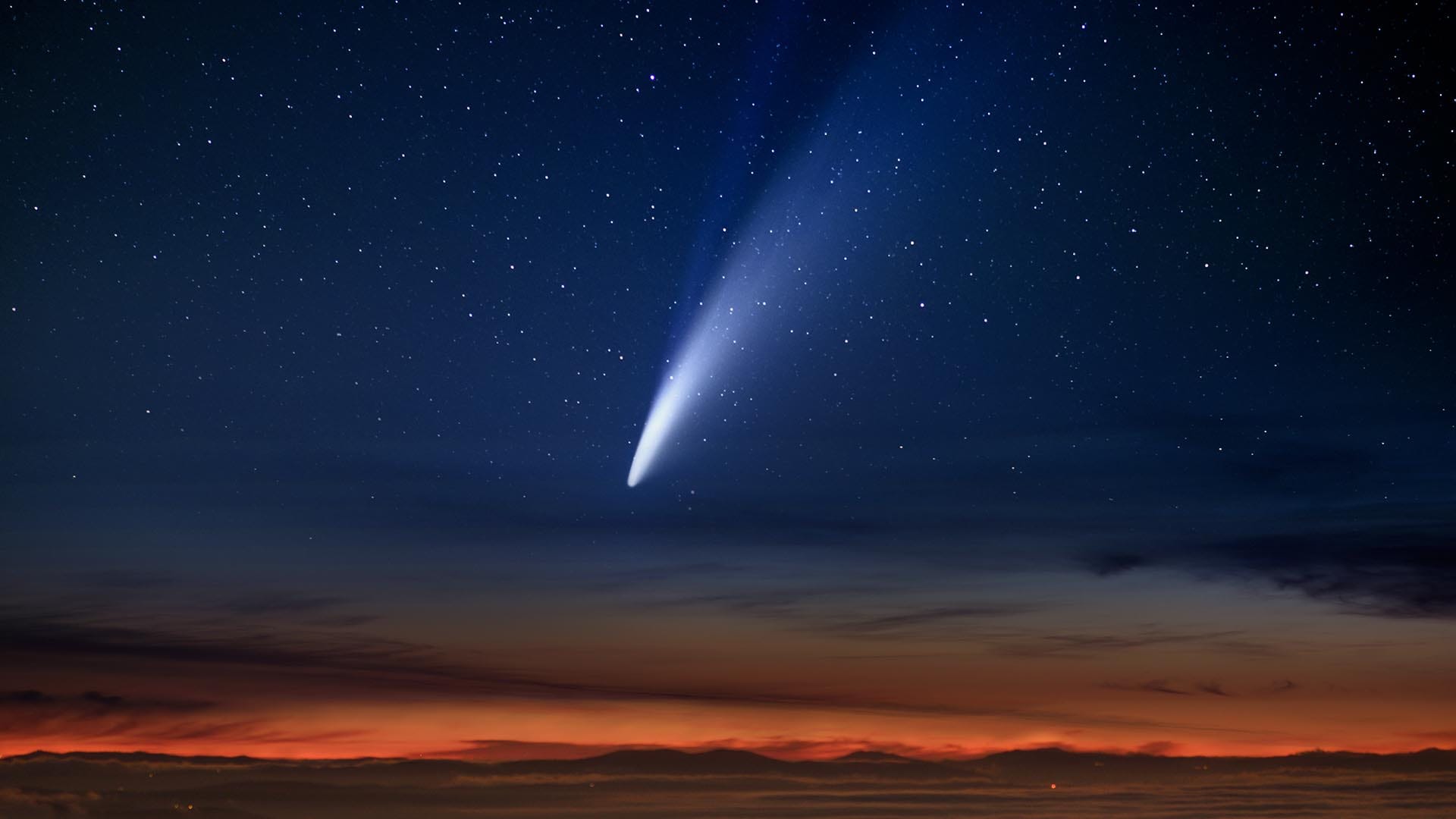
 Volcanoes would suddenly roar back to life, spewing vast clouds of debris into the atmosphere, adding to the hellish conditions. Forest fires would also create enormous noxious fumes that would stain the sky and cause the moon to appear “blood-red” in colour.
 It has now become accepted throughout the scientific community that the entire spectrum of dinosaurs, from the small to the very large, suddenly perished at a time when the earth underwent a catastrophic event.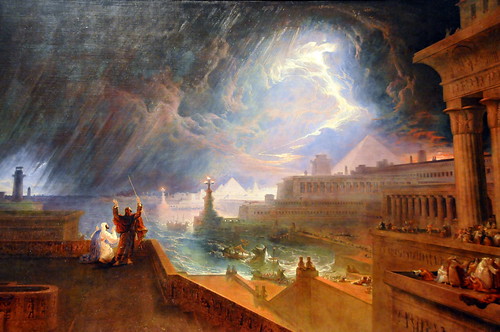
 In my post


 Over the span of the last century, a hidden revolution has been taking place in the science of Cosmology, the study of the origins and nature of the universe. It remains hidden because there is still, as yet, no outward sign that any significant change has taken place.
 Vast magnetic fields are now being discovered everywhere, even in the so-called “empty” regions of intergalactic space. And as every pupil is taught in grade school physics, magnetic fields do not exist without the presence of electric currents. In fact that is how they are formed. They are twin aspects of the same indivisible force.
 But as supporters of the “Electrical Universe” model have pointed out, there is no mystery to this at all. Space is not empty. On the contrary, it is full. For according to their electrical model, the 96% of missing matter in the universe exists in the form of plasma.
 Another scientist who propounded ideas that were in conflict with the established view of the universe was a Russian-Jewish psychiatrist named Immanuel Velikovsky. He became yet another victim of establishment science when he published his seminal work entitled Worlds in Collision in 1950.
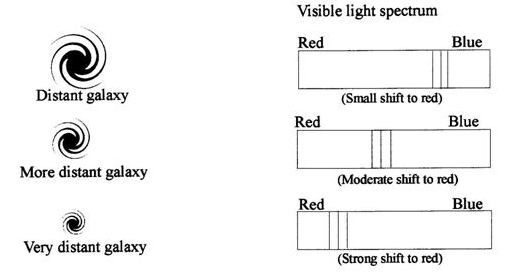
 In my previous post I indicated that we are living through the death throes of a dying age, and that a new age is dawning that will transform both the earth and the heavens. I went on to say that the transition from our existing world age to the new one will be accompanied by world-wide calamities brought about by a close encounter with a comet.

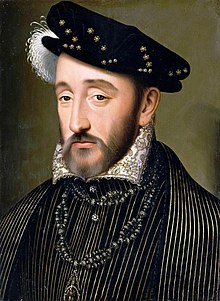
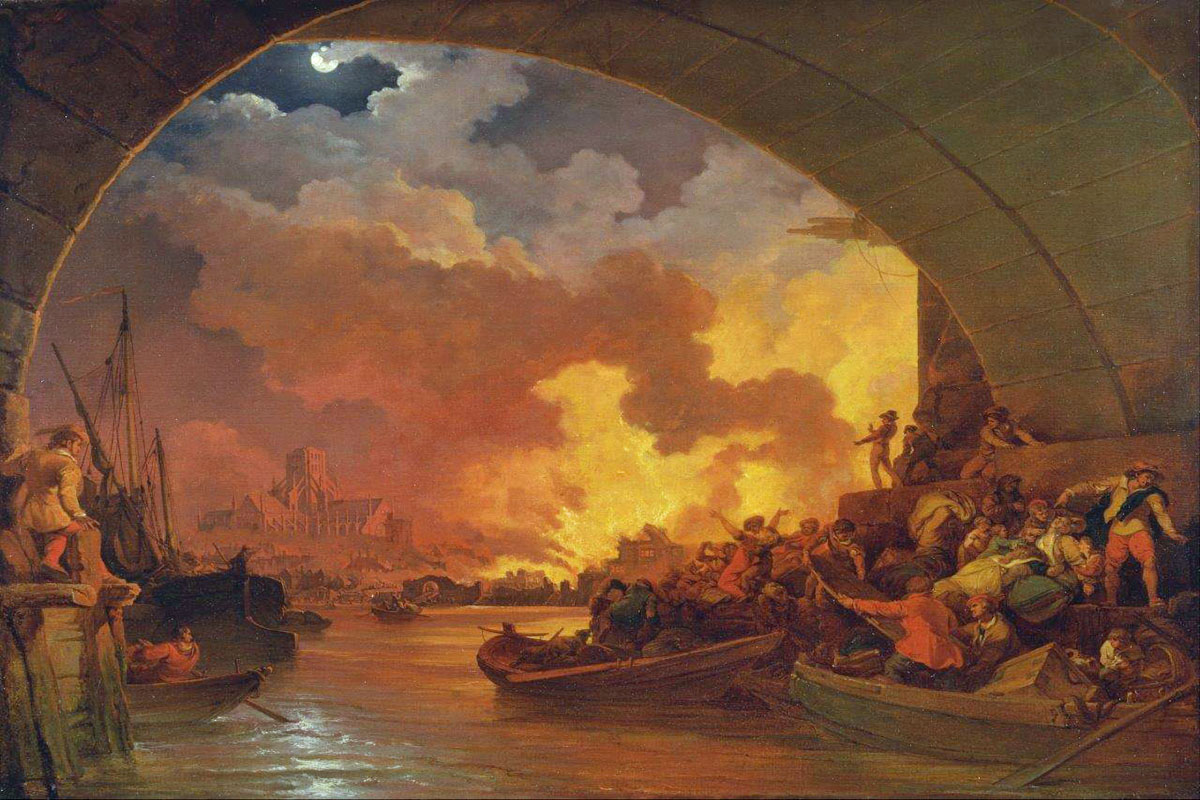
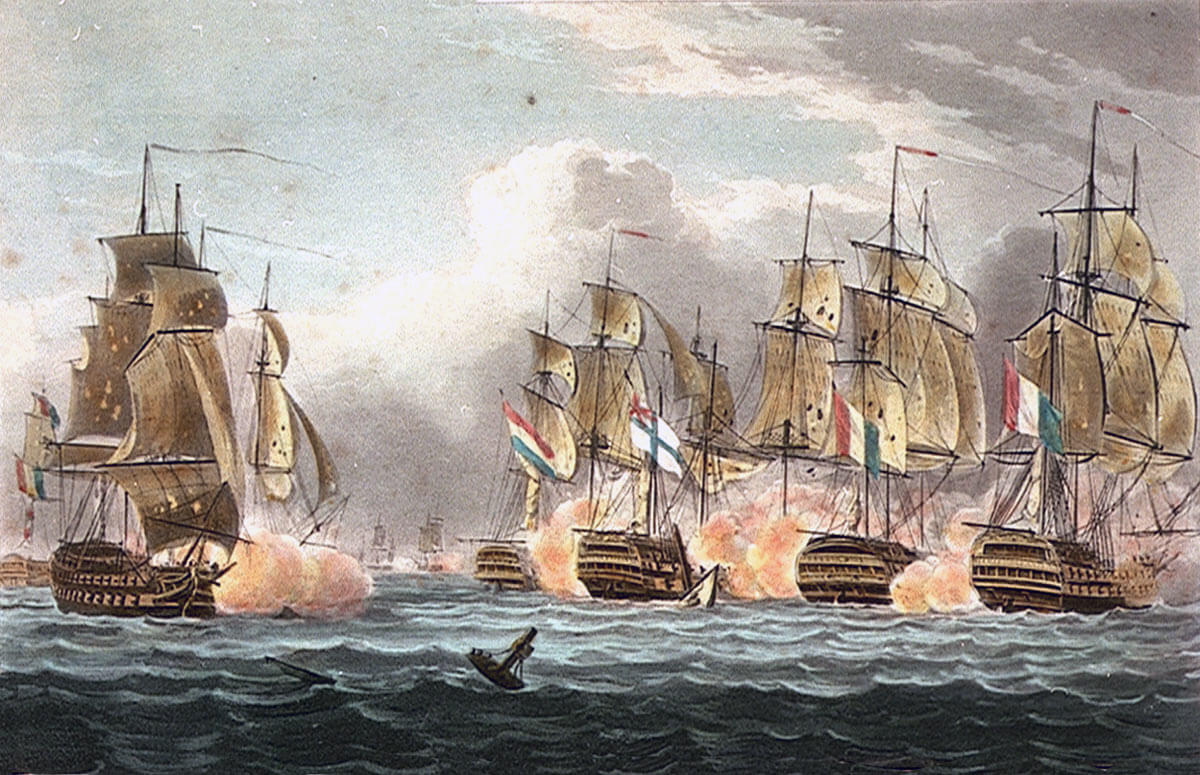
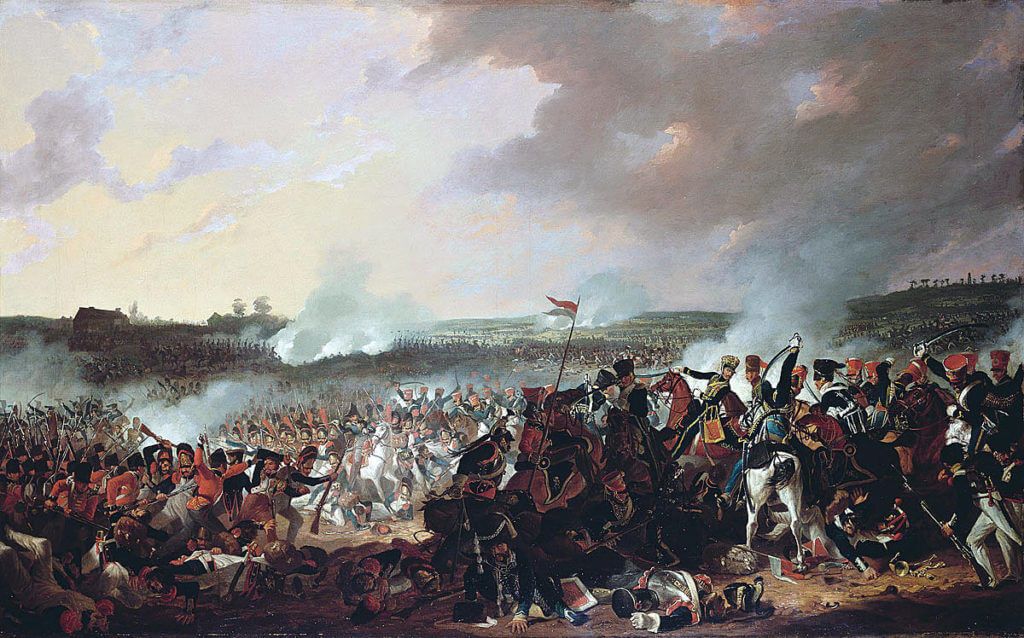
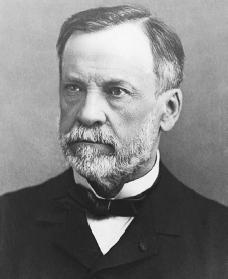

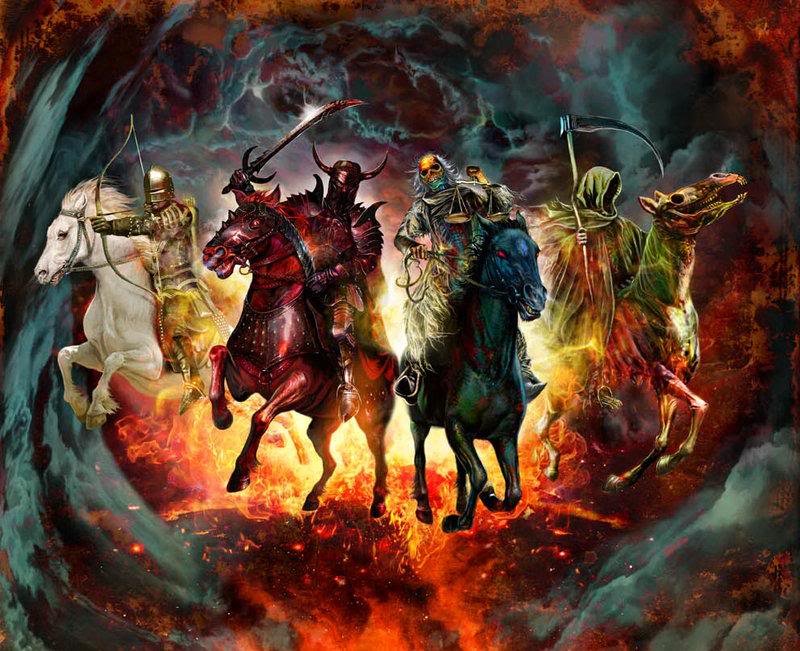
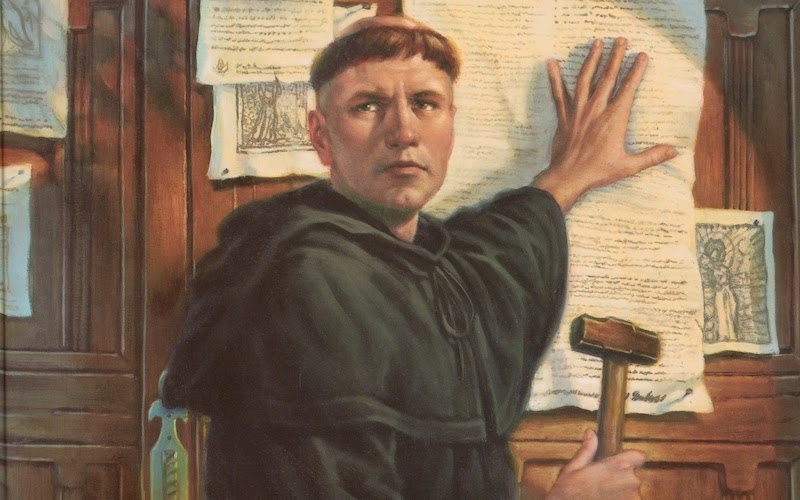

 As Nostradamus explained in a letter to his son César, he did not wish to be considered an infallible prophet, but only as an accomplished and diligent scholar who strove to acquire insight and understanding into the inscrutable ways of God. As he wrote in this letter dated March 1st, 1555, translated by Jean Charles de Fontbrune:

 Nostradamus converted the upper room of his house in Salon into a study, and it was there (as he later revealed in his book of prophecies) that he spent most of his time, poring over his occult books. One of the major sources of inspiration was a book called “De Magisteriis Aegyptiorum” (Concerning the Mysteries of Egypt), which had been published in Lyons a few years earlier.